Mar 10, 2026
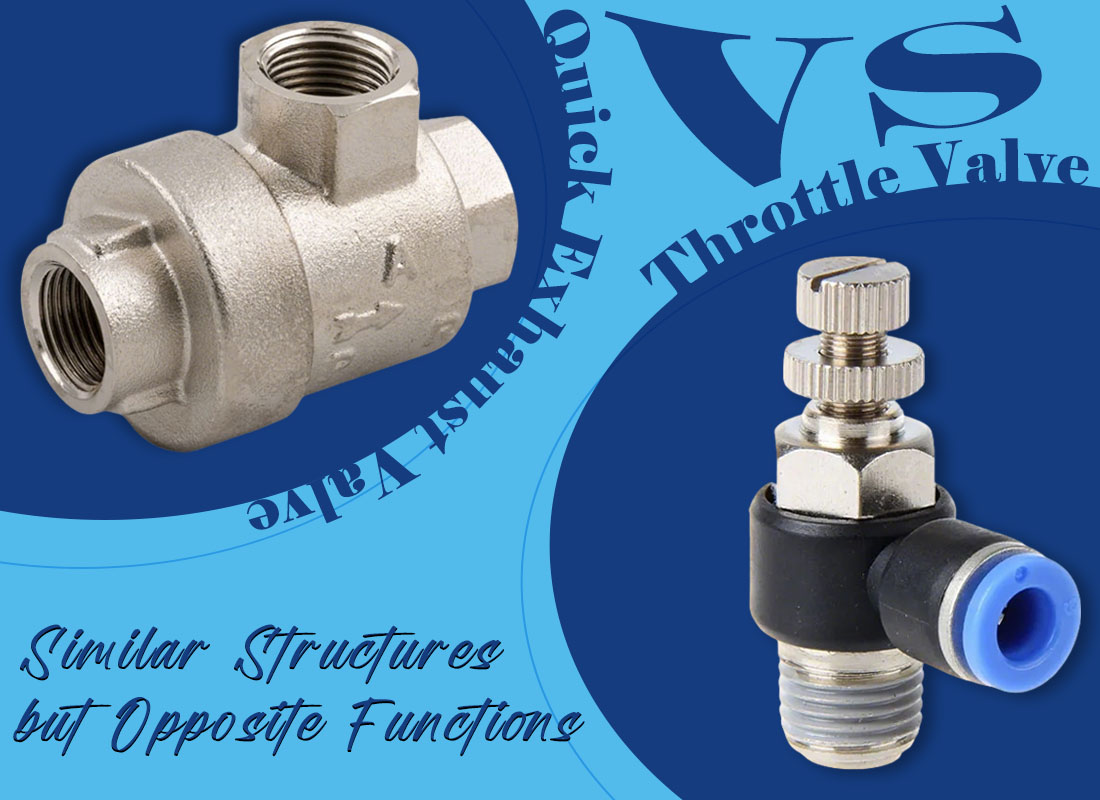
In pneumatic automation systems, controlling cylinder speed is an essential part of machine design. Engineers often rely on different types of valves to manage airflow, such as the quick exhaust valve and the flow control valve, also known as a throttle valve.
Although these two valves share some structural similarities—such as their installation near actuators and the use of one-way flow mechanisms—their functions are almost completely opposite.
Understanding the differences between a pneumatic quick exhaust valve and a flow control valve helps engineers, distributors, and system integrators design more efficient pneumatic circuits.
The speed of a pneumatic cylinder depends on both the air supply flow and the exhaust speed. When compressed air enters the cylinder, it pushes the piston to move forward. When the directional valve shifts, the air inside the cylinder must be released quickly to allow the piston to return.
If the exhaust path is long or restricted, residual pressure remains inside the cylinder chamber and slows down the movement.
For this reason, engineers often install either a quick exhaust valve or a flow control valve directly on the cylinder ports.
A quick exhaust valve is designed to release compressed air from a cylinder as quickly as possible. Instead of sending the exhaust air back through the directional control valve, the pneumatic quick exhaust valve vents the air directly to the atmosphere.
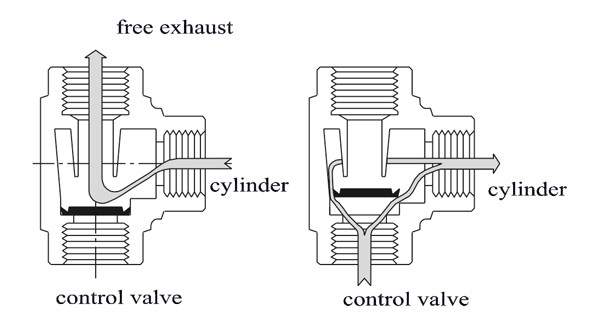
In a traditional circuit, the air must travel through a longer path:
Cylinder → pipeline → control valve → exhaust port → atmosphere
With a quick exhaust valve, the path becomes:
Cylinder → quick exhaust valve → atmosphere
This shorter exhaust path significantly reduces back pressure and improves cylinder response speed. Because of this, quick exhaust valves are commonly used in high-speed automation equipment.
A throttle valve, or flow control valve, has a completely different purpose. Instead of accelerating airflow, it restricts the flow of air to regulate cylinder speed.
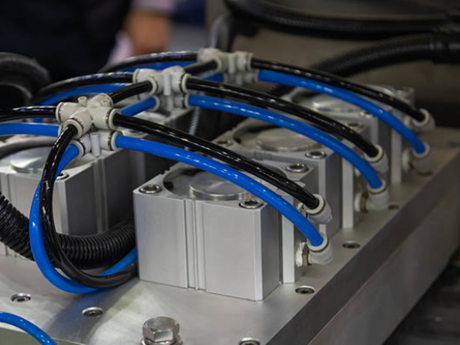
Most pneumatic flow control valves are designed with a check valve structure that allows free flow in one direction but restricts flow in the opposite direction.
By adjusting the throttle opening, engineers can precisely control the speed of the cylinder movement.
Even though both valves may include one-way flow structures and are often installed near the actuator, their effects on airflow are opposite.
| Feature | Quick Exhaust Valve | Flow Control / Throttle Valve |
|---|---|---|
| Main Function | Accelerate air exhaust | Control or restrict airflow |
| Flow Adjustment | Not adjustable | Adjustable flow rate |
| Effect on Cylinder Speed | Increase speed | Reduce or regulate speed |
| Installation Location | Near cylinder exhaust port | Near cylinder port |
| Internal Structure | One-way exhaust mechanism | Throttle + check valve |
| Typical Application | High-speed automation | Motion control systems |
This comparison clearly shows that quick exhaust valves are designed to maximize airflow during exhaust, while throttle valves are intended to regulate and slow down airflow.
In many automation systems, engineers combine both valves to achieve more precise motion control.
For example, in assembly equipment, a cylinder may need to extend slowly to avoid impacting the workpiece, but retract quickly to increase production efficiency.
In this situation:
◆ A pneumatic throttle valve slows the extension speed
◆ A pneumatic quick exhaust valve accelerates the return motion
This configuration allows the cylinder to extend smoothly while retracting rapidly.
When designing pneumatic circuits, the selection between a quick exhaust valve and a throttle valve should depend on system requirements.
Common recommendations include:
◆ Use pneumatic quick exhaust valves for high-speed cylinder applications
◆ Use pneumatic throttle valve for accurate speed adjustment
◆ Install valves as close to the actuator port as possible
◆ Select valve sizes that match the cylinder airflow capacity
Proper valve selection and placement can significantly improve the performance and efficiency of pneumatic automation systems.
(FK9025)
You May Interest In
Mar 06, 2026 Blog
IP Protection Rating of Solenoid Valve Coils
Dec 12, 2025 Blog
What Is a Globe Control Valve?
Dec 11, 2025 Blog
Two ways for a globe valve to be bidirectional
Get a free sample

Fokca is a brand of Ningbo Fokca Automation Co., Ltd.
Looking for custom pneumatic cylinder solutions? Visit our sister brand, Fescolo.→
© 2026 Ningbo Fokca Automation Co., Ltd. All rights reserved. Sitemap