Stopping Without the Shock
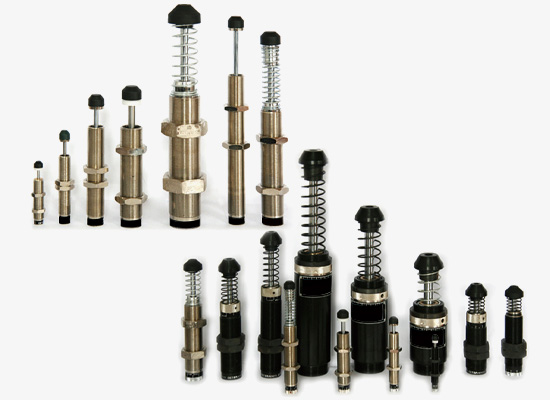
Moving masses need to stop. Hard stops wear machines. Smooth stops extend life. Fokca shock absorbers handle the deceleration. Hydraulic shocks – adjustable for varying loads, fixed for consistent applications, self-compensating when conditions change. Threads M8 to M36. Strokes 4 to 150mm. Capacity 1 to 500 Nm per cycle. Velocity to 5 m/s.
Rubber bumpers for light loads – cylindrical, domed, natural rubber or polyurethane. Stoppers for position limiting. Silencers for exhaust ports – bronze, plastic, cleanroom grade. Lock nuts, mounting brackets, impact caps. Calculate kinetic energy: half the mass times velocity squared. Add 20% safety margin. Match to capacity. For packaging lines, robotics, any machine that moves.
Moving masses need to stop. How they stop determines how long your machine lasts. Slam into hard stops – bearings wear, frames shake, cylinders leak. Decelerate smoothly – equipment lasts, noise drops, cycle times improve. Fokca shock absorbers handle the stopping.
Converts kinetic energy into heat. Dissipates it safely. Brings moving parts to a controlled stop. No bounce. No shock. No damage.
For applications where loads vary. Turn the knob to match the energy. One shock absorber covers a range of conditions.
• Thread sizes: M8, M10, M12, M14, M16, M20, M25, M36
• Stroke lengths: 4mm to 150mm
• Energy capacity: 1 to 500 Nm per cycle
• Max impact velocity: up to 5 m/s
• Adjustment: external hex or knob
For consistent applications. Set once, forget it. Lower cost than adjustable. No adjustment to drift.
• Same thread sizes, stroke lengths
• Factory set for specific energy
• Best for: repetitive cycles, known loads
Adjust automatically to varying loads and speeds. Set it up once, it handles changes. More expensive, but eliminates tuning.
• Progressive damping curve
• Adapts to conditions
• Best for: unpredictable applications
Simple. Cheap. Work for light loads, low speeds. Not for high energy, but sometimes that's all you need.
● Cylindrical, domed shapes
● Natural rubber, neoprene, polyurethane
● Threaded or push-in mounting
● Temperature range depends on material
● Adjustable mechanical stops – fine-tune position
● Fixed stops – simple, low-cost position limiting
● Often used with hydraulic shock absorbers for position control
Exhaust air makes noise. Silencers reduce it. Sintered bronze, plastic, or porous polyethylene.
● Thread sizes: M5 to G2
● Materials: bronze (standard), plastic (economical), porous polyethylene (cleanroom)
● Location: valve exhaust ports, cylinder exhaust
● Lock nuts: Keep adjustment where you set it
● Mounting brackets: Various configurations
● Impact caps: Buttons that take the hit
● Universal mounting blocks: Position shock anywhere
● Energy capacity (Nm): 1 to 500 per cycle
● Max velocity (m/s): up to 5
● Operating temperature: -10°C to +70°C standard (high-temp options available)
● Thread sizes: M8 to M36
● Strokes: 4mm to 150mm
Step 1: Know your moving mass (kg)
Total weight being stopped.
Step 2: Know your velocity (m/s)
How fast it's moving before deceleration.
Step 3: Calculate kinetic energy
E = 0.5 × mass × velocity²
Step 4: Consider cycles per hour
Heat builds up. Higher cycles need higher capacity or cooling.
Step 5: Add safety factor
20-30% extra capacity for unknown variables.
| Problem | Likely Cause |
| Shock leaks oil | Seal failure or overloading beyond rated capacity |
| No damping | Internal damage caused by impact beyond rating |
| Bounce at stop | Insufficient capacity or incorrect adjustment |
| Noise | Air trapped inside or loose mounting |
| Short life | Misapplication – incorrect size selection for the load |
Q1: Adjustable or fixed – which do I need?
Adjustable if loads vary or you're not sure of the exact energy. Fixed for consistent, known applications – cheaper and simpler.
Q2: How do I know what size to pick?
Calculate kinetic energy, add safety factor, match to capacity table. If unsure, go larger – too big works, too small fails.
Q3: Can I mount a shock absorber anywhere?
Yes, but alignment matters. Angled impacts reduce life. Use mounting brackets designed for proper alignment.
Q4: What's the difference between shock absorbers and rubber bumpers?
Bumpers are cheap, simple, for low energy. Shock absorbers handle real energy, provide controlled deceleration, cost more but protect your machine.
Q5: Do I need a lock nut?
Yes. Vibration loosens adjustments. Lock nut keeps settings where you put them.
Sizes from tiny (M8) to large (M36). Adjustable, fixed, self-compensating. Capacities from 1 to 500 Nm. Mounting accessories that fit. Competitive pricing. Stock ready to ship.
Browse the selection below. Or tell us what you're stopping and we'll help you size it right.
Need help selecting the right pneumatic component?
Contact our engineering team.
Get a free sample

Fokca is a brand of Ningbo Fokca Automation Co., Ltd.
Looking for custom pneumatic cylinder solutions? Visit our sister brand, Fescolo.→
© 2026 Ningbo Fokca Automation Co., Ltd. All rights reserved. Sitemap