Holding Parts, No Dropped Parts
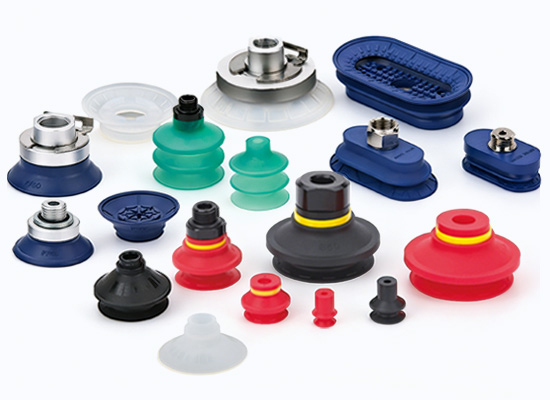
Material handling comes down to one question: does the part stay gripped? Fokca vacuum components answer yes. Flat cups for smooth surfaces. Bellows cups for uneven surfaces and height differences. Deep groove cups for oily parts. Oval cups for long, narrow items. Materials for every job – NBR general purpose, silicone for high heat and food contact, anti-static for electronics, polyurethane for abrasion.
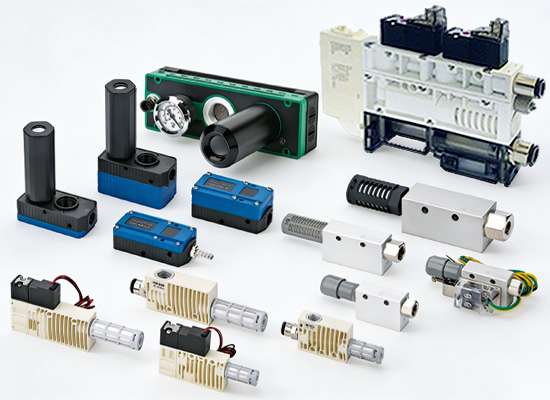
Single-stage ejectors when you need high flow. Multi-stage when efficiency matters. Compact modular units with integrated valves. Vacuum switches – mechanical or electronic with digital display. Filters to protect ejectors. Tubing, fittings, mounts, silencers. For electronics, packaging, any application where grip matters.
In material handling, success comes down to one thing: does the part stay gripped or does it drop? Fokca vacuum components are built for the first outcome.
Vacuum gripping seems straightforward. Then you encounter oily surfaces, uneven parts, porous materials, high speeds. Our vacuum range exists because different jobs need different solutions.
| Cup Type | Material Options | Best For | Why |
| Flat cups | NBR, silicone, polyurethane | Smooth, flat surfaces (glass, metal, plastic) | Maximum sealing, simple geometry |
| Bellows cups | NBR, silicone, anti-static | Uneven surfaces, height variation | Flexible bellows accommodate surface differences |
| Deep groove cups | NBR, special compounds | Oily or textured surfaces | Oil-resistant, performs better on rough finishes |
| Oval cups | NBR, polyurethane | Long, narrow parts (tubes, bars) | Elongated shape provides more stable grip |
| Food-grade cups | FDA silicone, white NBR | Food packaging, pharmaceutical | FDA compliant, ensures hygiene and traceability |
| Anti-static cups | ESD-safe materials | Electronics, PCB assembly | Prevents electrostatic discharge damage |
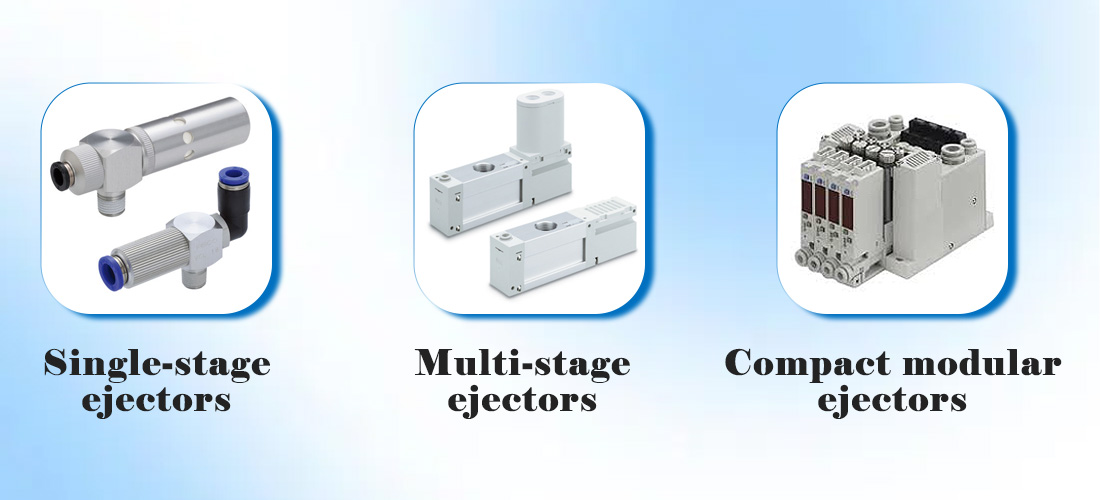
• Single-stage ejectors: Simple, high flow. For general applications.
• Multi-stage ejectors: Higher vacuum, lower air consumption. For porous materials, leaky systems.
• Compact modular ejectors: Integrated valves and sensors. For machine integration.
• With blow-off: Quick part release. Prevents sticking.
• Without blow-off: impler, lower cost.
● Maximum vacuum: -85 kPa (-0.85 bar) typical
● Supply pressure: 3-7 bar
● Air consumption: 10-200 L/min depending on model
● Response time: <10 ms for compact units
● Mechanical switches: Simple on/off. Adjustable set points.
● Electronic switches: Digital display. Programmable switching.
● Analog sensors: 4-20mA or 0-10V output. Continuous monitoring.
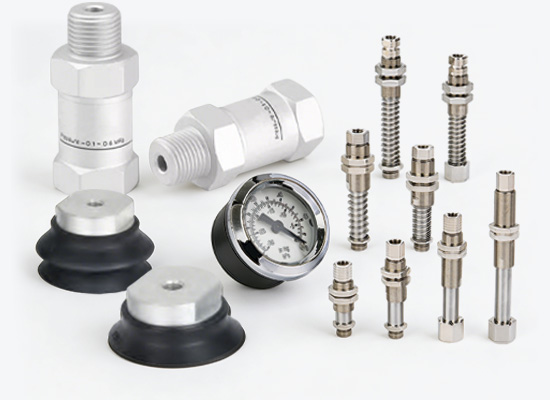
● Vacuum gauges: Visual pressure indication. No power needed.
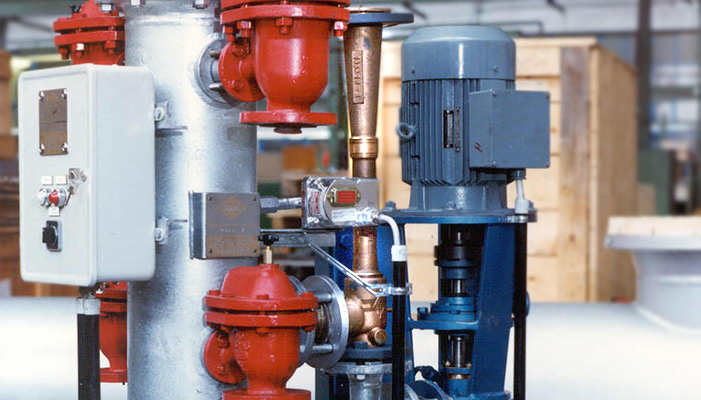
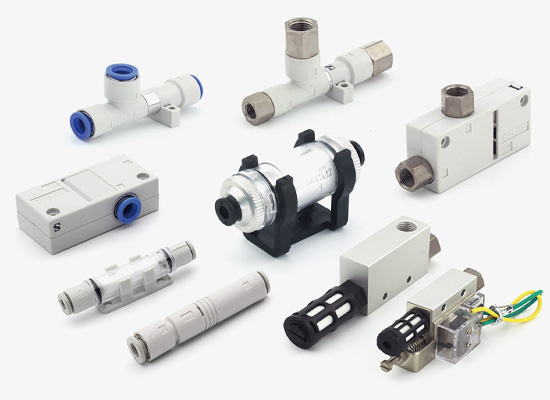
● Vacuum filters: Protect ejectors and valves from contamination.
● Vacuum tubing: Non-collapsible. Special formulation for vacuum.
● Fittings: Push-in and threaded. For vacuum circuits.
● Silencers: Reduce ejector exhaust noise.
● Cup mounts: Brackets and fittings for every cup type.
Step 1: Know What You're Picking Up
● Material: porous or non-porous? Smooth or rough? Oily or dry?
● Weight and dimensions
● Temperature
● Surface condition
Step 2: Pick the Cup
● Flat cups for smooth, rigid objects
● Bellows cups for curved surfaces or height variation
● Calculate holding force: F = P × A × safety factor
Step 3: Generate the Vacuum
● Central system if you have one
● Dedicated ejectors per cup or circuit
● Multi-stage for leaky or porous applications
Step 4: Add Control
● Vacuum switches for part presence
● Sensors for process monitoring
● Blow-off for quick release
| Problem | Likely Cause | What to Check |
| Part not picked up | Insufficient vacuum | Ejector size, suction cup size |
| Part drops mid-cycle | System leak | Suction cup condition, tube connections |
| Slow pick-up | Small ejector, long tubing | Ejector size, tube length |
| Cups wear fast | Wrong material | Suction cup material selection |
| High air consumption | Leaks, oversized ejector | System leakage, ejector sizing |
Q1: NBR vs silicone – what's the difference?
NBR is general-purpose, oil-resistant, economical. -20°C to +80°C. Silicone handles higher temperatures (-40°C to +200°C) and is FDA-grade for food contact.
Q2: How do I calculate holding force?
Force = effective suction area × vacuum pressure × safety factor. Horizontal lifting with multiple cups: safety factor 1.5. Vertical lifting: safety factor 4.0.
Q3: Multi-stage ejectors – when?
For porous materials (cardboard, wood) or when the system has leaks. They maintain high vacuum with less air.
Q4: Custom cups – possible?
For volume applications, yes. Tell us what you need.
Q5: What vacuum level do I need?
Non-porous materials: -60 to -80 kPa typical. Porous materials: higher vacuum from multi-stage.
Complete systems from one source. Cup materials for any application. Ejectors that don't waste air. Competitive pricing. Technical support that knows vacuum. Most items in stock.
Need help selecting the right pneumatic component?
Contact our engineering team.
Get a free sample

Fokca is a brand of Ningbo Fokca Automation Co., Ltd.
Looking for custom pneumatic cylinder solutions? Visit our sister brand, Fescolo.→
© 2026 Ningbo Fokca Automation Co., Ltd. All rights reserved. Sitemap