Directing Air, Simply and Reliably
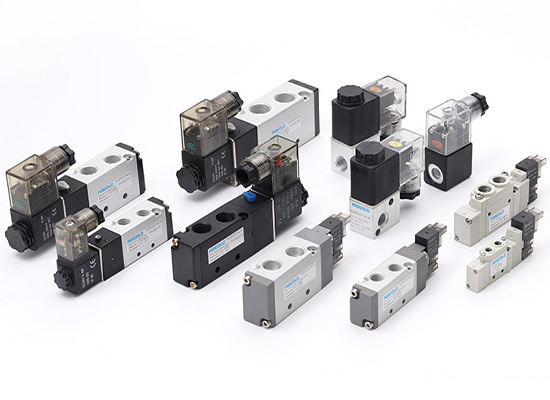
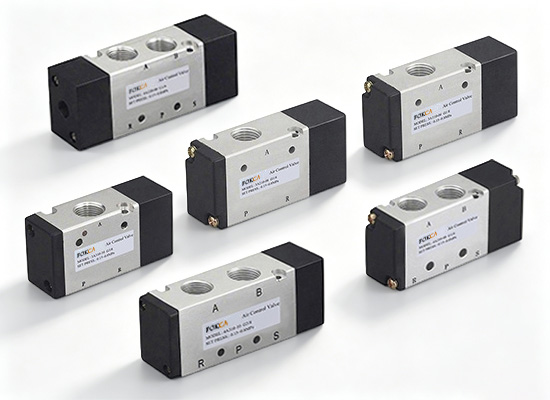
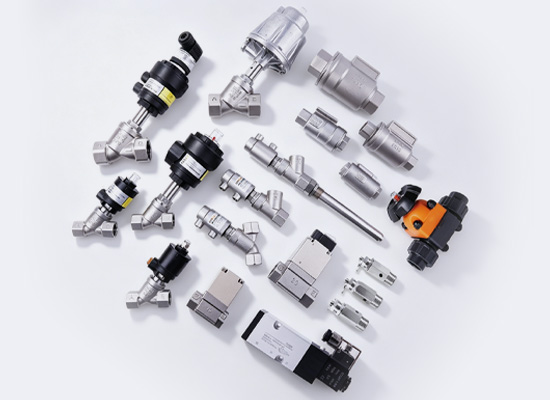
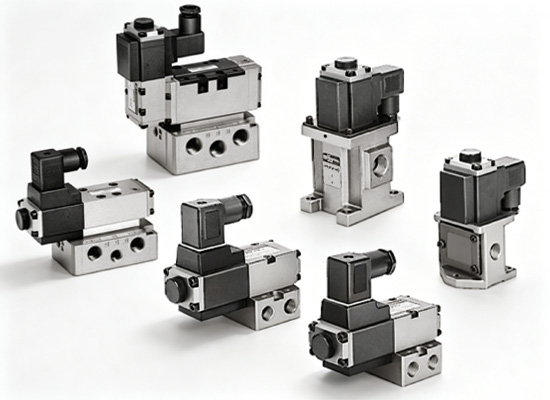
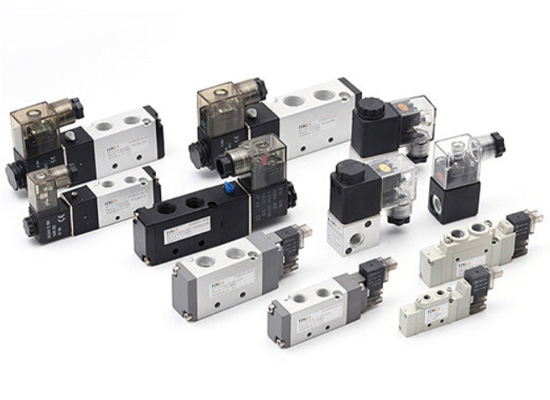
FOKCA offers solenoid, manual, and mechanical valves for reliable pneumatic control. Choose 3/2, 5/2, or 5/3-way designs, plus valve terminals, check valves, flow controls, and quick exhausts. With ports from M5 to G1/2, pressure up to 10 bar, and IP65 protection, they suit new systems and replacements.
Every pneumatic system needs a way to say "go here" and "stop there." That's what control valves do. They direct air. They stop air. They release air. Fokca control valves do it reliably, cycle after cycle.
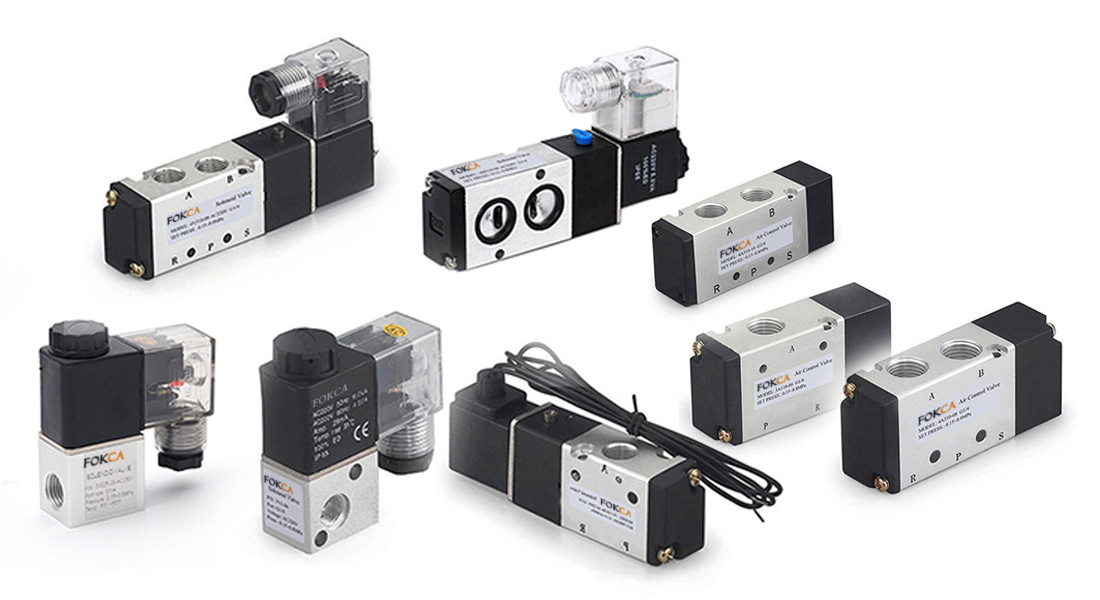
Simple in concept: a valve is a switch for air. Open, air flows. Closed, air stops. But between those two states lies a world of options – how many ports, how many positions, how it's actuated, how fast it responds.
| Type | What It Does | Where You Use It |
| Single solenoid | Spring return. Power on, valve shifts. Power off, it goes back. | Simple on/off control. One action per cylinder. |
| Double solenoid | Two coils. One shifts it one way, the other shifts it back. | Bi-stable control. Position stays if power fails. |
| 3/2 way | Three ports, two positions. | Single-acting cylinders. One port to extend, one to exhaust. |
| 5/2 way | Five ports, two positions. | Double-acting cylinders. One port to extend, one to retract. |
| 5/3 way | Five ports, three positions. | Double-acting with mid-position stop. Closed center, exhaust center, pressure center options. |
Voltages That Actually Exist
• 24V DC: Most common. Safe. Controllers speak it.
• 110V AC: For legacy systems, certain regions.
• 220V AC: High voltage applications.
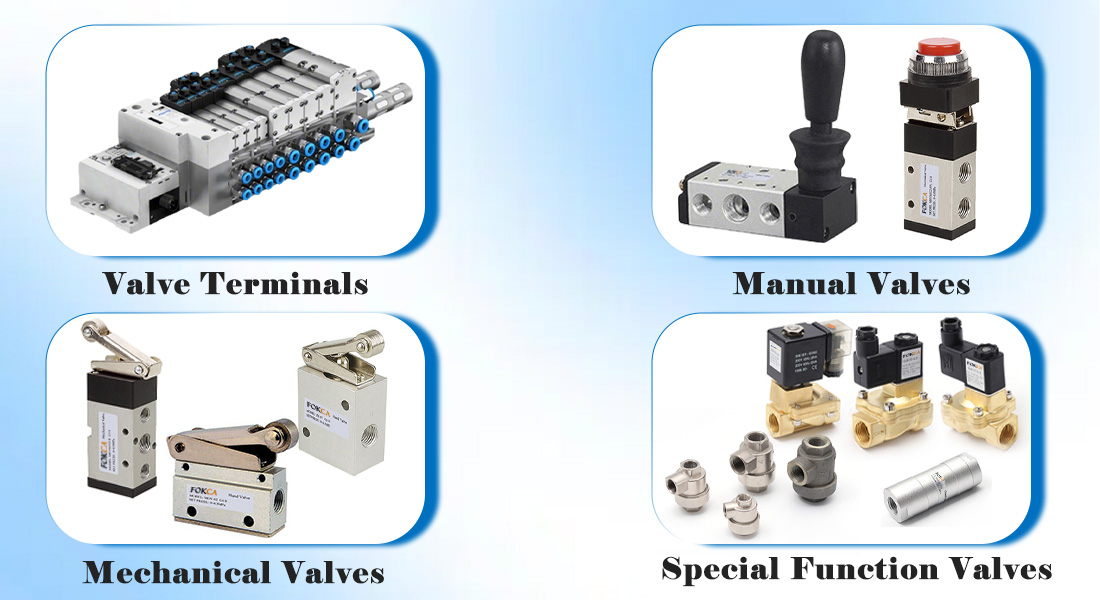
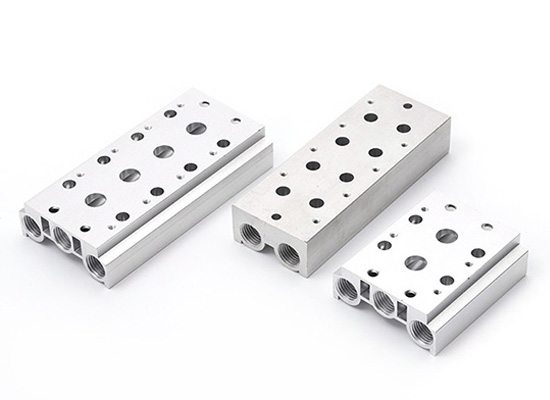
Multiple valves. One air supply. One electrical connection. Less tubing, less wiring, less time installing.
• 4 to 16 stations
• Multi-pin or fieldbus communication
• Modular – add stations as needed
• Common exhaust and supply – simpler plumbing
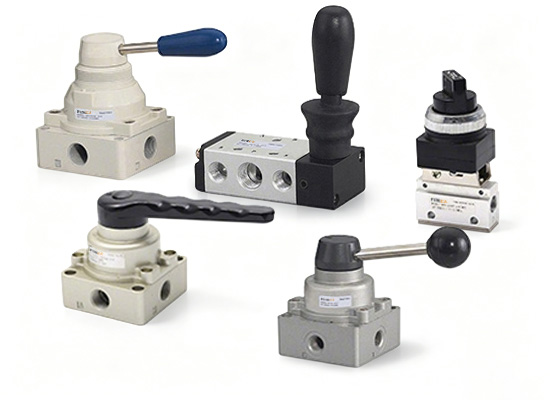
• Hand lever: Two or three positions. Positive detent. Operator knows what position it's in.
• Push-button: Momentary or maintained. Palm or finger operation.
• Selector: Key or knob. Restricts access if needed.
• Roller lever: Cam hits the roller, valve shifts.
• One-way trip: Actuates in one direction, bypasses in the other.
• Plunger: Direct mechanical actuation.

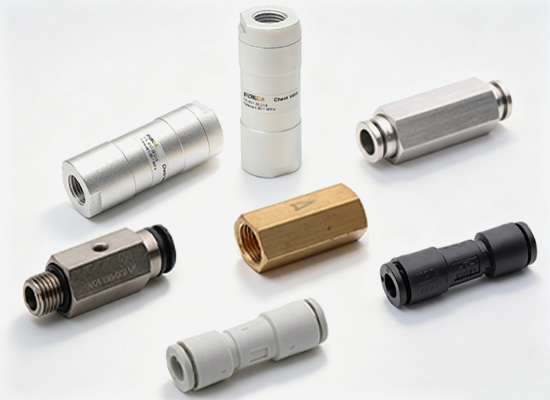
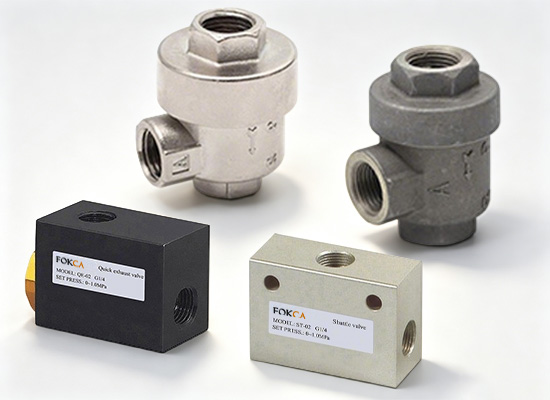
• Check valves: Air flows one way, blocks the other. Simple. Essential.
• Flow control valves: Slows air in one direction, free flow in the other. Controls cylinder speed.
• Quick exhaust valves: Dumps air fast near the cylinder. Faster return strokes.
• Pneumatically piloted valves: Air signal shifts them. For remote control, high temperatures, explosive environments.
● Port sizes: M5, G1/8, G1/4, G3/8, G1/2 (NPT options available)
● Pressure range: 0-10 bar (most valves)
● Flow rates (Cv): 0.2 to 2.0 depending on size
● Response time: 10-30ms typical
● Protection: IP65 standard
● Coil consumption: 2-4W DC, 4-6VA AC
Step 1: What are you controlling?
● Single-acting cylinder → 3/2 valve
● Double-acting cylinder → 5/2 valve
● Need mid-position stop → 5/3 valve
Step 2: How will you control it?
● PLC or electrical signal → solenoid valve (pick your voltage)
● Operator needs to control it → manual valve
● Cam or machine motion controls it → mechanical valve
Step 3: What size ports?
Match your cylinder ports. G1/4 for small cylinders. G1/2 for larger ones.
Step 4: Check the flow
Fast cycle times need higher flow. Slow movement needs less. Our specs show Cv values – compare to your requirements.
● Coil burns out: Wrong voltage, continuous duty rating exceeded. We spec coils for continuous use.
● Spool sticks: Dirty air, lack of lubrication. Good FRLs prevent this.
● Seals leak: Age, incompatible materials. We use proven compounds.
● Manual override fails: Cheap valves break here. Ours are built to be used.
Q1: 5/2 vs 5/3 – when do I need the third position?
When the cylinder needs to stop in the middle. 5/2 valves only go end to end. 5/3 valves can stop anywhere in between.
Q2: Single vs double solenoid – which is safer?
Single solenoid loses position on power failure – spring returns it. Double solenoid stays where it was. Choose based on your safety requirements.
Q3: What voltage should I use?
24V DC if you're building new. It's standard, safe, and what most controllers output.
Q4: Valve terminals – worth it?
If you have more than 4 valves, yes. Less tubing, less wiring, cleaner machine.
Every type you need. Voltages that match real-world controls. Ports from M5 to G1/2. Competitive pricing. Stock ready to ship. Support that helps you pick the right one.
Browse the selection below. Or tell us about your machine and we'll recommend the valve package.
Need help selecting the right pneumatic component?
Contact our engineering team.
Get a free sample

Fokca is a brand of Ningbo Fokca Automation Co., Ltd.
Looking for custom pneumatic cylinder solutions? Visit our sister brand, Fescolo.→
© 2026 Ningbo Fokca Automation Co., Ltd. All rights reserved. Sitemap