Keeping Air Where It Belongs
FOKCA tubing and fittings ensure reliable pneumatic connections. Choose PU tubing for flexibility, nylon for higher pressure, or PTFE for chemical and heat resistance, in 4–16 mm OD. Push-in and threaded fittings, valves, silencers, cutters, and clips simplify installation. Match materials, sizes, and connections to your application.
A pneumatic system is only as good as its connections. Leaks waste energy. Loose fittings cause downtime. Wrong materials fail prematurely. Fokca tubing and fittings are built to keep air where it belongs – moving your cylinders and tools.
Air moves through tubes. Fittings connect tubes to valves, cylinders, and other components. Simple in concept. But pressure drops, temperature swings, vibration, and chemical exposure all affect how well that air flows. The right combination keeps your system efficient.
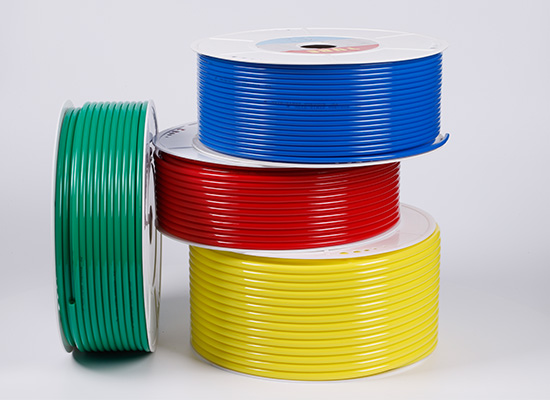
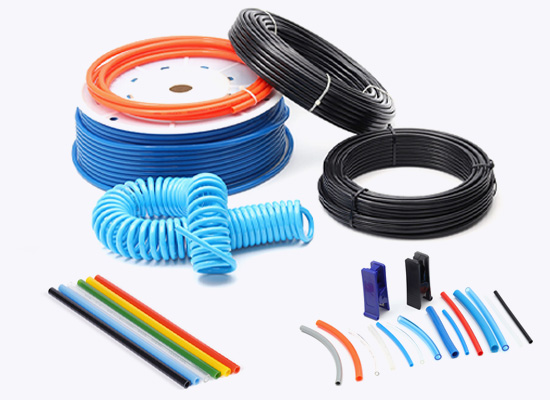
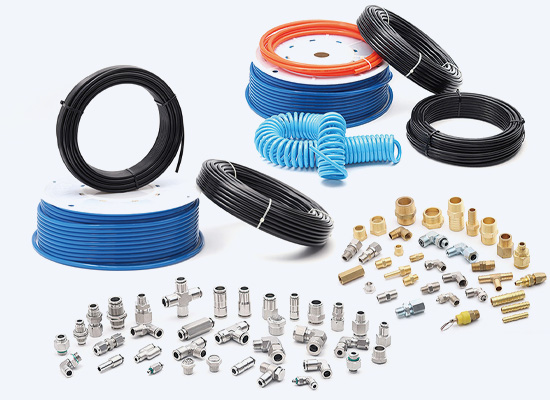
The most common choice for a reason. Flexible, abrasion-resistant, easy to work with.
• Outer diameters: 4mm, 6mm, 8mm, 10mm, 12mm, 16mm
• Colors: transparent, blue, black, red, yellow, green
• Operating pressure: up to 10 bar
• Temperature range: -20°C to +60°C
• Best for: general automation, moving applications, tight bends
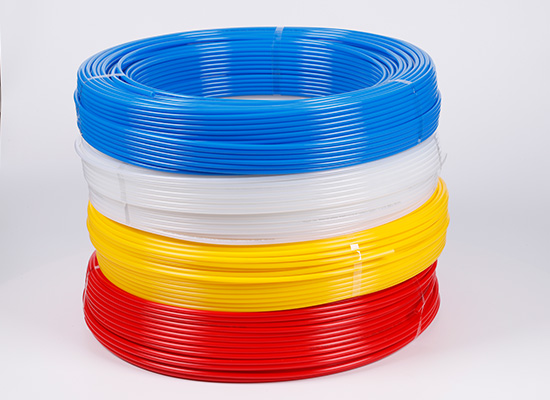
When pressure is higher or temperatures rise. Stiffer than PU, but handles more.
• Higher pressure rating than PU
• Better chemical resistance
• Temperature range: -40°C to +120°C
• Best for: high-pressure circuits, elevated temperatures
When nothing else will do. Chemical resistance. High temperatures. Low friction.
• Temperature range: -70°C to +260°C
• Nearly universal chemical resistance
• Non-stick surface
• Best for: chemical exposure, extreme heat, food processing
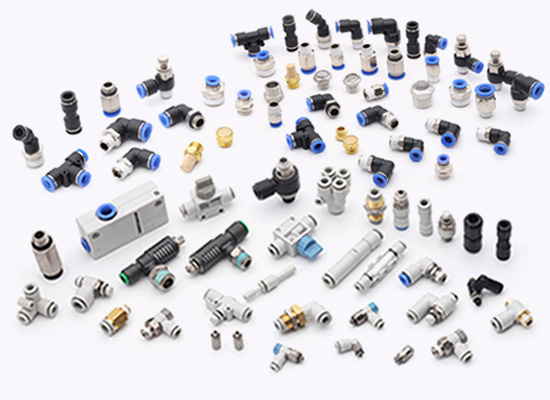
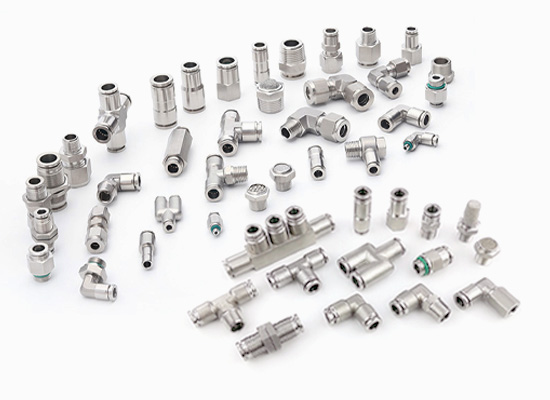
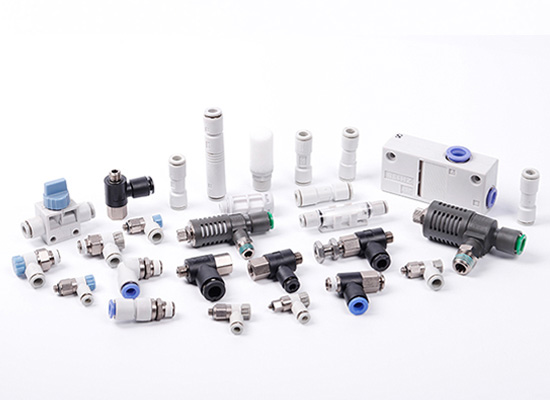
The beauty of push-in fittings: insert tube, it locks. Push the collar, tube releases. No tools. No leaks. No frustration.
| Type | Use When |
| Straight | Connecting two tubes end-to-end with the same diameter |
| Straight with thread | Connecting a tube to a threaded port (valve, cylinder, FRL unit) |
| Type | Use When |
| Swivel elbow | Direction change with flexibility. Ideal for installation in tight spaces |
| Fixed elbow | Direction change where rotation is not required. Lower cost option |
| 90° elbow | Most common angle for sharp direction change |
| 45° elbow | Gentle direction change to reduce flow resistance |
• Equal tee – all three ports same size
• Reducing tee – branch size different from run
• Best for: splitting air to multiple devices
• Connect different tube sizes
• Straight, elbow, tee configurations
• Through panel mounting
• Sealed connection between sides
• Extend tube runs
• Repair damaged sections
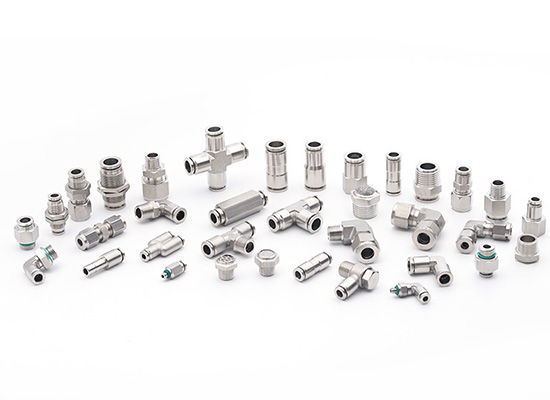
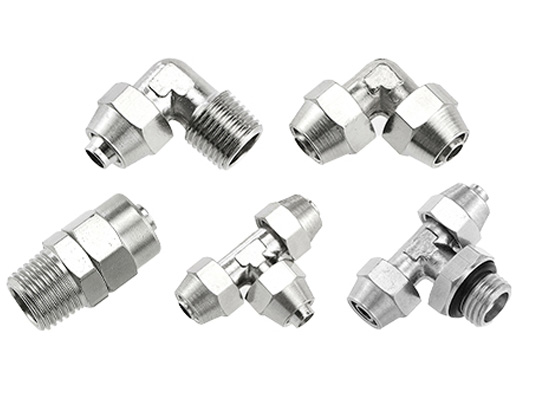
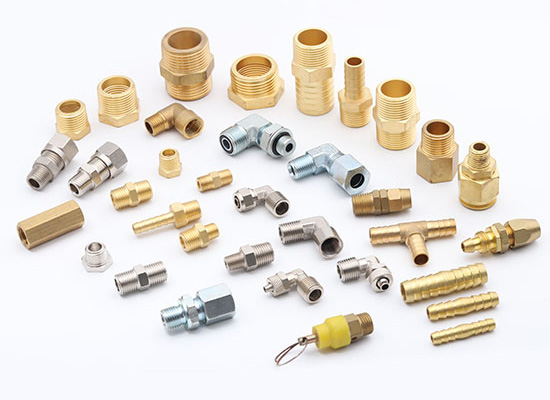
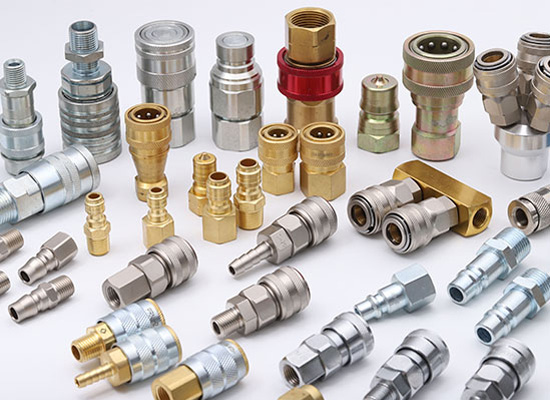
When you need to connect to valves, cylinders, FRLs – that's threaded.
● Thread types: Rc (tapered), G (BSPP parallel), NPT, metric
● Materials: brass, nickel-plated brass
● Stud couplings, hex nipples, socket connectors
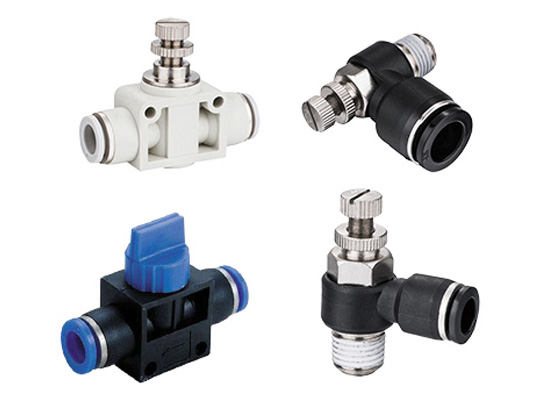
● Ball valves: Manual shut-off. Full flow when open.
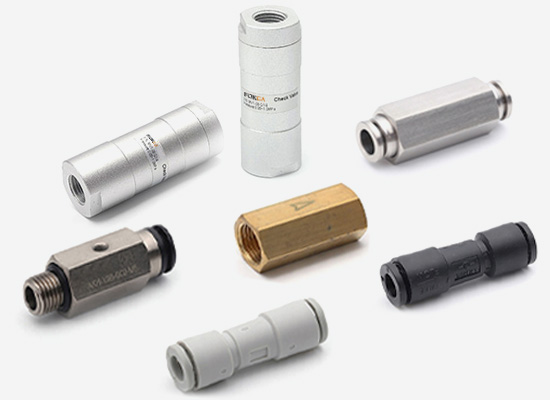
● Check valves: One-way flow only.
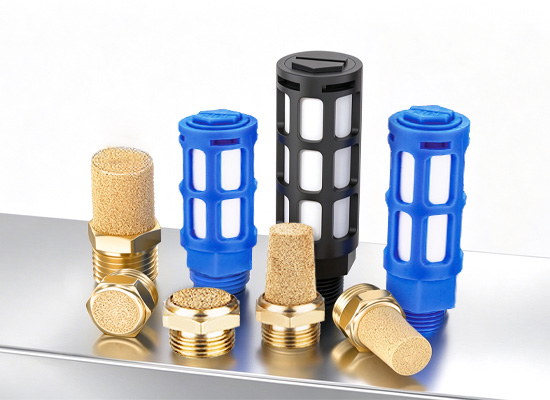
● Silencers: Reduce exhaust noise. Sintered bronze or plastic.
● Plugs: Seal unused ports.
● Tube cutters: Clean cuts, square ends. Essential for push-in fittings.
● Tube clips: Secure tubing. Prevent sagging, chafing.
● Tube OD: 4, 6, 8, 10, 12, 16mm (imperial sizes also available)
● Threads: R1/8, R1/4, R3/8, R1/2, G1/8, G1/4, G3/8, G1/2, NPT equivalents
● Pressure: up to 10 bar for PU, higher for nylon
● Temperature: depends on material – see above
| Problem | Likely Cause |
| Tube blows out | Incorrect tube OD for the fitting, or tube not fully inserted |
| Leak at fitting | Debris in O-ring, scratched tube surface, or over-tightening |
| Tube hardens/cracks | Incorrect material for temperature or chemical exposure |
| Fitting seizes | Over-tightening or thread galling |
| Tube kinks | Bend radius too tight for the tube material |
Step 1: What's your environment?
● Standard factory: PU tubing works fine
● High temperature: Nylon or PTFE
● Chemical exposure: PTFE
Step 2: What size do you need?
Match your valve and cylinder ports. 4mm for small valves, 6mm for general use, 8-12mm for high flow.
Step 3: What connections?
● Tube to valve: push-in fitting with correct thread
● Tube to tube: straight or elbow connectors
● Splitting air: tee connectors
Step 4: Add extras
● Tube cutter – get one, you'll need it
● Spare fittings – keep common sizes on hand
● Tube clips – keep runs tidy
Q1: PU, nylon, or PTFE – how do I choose?
PU for most applications – it's flexible, easy, economical. Nylon for higher pressure or temperature. PTFE when chemicals or extreme heat are present.
Q2: Push-in fittings – are they reliable?
Yes. The technology is mature. Millions in use. Just insert fully – you'll feel it seat.
Q3: Can I reuse push-in fittings?
Yes, but each reconnection slightly reduces retention force. Fine for occasional changes. For frequent changes, consider designs with replaceable grippers.
Q4: What thread do I need?
Check your component ports. G (BSPP) is common in Europe, Asia. NPT in North America. Rc is tapered BSP. We offer all.
Q5: Do I need a tube cutter?
For clean cuts, yes. Square ends seal better. Scissors or knives crush tube, cause leaks.
Complete range – tubes, push-in fittings, threaded fittings, accessories. Materials for any environment. Sizes that match real components. Competitive pricing. Stock ready to ship.
Browse the selection below. Your pneumatic system needs good connections – these are them.
Need help selecting the right pneumatic component?
Contact our engineering team.
Get a free sample

Fokca is a brand of Ningbo Fokca Automation Co., Ltd.
Looking for custom pneumatic cylinder solutions? Visit our sister brand, Fescolo.→
© 2026 Ningbo Fokca Automation Co., Ltd. All rights reserved. Sitemap