Mar 09, 2026
In industrial fluid control systems, the angle seat valve is widely used for steam, gas, and liquid applications due to its large flow capacity, fast response, and high temperature resistance. Whether it is a pneumatic angle seat valve or another type of angle seat piston valve, engineers must consider one key parameter during system design: pressure drop.
As the valve opening changes, the internal flow area and velocity distribution also change, which directly affects the pressure loss across the valve. Improper pressure drop estimation can lead to insufficient flow, increased energy consumption, and unstable system performance.
Understanding how pressure loss varies with valve opening is therefore essential when selecting the correct angle seat valves for industrial applications.
Compared with conventional globe valves, an angled seat valve features an inclined seat design that creates a smoother flow path. A typical 2 2 way angle seat valve allows fluid to pass through the body with minimal directional change when fully open.
This structure significantly reduces energy loss caused by sharp turns in the flow path. Many angle seat valve diagrams show how the fluid travels almost straight through the valve body.
However, when the valve operates at partial openings, the piston position forms a throttling area. This restriction increases flow velocity and creates measurable pressure loss.
In valve engineering, Cv and Kv values are widely used to describe the flow capacity of a valve.
The Cv value represents the number of US gallons of water per minute that flow through the valve with a pressure drop of 1 psi.
The Kv value, commonly used in Europe and Asia, represents the flow rate in cubic meters per hour (m³/h) with a 1 bar pressure drop.
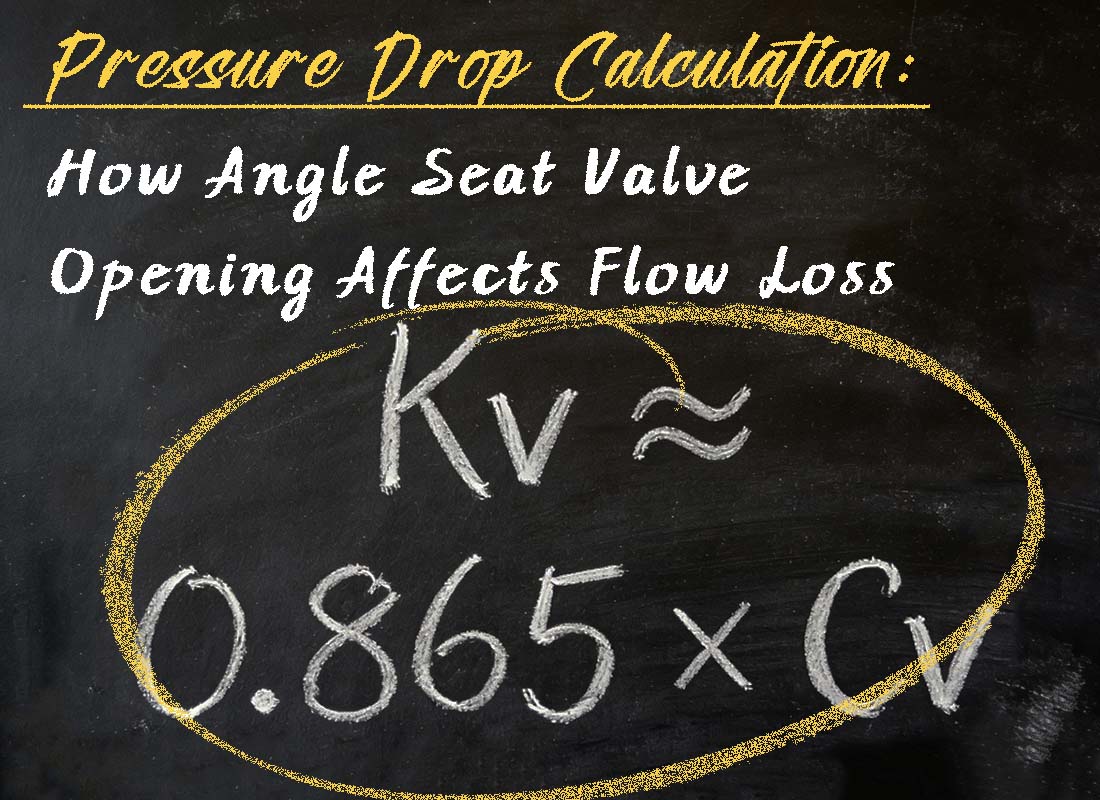
The relationship between them is approximately:
Kv ≈ 0.865 × Cv
These parameters help engineers estimate flow performance under different operating conditions and determine how the angle seat valve function affects system pressure.
The relationship between valve opening and pressure drop is nonlinear. When angle seat valves begin to open, the flow area gradually increases while the velocity distribution inside the valve changes.
At small openings, the fluid must pass through a narrow throttling section. This results in higher velocity and a larger pressure drop.
As the valve approaches full opening, the effective flow area increases significantly and the pressure loss decreases rapidly.
The following example illustrates the typical flow coefficient variation of a DN25 pneumatic angle seat valve.
| Valve Opening | Relative Cv | Pressure Drop Trend | Typical Flow Condition |
|---|---|---|---|
| 25% Open | 0.15 Cv | High pressure drop | Strong throttling |
| 50% Open | 0.40 Cv | Medium pressure drop | Partial flow control |
| 75% Open | 0.75 Cv | Low pressure drop | Stable high flow |
| 100% Open | 1.00 Cv | Minimal pressure drop | Maximum flow capacity |
This trend shows that pressure loss is highest when the valve operates at low openings and lowest when it is fully open.
Because of this characteristic, the angle seat valve working principle is better suited for on/off control or moderate regulation rather than precise throttling.
In steam pipelines or compressed air systems, pressure loss directly affects system efficiency. If the valve size is too small, the pressure drop can remain significant even when the valve is fully open.
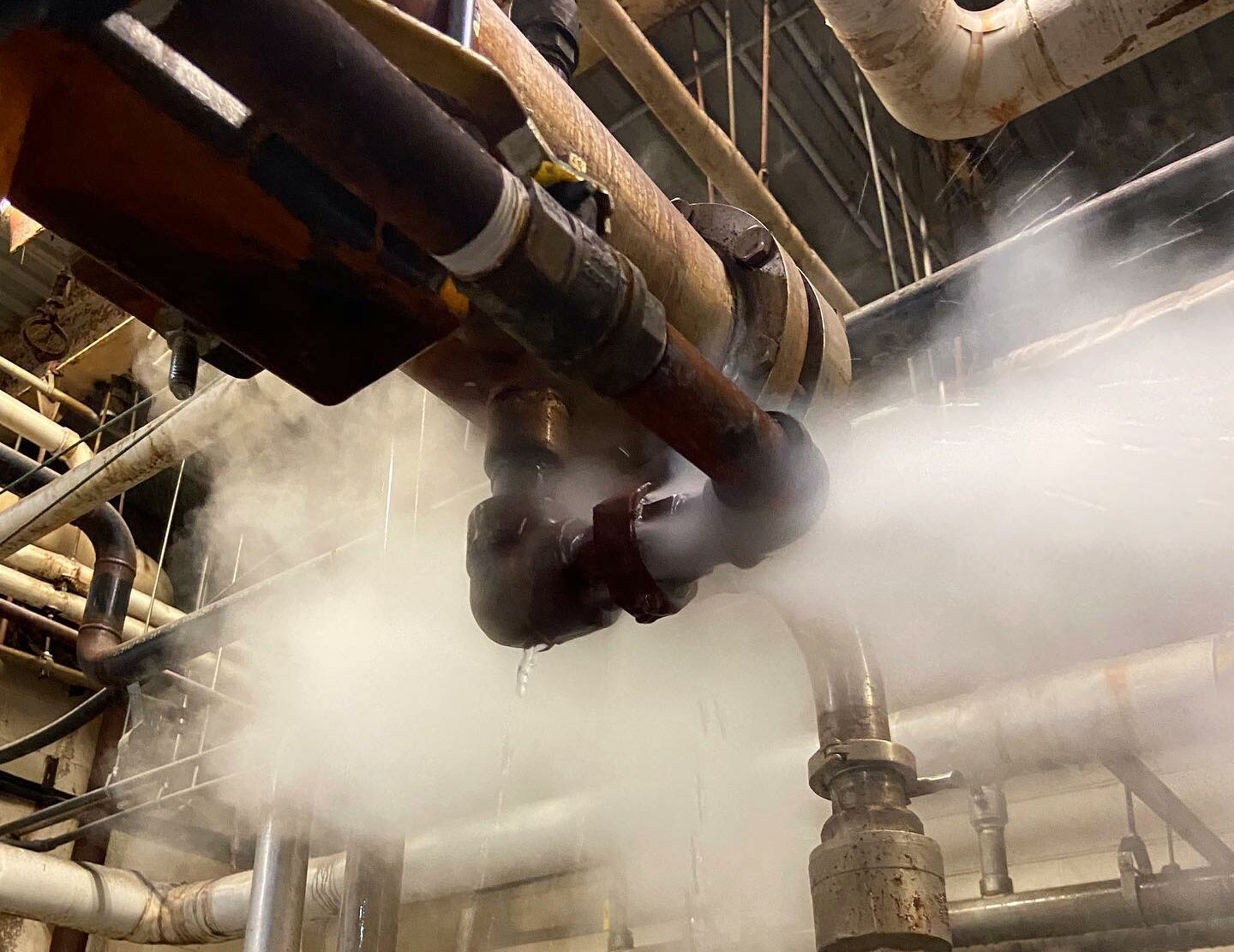
For example, when a pneumatic angle seat valve operates continuously at partial opening in a steam system, the increased fluid velocity may lead to:
◆ Higher noise levels
◆ Faster seat wear
◆ Increased energy consumption
For this reason, engineers typically size valves so that normal operation occurs at 60–80% opening. Within this range, the valve maintains relatively low pressure loss while still providing some control capability.
When selecting an angle seat valve for automation systems, engineers often consider both flow capacity and pressure loss.
Typical recommendations include:
◆ Calculate required Cv or Kv values based on system flow
◆ Avoid continuous operation below 20% valve opening
◆ Select slightly larger valves for steam applications
◆ Ensure the correct angle seat valve flow direction during installation
Proper pressure drop estimation and valve sizing can significantly improve the performance and service life of a pneumatic angle seat valve in industrial automation systems.
(FK9025)
You May Interest In
Nov 13, 2025 Blog
What are pneumatic angle seat valves used for?
Nov 13, 2025 Blog
How to check valve seat angle?
Apr 18, 2025 Blog
What is an Angle Seat Valve?
Mar 06, 2026 Blog
IP Protection Rating of Solenoid Valve Coils



Get a free sample

Fokca is a brand of Ningbo Fokca Automation Co., Ltd.
Looking for custom pneumatic cylinder solutions? Visit our sister brand, Fescolo.→
© 2026 Ningbo Fokca Automation Co., Ltd. All rights reserved. Sitemap