Feb 27, 2026
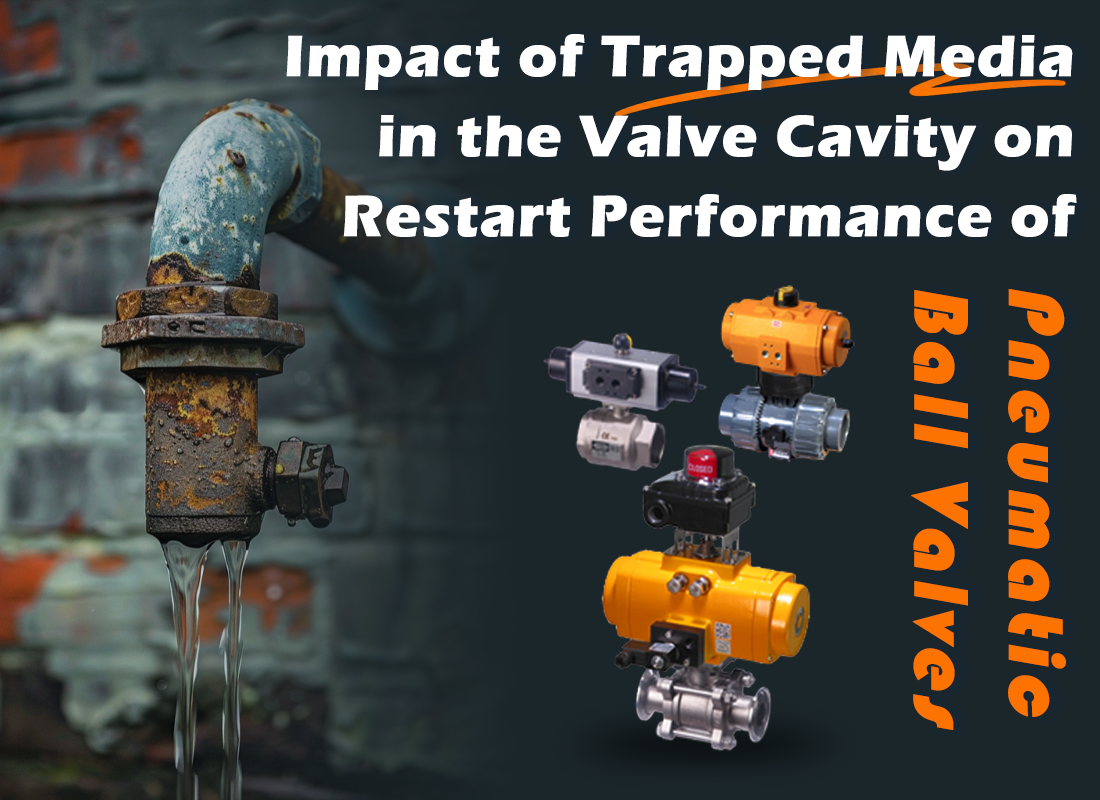
In industrial automation, engineers often focus on sealing class and actuator sizing, yet the effect of trapped media inside a pneumatic ball valve cavity is frequently underestimated. After a valve is closed, a small volume of fluid may remain sealed inside the body cavity. Under certain operating conditions, this residual media can influence restart torque and long-term reliability.
Understanding this behavior is essential for distributors, equipment engineers, and procurement teams working with pneumatic ball valves in demanding environments.

A quarter turn pneumatic ball valve isolates upstream and downstream flow when closed. However, the internal body cavity between the ball and valve wall is not fully evacuated. In a pneumatic 2 way ball valve, this cavity may retain a small quantity of fluid once the system stops.
The situation becomes more critical in:
◆ pneumatic ball valve for steam applications where condensation occurs
◆ pneumatic ball valve for chemical process lines with viscous media
◆ pneumatic ball valve for oil & gas systems handling heavy hydrocarbons
◆ Low-temperature environments using a low temperature pneumatic ball valve
In such cases, retained media may solidify, crystallize, or leave deposits.
When restarting the system, the pneumatic ball valve actuator must overcome not only seat friction but also resistance from trapped media. If deposits have formed, breakaway torque increases beyond the standard pneumatic ball valve torque requirement.
In a double acting pneumatic ball valve, higher air pressure may temporarily compensate, but repeated overload can shorten actuator life. A spring return pneumatic ball valve may experience slower response during initial rotation.
| Operating Condition | Trapped Media Behavior | Impact on Restart |
|---|---|---|
| High temperature steam | Condensation residue | Increased breakaway torque |
| Viscous chemical fluid | Sticky film formation | Slower rotation |
| Oil & gas heavy media | Deposit accumulation | Long-term torque rise |
| Low temperature gas | Possible crystallization | Irregular movement |
Over time, excessive torque demand may affect the overall pneumatic ball valve control system performance.
In high-cycle pneumatic ball valve automation systems, repeated exposure to trapped media can accelerate wear on sealing surfaces. A pneumatic stainless steel ball valve, including stainless steel pneumatic ball valve 316, offers corrosion resistance, but mechanical resistance from deposits remains a concern.
In compact installations using a compact pneumatic ball valve, cavity space is limited, making media accumulation relatively concentrated. This may gradually influence the pneumatic ball valve flow control characteristics, especially in precision-controlled systems.
To mitigate trapped media effects, some air operated ball valve designs incorporate pressure relief or drain holes in the ball. These allow cavity pressure equalization and reduce retained volume.
Advanced structures in sanitary pneumatic ball valve models minimize dead space to improve self-cleaning behavior. In critical systems, referencing a proper pneumatic ball valve selection guide and checking compatibility with the pneumatic ball valve sizing chart ensures actuator torque margin is sufficient for restart conditions.
Compared with a pneumatic ball valve vs electric ball valve, pneumatic systems often provide higher instantaneous torque, which can better handle temporary resistance. However, structural optimization remains the most reliable long-term solution.
For automation engineers and distributors, evaluating cavity retention behavior during specification is not an optional refinement—it is a performance safeguard that directly affects operational stability and maintenance frequency.
(FK9025)
You May Interest In
Dec 12, 2025 Blog
What Is a Globe Control Valve?
Dec 11, 2025 Blog
Two ways for a globe valve to be bidirectional
Dec 10, 2025 Blog
How Does a Manual Globe Control Valve Work?
Get a free sample

Fokca is a brand of Ningbo Fokca Automation Co., Ltd.
Looking for custom pneumatic cylinder solutions? Visit our sister brand, Fescolo.→
© 2026 Ningbo Fokca Automation Co., Ltd. All rights reserved. Sitemap