Introduction: Understanding Globe Valves
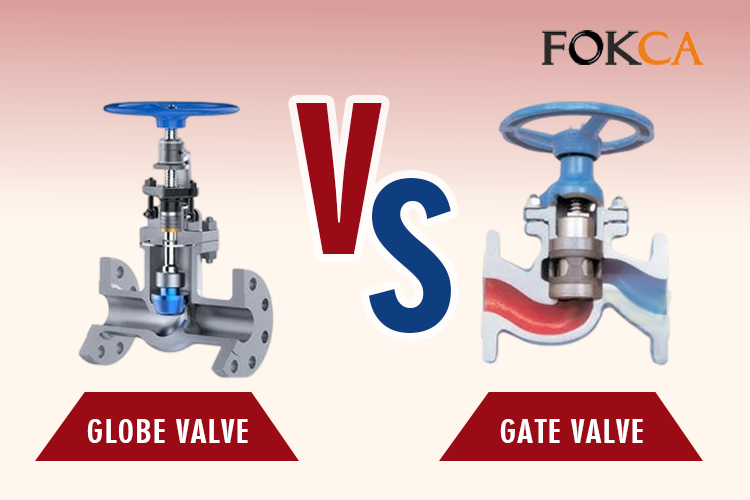
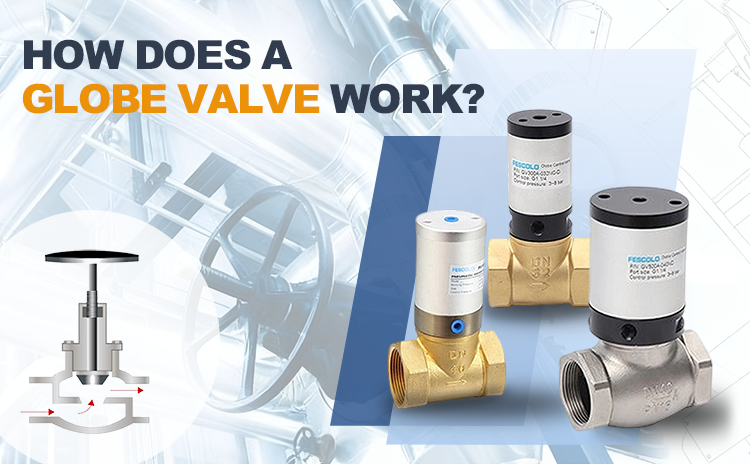
In industrial fluid control systems, globe valves play a vital role thanks to their precise throttling capability, reliable shut-off performance, and suitability for a wide range of media. Their linear-motion plug and robust sealing design make them one of the most widely used control valves for steam, gas, and liquid pipelines.
Traditional globe valves are typically designed for unidirectional flow, with the valve body and seat structure optimized to withstand pressure from only one direction. However, under certain operating conditions, a globe valve can also be designed or configured to allow bidirectional flow. Achieving this capability depends on factors such as seat design, sealing type, pressure rating, and flow characteristics—making it a result of both structural design and application conditions.
When a globe valve is capable of bidirectional flow, it can significantly improve installation flexibility, reduce flow direction limitations, simplify piping design, enhance system integration, and increase operational reliability in specific applications. In this article, I will focus on the two ways a globe valve can be made bidirectional.
What Is A Bidirectional Globe Valve?
A bidirectional globe valve is a type of globe valve designed to withstand fluid pressure from both directions and maintain reliable sealing and stable operation regardless of the flow direction.
Conventional globe valves are typically unidirectional, with the internal body geometry, seat angle, and sealing surfaces optimized for a fixed flow direction. When pressure is applied in the opposite direction, it may result in poor sealing performance, increased leakage, or unbalanced forces acting on the disc.
A bidirectional globe valve utilizes a specially engineered internal structure that allows the medium to enter from either side of the valve without compromising sealing integrity, operating stability, or service life. It is commonly used in applications where flow direction may change, installation space is limited, or piping orientation needs to be simplified.
The Working Principle of Bidirectional Globe Valves
The working principle of a bidirectional globe valve is basically the same as that of a conventional globe valve. Both operate by moving the valve stem to drive the disc (plug) up and down, thereby controlling the opening, shutting off, and regulating of the fluid. The key difference is that, regardless of the flow direction, the disc can form a reliable seal with the seat while maintaining stable forces.
The bidirectional flow capability of the globe valve mainly relies on the following design features:
Comparison Item | Unidirectional Globe Valve | Bidirectional Globe Valve (Concise) |
|---|
| Seat Structure | Designed for one-way pressure | Symmetrical or reinforced seat, withstands pressure from both directions |
| Disc/Stem Structure | Sealing surface faces one direction | Symmetrical or balanced disc for reliable sealing in both flow directions |
| Flow Path Design | Strong directional flow path | More symmetrical flow path for stable flow in both directions |
| Sealing Method | Weaker sealing in reverse flow | Enhanced dual-direction sealing with metal or soft seal options |
Advantages of Bidirectional Globe Valves
High Installation Flexibility
The greatest advantage of a bidirectional globe valve is that it provides higher system flexibility. There is no need to consider flow direction, allowing installation according to available pipe space and layout.
Suitable for Variable Flow Conditions
Another advantage of a bidirectional globe valve is that it maintains reliable sealing and stable operation even when the fluid may flow in either direction.
Simplified Piping Design
Using a bidirectional globe valve eliminates the need for additional fittings to change flow direction, making the piping layout more compact and reducing engineering costs.
Improved System Integration
In complex piping networks or multi-branch systems, it allows flexible connections and reduces constraints on valve selection.
How Globe Valves Achieve Bidirectional Flow
A globe valve designed for bidirectional flow offers greater installation flexibility, enhanced system adaptability, and easier maintenance and operation. The following are two ways to achieve this.
Special Valve Disc Design
The valve disc shape is optimized to ensure a tight fit with the valve seat regardless of which end the fluid enters from.
The valve disc may employ a symmetrical shape or a double-sided sealing surface to ensure a seal even during reverse flow.
This design typically requires precision machining to avoid leakage or excessive flow resistance.
Special Valve Seat Design
The valve seat structure can be designed to withstand bidirectional pressure, with the sealing surface effective in both directions.
For example, the valve seat may feature a bidirectional conical surface or a raised face sealing ring, ensuring a seal regardless of which side the valve disc enters from.
(9016)