Dec 08, 2025
In industrial automation, few components deliver stable flow control as consistently as a globe valve.
Whether the system handles compressed air, steam, water, or chemical media, this valve type remains a preferred choice among distributors, equipment engineers,
and procurement teams who need predictable regulation rather than brute flow capacity.
Its internal structure determines how it performs, why it excels in certain applications, and how a pneumatic valve actuator transforms it into a fully automated control device suitable for modern factory lines.
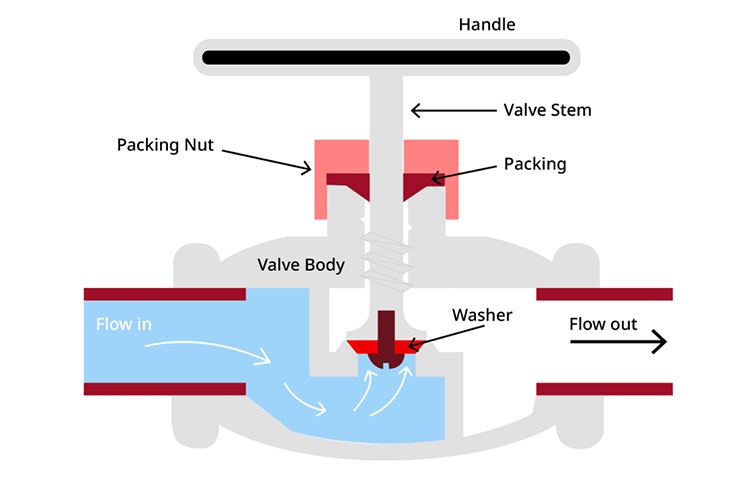
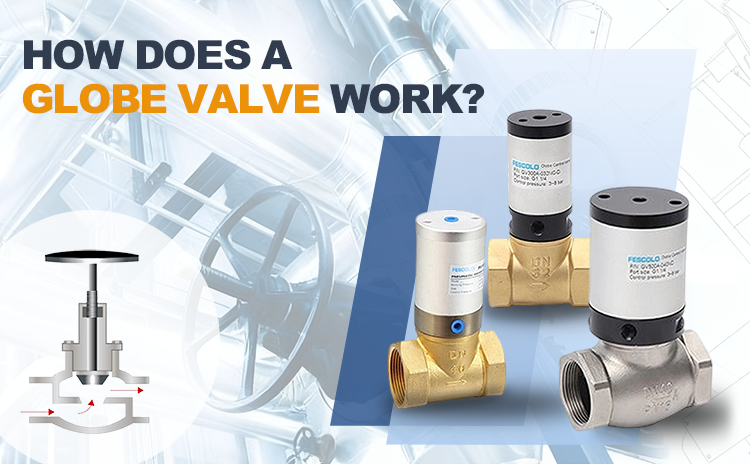
A globe valve is defined by its distinctive S-shaped flow path. Fluid enters the body, changes direction through the seat area, and exits from the opposite side. While this geometry creates resistance,
it also produces highly stable pressure distribution around the valve plug. This stability is the foundation for precise throttling.
The main components—valve body, bonnet, stem, plug, seat, packing, and optionally a pneumatic actuator—work together in a linear vertical motion.
When the stem rises, the plug lifts off the seat, opening the flow channel. When the stem moves downward, the plug presses against the seat, achieving tight shutoff with very low leakage.
In a pneumatic globe valve, compressed air acts on a diaphragm or piston to drive the stem. The design allows fast response, repeatable positioning, and long-term reliability, even in applications with high temperature or corrosive vapors.
Engineers often appreciate how a simple up-and-down stroke can deliver such controllable modulation across the full travel range.
Plants that operate around the clock—such as food processing, pharmaceutical manufacturing, and packaging equipment—prefer the globe valve for several structural advantages.
1. High Accuracy
The valve’s linear flow characteristic means each millimeter of movement corresponds to a measurable change in flow rate. This behavior is vital when maintaining temperature, humidity, or pressure within tight tolerances.
2. Excellent Shutoff Capability
The plug-to-seat contact area produces a reliable seal even under significant differential pressure. Leakage rates are noticeably lower than those of butterfly or ball valves.
3. Versatile Actuator Pairing
Because the stem moves in a straight line, it easily integrates with pneumatic, electric, or manual actuators. With a pneumatic actuator, the valve becomes a robust pneumatic control valve suited to fully automated lines
4. Material Flexibility
Manufacturers can build the valve using stainless steel, cast steel, bronze, or corrosion-resistant alloys. This makes it suitable for water, chemicals, oil, steam, and compressed air.
In several OEM projects, customers have reported improved thermal stability after switching from quarter-turn valves to pneumatic globe valves—pressure fluctuations decreased, reducing quality variations in heat-sensitive processes.
Industry reports also note that properly selected trims can improve controllability by 20–30% compared with general-purpose valves.
Despite its strengths, the globe valve has some limitations engineers must consider before selection. Because of the S-shaped flow path, the valve creates higher pressure drop than straight-through valve types.
For pipelines requiring maximum flow capacity, such as cooling water distribution, other valve configurations are generally preferred.
The second limitation lies in size efficiency. Globe valves are excellent in small and medium pipe diameters, but in very large pipelines the cost and weight increase significantly.
Finally, while a pneumatic valve actuator offers speed and reliability, fluctuations in supply pressure can influence response time. This issue is usually solved by adding a positioner or selecting a larger actuator.
Understanding these limitations helps procurement teams and technicians avoid selecting a valve that performs well in theory but creates unnecessary energy losses in practice.
One of the reasons the globe valve remains popular among distributors and plant operators is its ability to handle both on/off isolation and precise flow regulation.
Below are common industrial uses:
In sterilization and heating lines, globe valves modulate steam to maintain constant temperature.
In mechanical automation, they stabilize compressed air delivery so each station receives consistent pressure.
In chemical dosing systems, their fine control prevents overshoot and pressure shocks that could damage sensitive equipment.
In water treatment, they regulate flow between filtration and circulation stages.
A pneumatic globe valve is especially valuable in applications requiring remote automation. Controlled by PLC signals, it provides repeatable opening adjustments, reducing operator workload and improving system consistency.
For factory managers, this translates into fewer shutdowns, smoother production, and lower maintenance cost.
Different construction styles allow the globe valve to adapt to diverse industrial conditions. Choosing the best type requires understanding how each design affects performance.
Common Types of Globe Valves
Valve Type | Key Features | Typical Use |
Straight-Pattern | Simple structure, easy maintenance | General industrial fluids, compressed air |
Angle-Pattern | 90° flow change, reduces need for elbows | Condensate drainage, corrosive or erosive media |
Y-Pattern | Lower pressure drop, suitable for high pressure | Steam lines, gas control, high-pressure water systems |
Valve trims (plug designs) also influence performance:
Linear trim for proportional control
Equal percentage trim for finer adjustment at low openings
Cage-guided trim for noise reduction and high-pressure environments
When combined with a pneumatic actuator, the valve becomes a stable pneumatic control element for temperature loops, mixing processes, or pressure-reducing stations.
Engineers should also evaluate media type, temperature, pressure, connection method, and maintenance requirements before finalizing a selection.
FOKCA Automation supplies complete pneumatic solutions to global OEMs, distributors, and industrial facilities. Our expertise extends beyond conventional valve supply—our team provides engineering-level support and OEM/ODM customization, ensuring every project receives a fit-for-purpose solution.
Key strengths include:
Custom globe valve assemblies with stainless steel or aluminum options, tailored for steam, compressed air, or chemical processing.
Comprehensive component lineup such as pneumatic cylinders, solenoid valves, angle seat valves, air treatment units, tubing, and fittings.
Strict testing, including leak detection, pressure cycling, and durability checks for long service life.
Flexible OEM production, ideal for distributors who need private-label pneumatic valve ranges.
If you would like to learn more about pneumatic valve pneumatic push-in fittings, pneumatic tubing, or other air-line components, please feel free to contact us at any time.
FOKCA is committed to providing you with the most professional support and service.
Other websites related to manufacturing:
(FK9026)
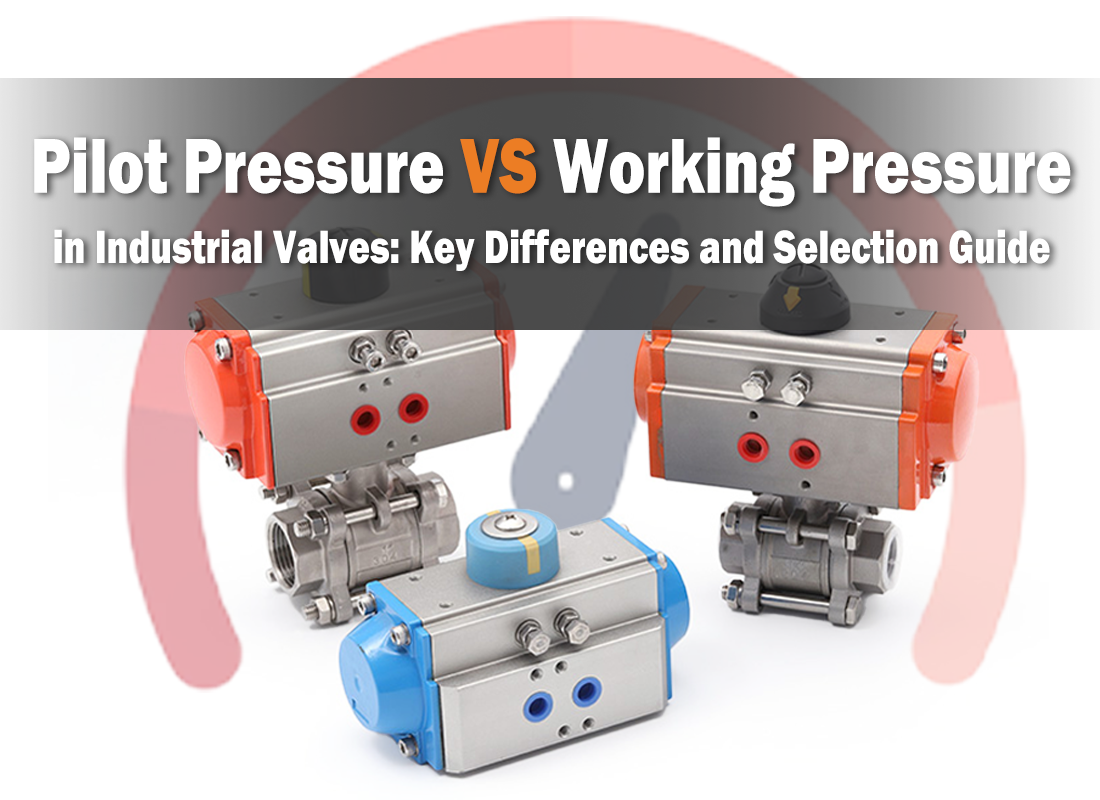 Pilot Pressure vs Working Pressure in Industrial Valves: Key Differences and Selection Guide
 Water Hammer Explained: Why Angle Seat Valves Are the Optimal Solution
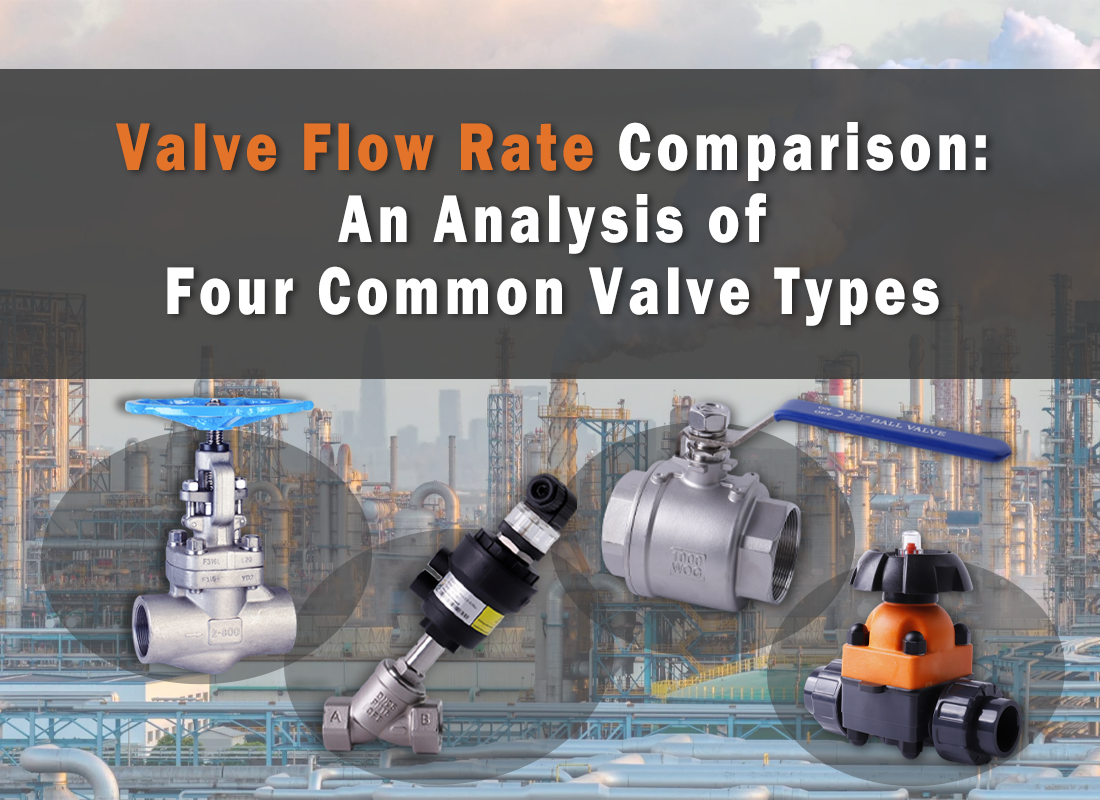 Valve Flow Rate Comparison: An Analysis of Four Common Valve Types
 The Temperature Limit of Valves: How Seal Material Affects Valve Body Performance
 Valve Flow Coefficients CV & KV: Differences Analysis and Selection Guide
You May Interest In
Dec 08, 2025 Blog
How Does a Globe Valve Work
Dec 04, 2025 Blog
How to Identify Gate Valve and Globe Valve
Nov 28, 2025 Blog
Fokca Automaion
Dec 02, 2025 Blog
What are the parts of a pneumatic cylinder?
Dec 06, 2025 Blog
How to check pneumatic solenoid valve?
Get a free sample

Fokca is a brand of Ningbo Fokca Automation Co., Ltd.
Looking for custom pneumatic cylinder solutions? Visit our sister brand, Fescolo.→
© 2026 Ningbo Fokca Automation Co., Ltd. All rights reserved. Sitemap