Mar 09, 2026
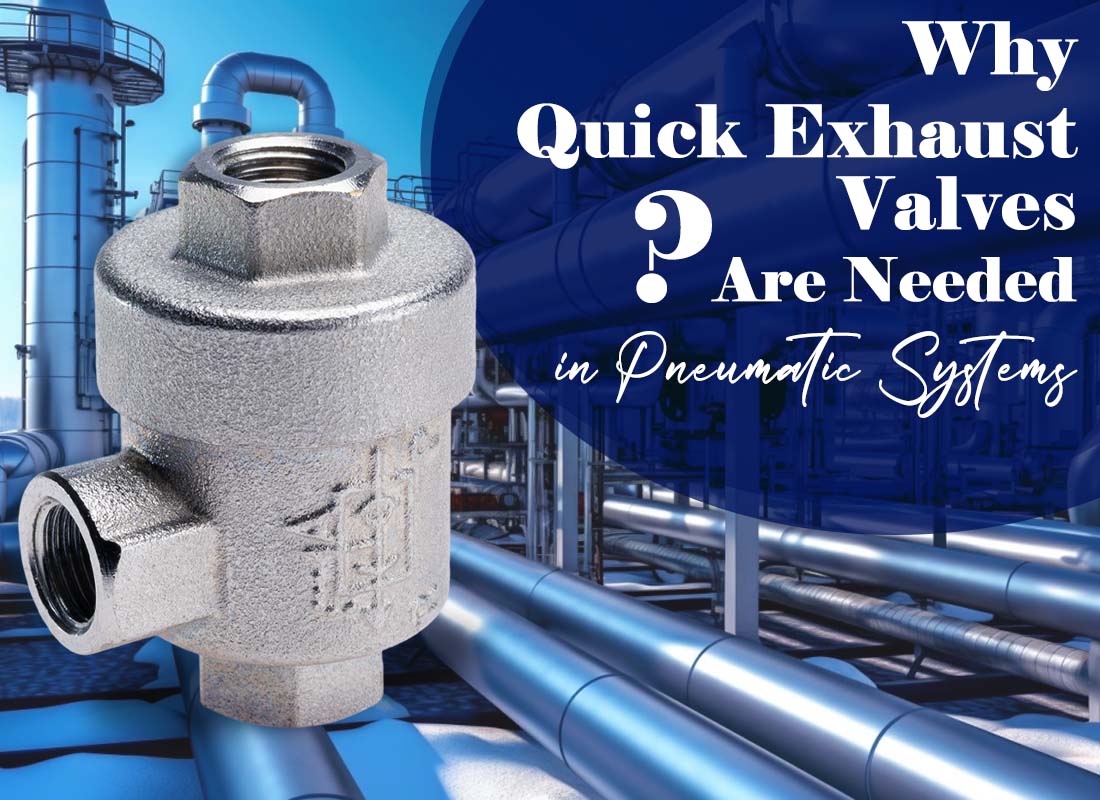
In pneumatic automation systems, the speed of a cylinder is influenced not only by supply pressure but also by how quickly the compressed air can be released. After a cylinder completes its motion, the compressed air inside must be discharged efficiently. If the exhaust path is too long or restricted, the cylinder return speed will decrease.
To solve this issue, engineers often use a quick exhaust valve, also known as a pneumatic quick exhaust valve.
Unlike conventional exhaust methods, a quick exhaust valve can be installed directly near the cylinder port, allowing compressed air to exit the system immediately without traveling back through the directional control valve. This design significantly improves cylinder speed and system responsiveness.
In a typical pneumatic circuit, when the directional valve switches position, the air inside the cylinder follows a longer exhaust route:
Cylinder → pipeline → control valve → valve exhaust port → atmosphere
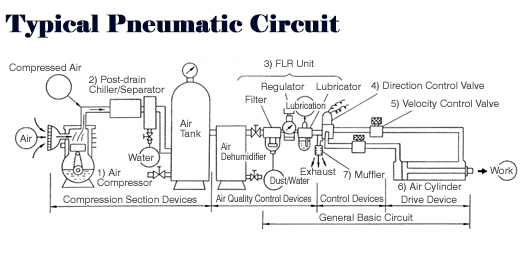
This path introduces additional flow resistance. The longer the pipeline or the more components involved, the greater the pressure loss during exhaust.
In high-speed automation equipment, such delays can reduce machine productivity. For this reason, many modern systems incorporate quick exhaust valves to improve air discharge efficiency.
A pneumatic exhaust valve generally consists of a valve body, piston or diaphragm, and sealing components.
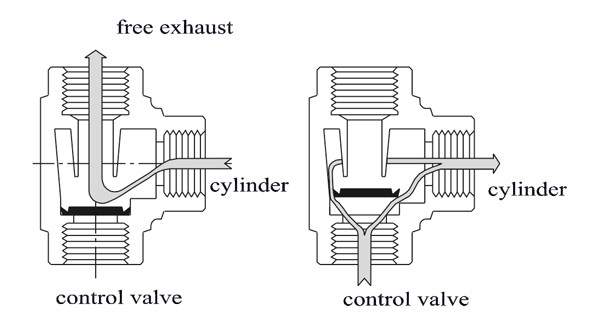
When compressed air flows into the cylinder, the valve closes the exhaust outlet and allows air to enter the actuator. When the control valve switches and the pressure reverses, the internal mechanism opens the exhaust port.
This allows air to be released directly from the valve body to the atmosphere rather than traveling through the control valve. Because the exhaust path is significantly shorter, the pressure drop in the system is reduced.
As a result, the quick exhaust valve enables faster air release and improved actuator performance.
Cylinder speed depends largely on airflow capacity and exhaust efficiency. When the exhaust path is restricted, residual pressure remains inside the cylinder chamber, slowing down piston movement.
Installing a pneumatic quick exhaust valve reduces this back pressure, allowing the air to escape rapidly and increasing the speed of the cylinder.
The following example illustrates the typical performance difference.
| System Configuration | Exhaust Path | Cylinder Response Speed | Typical Application |
|---|---|---|---|
| Standard pneumatic valve exhaust | Cylinder → valve → atmosphere | Medium | General automation |
| With quick exhaust valve | Cylinder → quick exhaust valve → atmosphere | High | High-speed automation |
| Long piping system | Cylinder → long pipe → valve → atmosphere | Low | Remote valve installation |
This comparison shows that the quick exhaust valve provides the shortest exhaust path and the highest actuator response speed.
Many automated machines require cylinders to operate at very high cycle speeds. In such cases, exhaust efficiency becomes critical.
Typical applications for pneumatic quick exhaust valves include:
◆ Packaging machinery
◆ Printing and labeling equipment
◆ Assembly line automation
◆ High-speed pneumatic actuators
These systems benefit from improved response time and reduced pressure loss.
When integrating a quick exhaust valve into a pneumatic system, proper installation is important.
Engineers generally follow several practical guidelines:
◆ Install the quick exhaust valve directly on the cylinder port
◆ Avoid restricting the exhaust port with overly small silencers
◆ Select appropriate valve size for high flow capacity
◆ Inspect seals and internal components periodically
With proper design and installation, quick exhaust valves can significantly enhance the speed and efficiency of pneumatic automation systems while maintaining reliable operation.
(FK9025)
You May Interest In
Mar 06, 2026 Blog
IP Protection Rating of Solenoid Valve Coils
Get a free sample

Fokca is a brand of Ningbo Fokca Automation Co., Ltd.
Looking for custom pneumatic cylinder solutions? Visit our sister brand, Fescolo.→
© 2026 Ningbo Fokca Automation Co., Ltd. All rights reserved. Sitemap