Mar 10, 2026
In pneumatic motion control, airflow direction determines how smoothly a cylinder moves. Engineers often encounter two common configurations: Control Valve In (intake throttling) and Control Valve Out (exhaust throttling). Both are types of throttle valve / flow control valve, but they regulate airflow in opposite directions.
For example, in compact pneumatic fittings like the SC series throttle valve, the model SC8-01 works as a Control Valve Out, while SC8-01-B is designed as a Control Valve In. Although the structure looks similar, their airflow behavior during cylinder extension and retraction is completely different. Understanding this difference helps distributors, engineers, and buyers select the right valve for stable motion control.
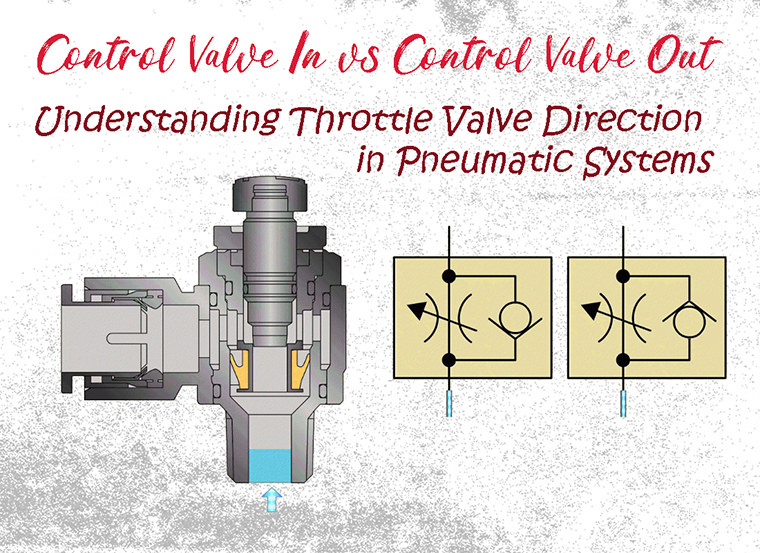
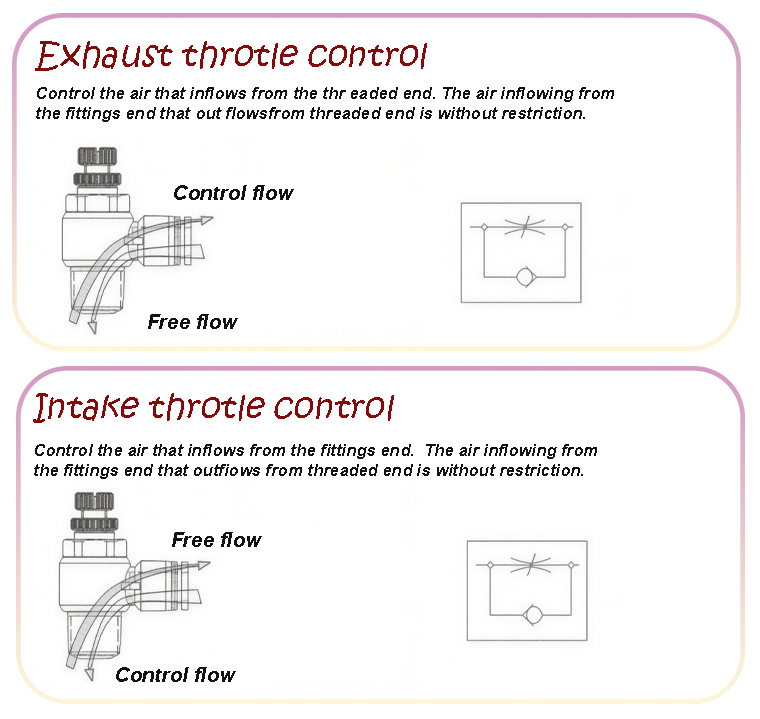
A Control Valve Out regulates airflow on the exhaust side of the cylinder. When compressed air enters the cylinder, the intake flow is unrestricted, but the exhaust air leaving the cylinder is throttled.
This configuration is widely used because exhaust throttling stabilizes piston speed under load. By restricting the outgoing air, the piston moves smoothly even when the load varies.
In the SC throttle valve series, the SC8-01 model is a typical Control Valve Out design, commonly used in automation equipment where precise motion control is required.
Typical characteristics:
◆Smooth cylinder speed control
◆Better stability under varying loads
◆Widely used in packaging machines, automation lines, and assembly equipment
Many engineers prefer exhaust throttling because compressed air systems are easier to stabilize by controlling the exhaust flow rather than the intake flow.
A Control Valve In works in the opposite way. It restricts the air entering the cylinder, while the exhaust air leaves freely.
In this setup, the flow control valve only affects the intake side, which means the cylinder receives a limited airflow during motion.
Within the SC series, the SC8-01-B model functions as a Control Valve In, allowing intake airflow adjustment while keeping the exhaust path unrestricted.
Typical use cases include:
◆Lightweight cylinders
◆Situations requiring slower air filling
◆Certain low-load automation mechanisms
However, engineers must be cautious because intake throttling can lead to unstable piston movement when loads change.
Understanding the operational difference is easier when comparing the airflow behavior directly.
| Feature | Control Valve In (Intake Valve) | Control Valve Out (Exhaust Valve) |
|---|---|---|
| Flow control location | Air entering cylinder | Air leaving cylinder |
| Intake airflow | Restricted | Free |
| Exhaust airflow | Free | Restricted |
| Motion stability | Moderate | High stability |
| Typical use | Light load systems | Industrial automation equipment |
In most industrial pneumatic systems, engineers prefer Control Valve Out (exhaust throttling) because it delivers more predictable cylinder movement.
In practical purchasing situations, distributors and equipment builders often rely on model numbers to identify airflow direction. The SC flow control valve series follows a simple rule:
| Model | Flow Direction Type | Function |
|---|---|---|
| SC8-01 | Control Valve Out | Exhaust airflow throttling |
| SC8-01-B | Control Valve In | Intake airflow throttling |
Note: some product tables on websites may not yet reflect this airflow distinction, so checking the valve structure or technical documentation is recommended.
For system compatibility, these valves are commonly installed alongside components such as pneumatic cylinders, solenoid valves, and quick push-in fittings.
Selecting the correct throttle valve depends on the motion behavior required in the machine.
When equipment requires stable cylinder speed under load, engineers generally choose Exhaust throtle control. This configuration prevents sudden piston acceleration and improves repeatability.
On the other hand, Control Valve In intake throttling may be used when airflow must be limited before entering the cylinder or when working with lightweight mechanisms.
In most factory automation lines, the exhaust valve configuration remains the industry-preferred solution for reliable pneumatic control.
For engineers configuring pneumatic systems, it is also important to match the valve with the correct cylinder size, airflow requirement, and connection fittings. Proper component matching improves overall system efficiency and reduces maintenance frequency.
If you are selecting valves for automation equipment, you can also review compatible components such as pneumatic cylinders, solenoid valves, and pneumatic fittings to ensure full system compatibility.
(FK9026)
You May Interest In

Dec 02, 2025 Blog
What are the parts of a pneumatic cylinder?
Apr 18, 2025 Blog
What is an Angle Seat Valve?
Get a free sample

Fokca is a brand of Ningbo Fokca Automation Co., Ltd.
Looking for custom pneumatic cylinder solutions? Visit our sister brand, Fescolo.→
© 2026 Ningbo Fokca Automation Co., Ltd. All rights reserved. Sitemap