Aug 21, 2026
Air hose fittings are essential connection components in pneumatic systems. They connect air hoses and pneumatic tubing to cylinders, valves, filters, regulators, compressors, tools, and other equipment, creating a secure and reliable path for compressed air.
A properly selected fitting does more than simply connect two components. It helps maintain a tight seal, prevent air leakage, stabilize system pressure, and make installation or maintenance easier. Depending on the application, air hose fittings are available with different connection methods, thread standards, materials, and sealing designs.
In a compressed air system, air travels from the compressor through filtration and pressure-regulating equipment before reaching pneumatic actuators and other end devices. Air hose fittings form the connection points throughout this network.
Their main functions include:
•Connecting pneumatic tubing or hoses to pneumatic components
•Joining two hoses or tubes together
•Changing the direction of an air line
•Extending or branching pneumatic pipelines
•Providing quick connection and disconnection
•Maintaining a sealed connection under operating pressure
•Supporting reliable compressed-air distribution throughout the system
Because fittings are installed at many connection points, their quality can directly influence the overall performance and reliability of a pneumatic circuit.
Different pneumatic fittings are designed for different installation requirements, but most share several important characteristics.
Push-to-connect and quick-connect designs allow tubing or hoses to be installed and removed with minimal tools. This is particularly useful when equipment requires frequent maintenance or component replacement.
A good fitting should maintain a secure seal during continuous operation. O-rings, sealing cones, gaskets, or other sealing structures help minimize compressed-air leakage at the connection point.
Air hose fittings are generally designed for compressed-air systems operating at moderate pressures. The fitting, tubing, thread, and sealing method should always be selected according to the actual working pressure and temperature of the system.
Common thread standards include BSP, NPT, and metric threads. Standardized connections make it easier to match fittings with cylinders, valves, regulators, filters, and other pneumatic components.
Pneumatic fittings are commonly manufactured from materials such as nickel-plated brass, stainless steel, aluminum, and engineering plastics. Material selection depends on factors such as pressure, temperature, corrosion exposure, weight, and operating environment.
A pneumatic system can contain dozens or even hundreds of connection points. Even a small leak at one fitting can gradually reduce the efficiency of the entire air circuit.
High-quality air hose fittings can help maintain:
•Stable working pressure
•Consistent cylinder movement
•Reliable pneumatic tool performance
•Lower compressed-air consumption
•Better overall system efficiency
•Longer service life of hoses and components
•Easier installation and maintenance
For example, if a fitting does not properly grip the tubing or its sealing element deteriorates, compressed air may escape from the connection. In a cylinder circuit, this can result in slower or inconsistent actuator movement. In an air-tool application, pressure loss can reduce tool performance.
For this reason, fitting selection should consider not only tube size but also connection type, thread specification, material, operating pressure, temperature, and application environment.
Air hose fittings can be classified according to how they connect to tubing, hoses, or equipment. The most common types include push-to-connect fittings, barbed fittings, threaded fittings, quick couplers, and one-touch fittings.
Push-to-connect fittings, also called push-in or one-touch pneumatic fittings, allow pneumatic tubing to be connected by simply pushing the tube into the fitting.
An internal gripping mechanism holds the tube while a sealing element creates an airtight connection. To remove the tube, the release ring is pressed while pulling the tubing outward.
These fittings are widely used with PU, PA, PE, PTFE, and other pneumatic tubing materials.
Common configurations include:
•Straight fittings
•Male and female elbow fittings
•Tee fittings
•Y fittings
•Bulkhead fittings
•Reducer fittings
•Multi-port fittings
Their tool-free installation makes them especially suitable for automated equipment, control cabinets, pneumatic manifolds, and compact machinery.
Barbed fittings use a series of ridges or barbs on the connection end. The flexible hose is pushed over the barbed section, where the barbs grip the inner wall of the hose.
A hose clamp is often used to provide additional retention, particularly in applications subject to vibration or higher mechanical loads.
Barbed fittings are commonly used with flexible rubber, PVC, polyurethane, and other soft hoses.
Their simple construction makes them useful for:
•Flexible air hoses
•Low-pressure pneumatic connections
•General-purpose air lines
•Equipment maintenance
•Applications where tool-free push-in tube connections are not required
Threaded fittings use male or female threads to connect hoses, tubes, valves, cylinders, filters, regulators, or other pneumatic equipment.
Common thread standards include:
•BSP
•NPT
•Metric
Threaded fittings are available in many configurations, including straight adapters, elbows, tees, reducers, and bulkhead fittings.
When selecting a threaded fitting, it is important to verify both the thread type and size. BSP and NPT threads are not interchangeable, even when their nominal sizes appear similar.
Quick couplers are designed for fast connection and disconnection of pneumatic hoses and equipment.
A typical quick coupling consists of a female coupler and a male plug. The plug is inserted into the coupler until it locks into position. Depending on the design, the connection can usually be released by operating the sleeve or release mechanism.
Quick couplers are particularly useful when air tools, hoses, or portable equipment need to be connected and disconnected frequently.
Typical applications include:
•Pneumatic tools
•Air compressors
•Maintenance equipment
•Assembly lines
•Portable pneumatic machinery
•Workshop air systems
One-touch fittings are a type of push-in fitting designed for fast connection of pneumatic tubing. They are widely used in industrial automation because tubing can be installed and removed quickly without complicated tools.
They are commonly used with PU and nylon tubing and are available in different shapes and thread configurations.
Their compact design and simple installation make them suitable for pneumatic cylinders, solenoid valves, sensors, air preparation units, and automated machinery.
Choosing an air hose fitting should start with the requirements of the complete pneumatic circuit rather than the fitting alone.
Check the outside diameter of the pneumatic tube when using push-to-connect fittings. The fitting must match the specified tube diameter to ensure proper gripping and sealing.
Confirm whether the equipment uses BSP, NPT, or metric threads. Using the wrong thread standard can result in poor sealing, thread damage, or an unreliable connection.
The fitting should have a suitable pressure and temperature rating for the actual application. Consider operating conditions as well as pressure surges and temperature changes.
Nickel-plated brass is widely used for general pneumatic applications because it provides a balance of strength, durability, and corrosion resistance. Stainless steel fittings may be preferred for corrosive, high-humidity, food-processing, or demanding industrial environments.
Engineering-plastic fittings can be useful when low weight, corrosion resistance, or cost efficiency is important.
For equipment with limited installation space, compact elbows and multi-directional fittings can help simplify tube routing. For applications requiring frequent hose replacement, quick couplers may provide greater convenience.
Air hose fittings are found throughout compressed-air and pneumatic systems.
Fittings connect the compressor outlet to air hoses, filters, regulators, distribution lines, and pneumatic equipment.
Automated machinery uses fittings to connect cylinders, valves, sensors, regulators, and pneumatic tubing. Reliable connections help maintain consistent actuator performance.
Air wrenches, drills, impact tools, spray guns, and other pneumatic tools commonly use quick couplers to allow hoses to be connected and disconnected efficiently.
Production lines and robotic systems use pneumatic fittings to distribute compressed air to actuators, grippers, control valves, and other equipment.
Fittings are used throughout pneumatic circuits to route air around moving parts, change flow direction, connect components, and simplify equipment maintenance.
Although both are used to connect fluid lines, pneumatic and hydraulic fittings are designed for different operating conditions.
Pneumatic fittings are primarily used with compressed air and are generally designed around the pressure, flow, tubing, and installation requirements of pneumatic systems. Hydraulic fittings are designed for liquid media and typically need to withstand much higher pressures.
Therefore, pneumatic and hydraulic fittings should not be selected based only on physical appearance or nominal size. The media, pressure, temperature, connection standard, and material must all be considered.
Fokca Pneumatics manufactures and supplies a broad range of fittings for pneumatic and hydraulic applications. Its pneumatic fitting range covers different connection methods, including push-to-connect connections, barbed hose connections, threaded connections, and quick-connect couplings.
Different materials and configurations are available to meet the requirements of automated machinery, compressed-air systems, pneumatic tools, and industrial equipment.
If you are unsure which air hose fitting is suitable for your application, check the tube size, thread specification, working pressure, operating temperature, and installation requirements first. For special applications or customized connection requirements, contact Fokca for product selection and technical support.
 Pilot Pressure vs Working Pressure in Industrial Valves: Key Differences and Selection Guide
 Water Hammer Explained: Why Angle Seat Valves Are the Optimal Solution
 Valve Flow Rate Comparison: An Analysis of Four Common Valve Types
 The Temperature Limit of Valves: How Seal Material Affects Valve Body Performance
 Valve Flow Coefficients CV & KV: Differences Analysis and Selection Guide
You May Interest In

Dec 02, 2025 Blog
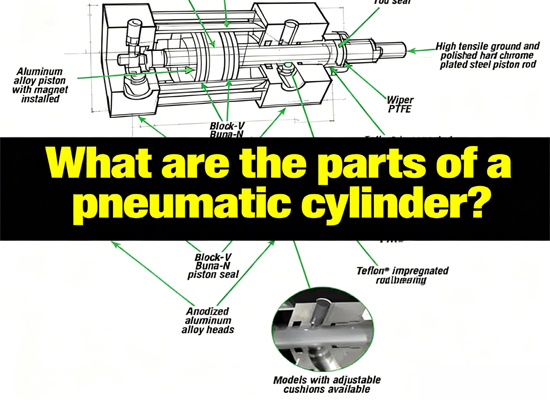
What are the parts of a pneumatic cylinder?


Apr 18, 2025 Blog
What is an Angle Seat Valve?
Get a free sample

Fokca is a brand of Ningbo Fokca Automation Co., Ltd.
Looking for custom pneumatic cylinder solutions? Visit our sister brand, Fescolo.→
© 2026 Ningbo Fokca Automation Co., Ltd. All rights reserved. Sitemap