Aug 24, 2026
When selecting industrial valves, the stainless steel valve body is a critical factor in determining corrosion resistance, mechanical durability, and service life. Grades 304, 316, and 316L are widely used in chemical processing, water treatment, food production, and industrial automation, but they are not interchangeable.
The main differences come from their alloy composition, particularly the presence of molybdenum and the carbon content. Choosing the wrong grade for a specific medium or environment can increase corrosion risk, maintenance requirements, and the possibility of leakage. Understanding these differences makes material selection more reliable and cost-effective.
All three grades are austenitic stainless steels based on chromium and nickel. Their similar appearance can make them difficult to distinguish, but their alloy composition produces important differences in corrosion resistance and fabrication performance.
| Material | Chromium (Cr) | Nickel (Ni) | Molybdenum (Mo) | Carbon (C) | Key Characteristic |
| 304 | 18–20% | 8–12% | None | ≤0.08% | General-purpose corrosion resistance |
| 316 | 16–18% | 10–14% | 2–3% | ≤0.08% | Improved chloride resistance |
| 316L | 16–18% | 10–14% | 2–3% | ≤0.03% | Low carbon and improved weldability |
304 stainless steel is the most widely used and economical option. It provides good general corrosion resistance for clean water, air, food-processing equipment, and many indoor industrial applications.
316 stainless steel contains molybdenum, which improves resistance to localized corrosion, particularly in chloride-containing environments. This makes it a stronger choice for coastal, chemical, and other moderately corrosive applications.
316L stainless steel has essentially the same major alloying elements as 316 but a much lower carbon content. The low-carbon composition reduces the risk of intergranular corrosion after welding, making it particularly suitable for welded valve bodies and fabricated components.
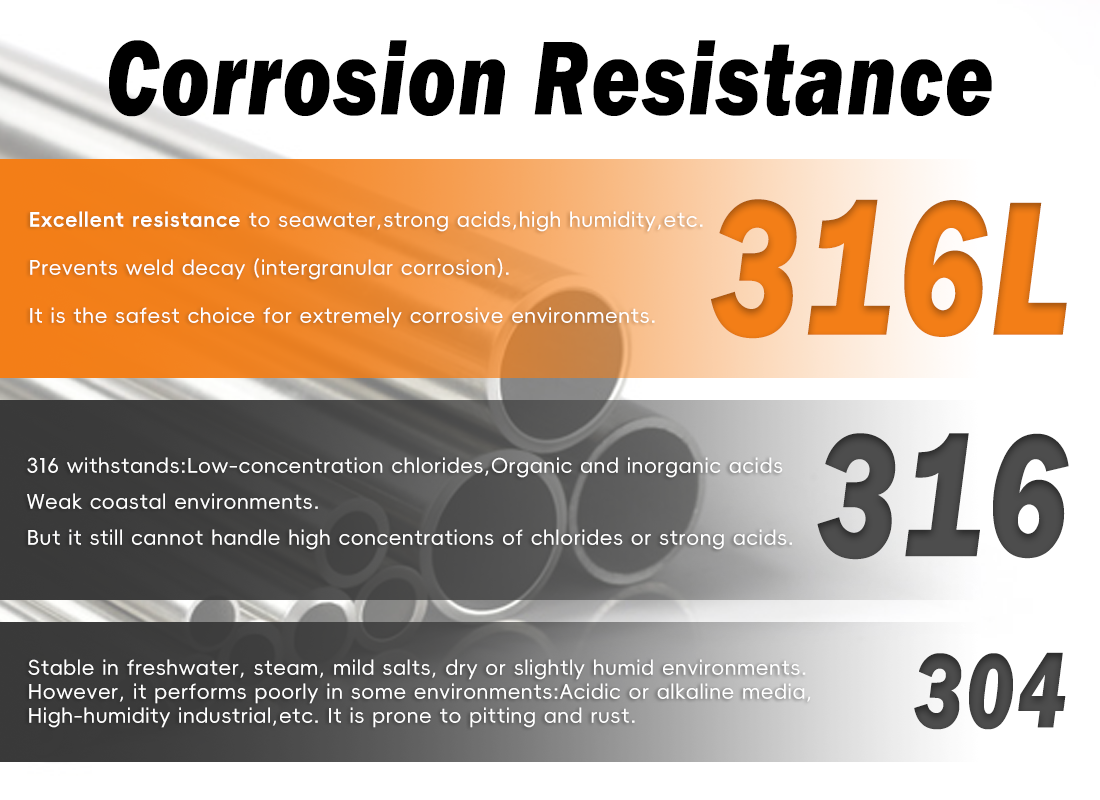
Corrosion resistance is often the first consideration when choosing a stainless steel valve body, but the actual performance depends on the fluid, chloride concentration, temperature, and exposure conditions.
304 stainless steel performs well with freshwater, clean air, steam, and many general-purpose fluids. Its resistance becomes less reliable in chloride-rich environments, especially where moisture remains on the surface for extended periods. Pitting and crevice corrosion can occur under unfavorable conditions.
316 stainless steel provides better resistance to chloride-induced localized corrosion because of its molybdenum content. It is therefore commonly selected for coastal environments, moderately saline fluids, and applications involving certain organic or inorganic chemicals.
316L stainless steel offers similar basic corrosion resistance to 316 while providing better resistance to weld-related intergranular corrosion. This makes it particularly valuable when the valve body contains welded or fabricated sections and long-term corrosion resistance is important.
In practice, the ranking 316L ≈ 316 > 304 is more useful than treating the grades as universally ranked, because the actual result depends heavily on the medium and operating conditions.
The three grades provide comparable mechanical performance for many standard industrial valve applications. Typical minimum tensile strength is around 480 MPa, while yield strength is commonly around 205 MPa, depending on the applicable material standard and product condition.
The main advantage of 316L is not simply higher strength. Its low carbon content improves weldability and reduces the risk of sensitization during welding. This is especially useful for complex valve structures, welded assemblies, and equipment exposed to demanding temperature conditions.
Actual allowable valve pressure should always be determined from the valve design, temperature rating, wall thickness, connection type, and applicable standard rather than from the stainless-steel grade alone.
Material cost generally increases from 304 to 316 and then 316L, although actual pricing varies with market conditions, product dimensions, and manufacturing requirements.
| Grade | Relative Cost | Typical Reason |
| 304 | Low | General alloy composition and broad availability |
| 316 | Medium | Additional molybdenum and higher nickel content |
| 316L | Higher | Low-carbon composition and tighter material requirements |
The lowest purchase price is not necessarily the lowest overall cost. In a corrosive environment, upgrading from 304 to 316 or 316L may reduce replacement, maintenance, and unplanned downtime over the valve's service life.
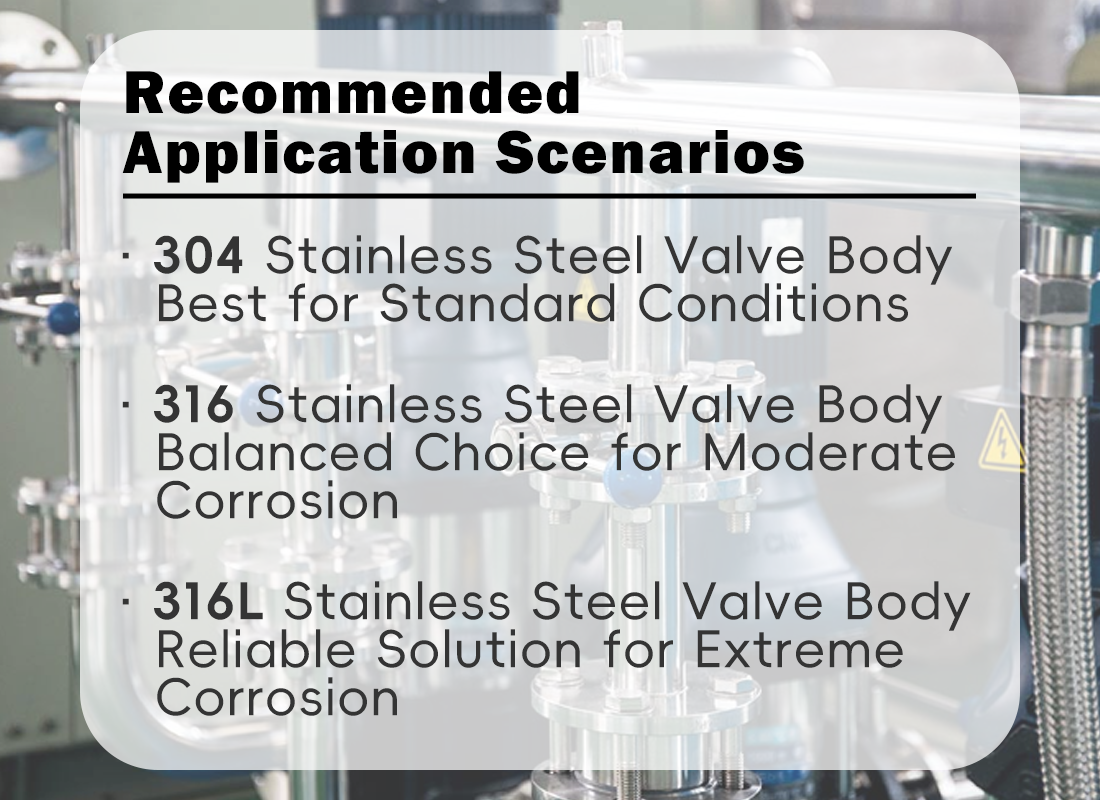
304 is a practical choice when the medium is relatively clean and the environment does not contain significant chloride or aggressive chemical exposure.
Typical applications include:
● Building water supply and HVAC systems
● Food and beverage equipment
● Industrial cooling-water systems
● Compressed-air systems
● Indoor or mildly humid environments
For applications with significant chloride exposure or aggressive chemicals, a higher-alloy grade should be considered.
316 is well suited to applications where corrosion resistance is more important than the lowest initial material cost.
Typical applications include:
● Coastal industrial equipment
● Pharmaceutical and process-water systems
● Moderate chemical processing
● Industrial equipment exposed to chlorides
● Marine-adjacent applications
Its combination of corrosion resistance and cost efficiency often makes it a practical middle-ground option.
316L is particularly useful when both corrosion resistance and welding performance are important.
Typical applications include:
● Seawater and desalination equipment
● Marine and offshore systems
● Chemical-processing equipment
● High-humidity industrial environments
● Welded or fabricated valve structures
For highly aggressive media, however, even 316L should not be selected solely by material grade. The exact chemical concentration, temperature, pressure, and exposure time should be evaluated before finalizing the valve material.
The best stainless steel valve body is not necessarily the most expensive one. Start with the fluid, chloride level, temperature, pressure, and manufacturing method, then select the grade that provides an appropriate corrosion and mechanical margin.
● Clean water, compressed air, general industrial service → 304
Economical and suitable for many standard conditions.
● Moderate chloride exposure or mildly corrosive media → 316
Provides improved corrosion resistance without the highest material cost.
● Welded structures, marine service, or demanding corrosive environments → 316L
Low carbon improves weldability and resistance to weld-related corrosion.
● High-pressure applications → Check the complete valve rating
Material grade alone does not determine allowable working pressure.
A reliable selection should also consider the valve seat, stem, seals, connection method, and relevant material standards. These components work together to determine the actual service life of the finished valve.
The right stainless-steel grade can improve reliability without unnecessary material costs. 304 remains a strong general-purpose choice, 316 provides enhanced resistance for moderately corrosive environments, and 316L is particularly valuable for welded structures and demanding service conditions. Matching the grade to the actual operating environment is the key to achieving both dependable performance and long-term value.
(FK9025)
 AV700 Series Fill Valve: A Comprehensive Application Guide
 Pilot Pressure vs Working Pressure in Industrial Valves: Key Differences and Selection Guide
 Water Hammer Explained: Why Angle Seat Valves Are the Optimal Solution
 Valve Flow Rate Comparison: An Analysis of Four Common Valve Types
 The Temperature Limit of Valves: How Seal Material Affects Valve Body Performance
You May Interest In

Dec 02, 2025 Blog
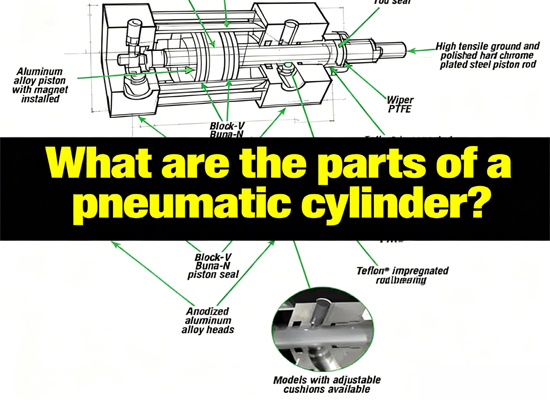
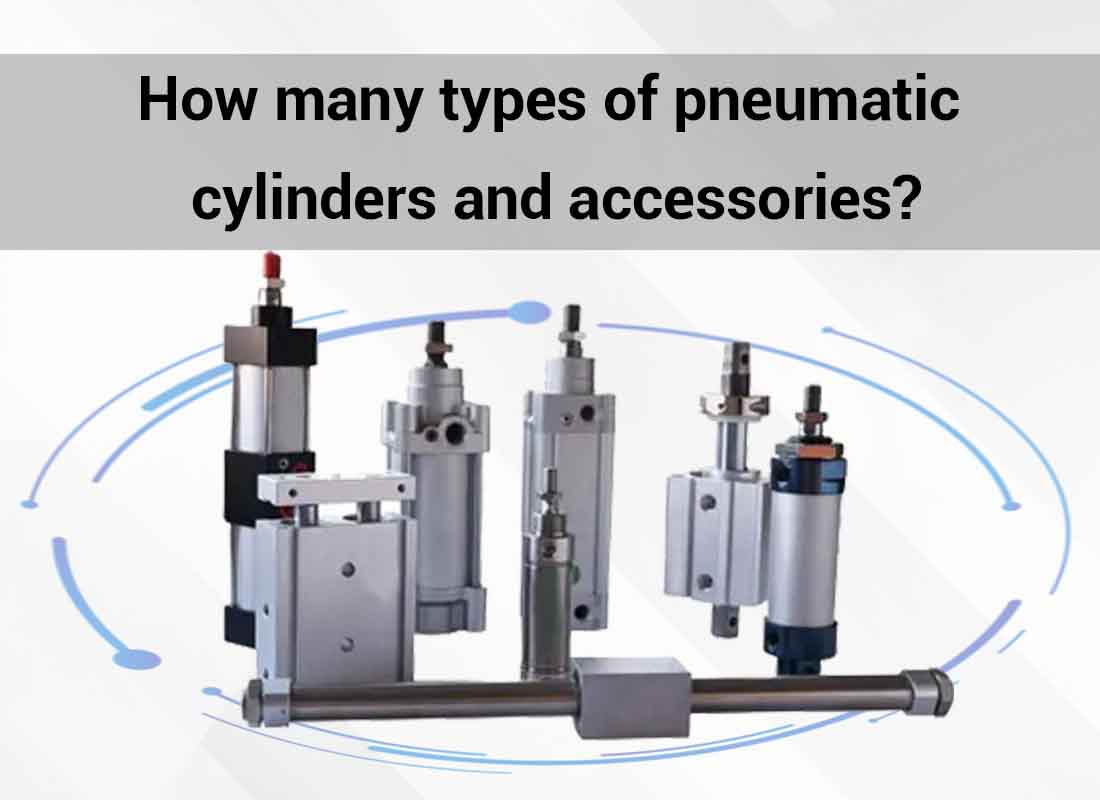
What are the parts of a pneumatic cylinder?



Apr 18, 2025 Blog
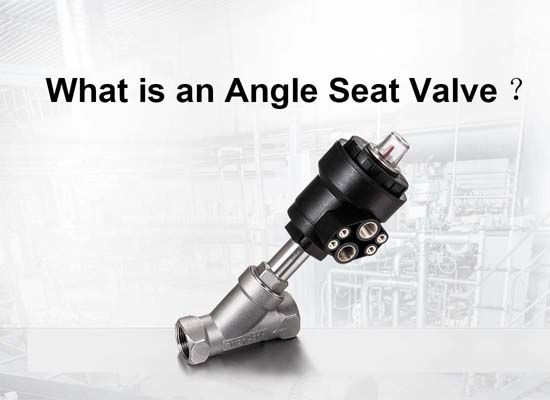
What is an Angle Seat Valve?
Get a free sample

Fokca is a brand of Ningbo Fokca Automation Co., Ltd.
Looking for custom pneumatic cylinder solutions? Visit our sister brand, Fescolo.→
© 2026 Ningbo Fokca Automation Co., Ltd. All rights reserved. Sitemap