Nov 20, 2026
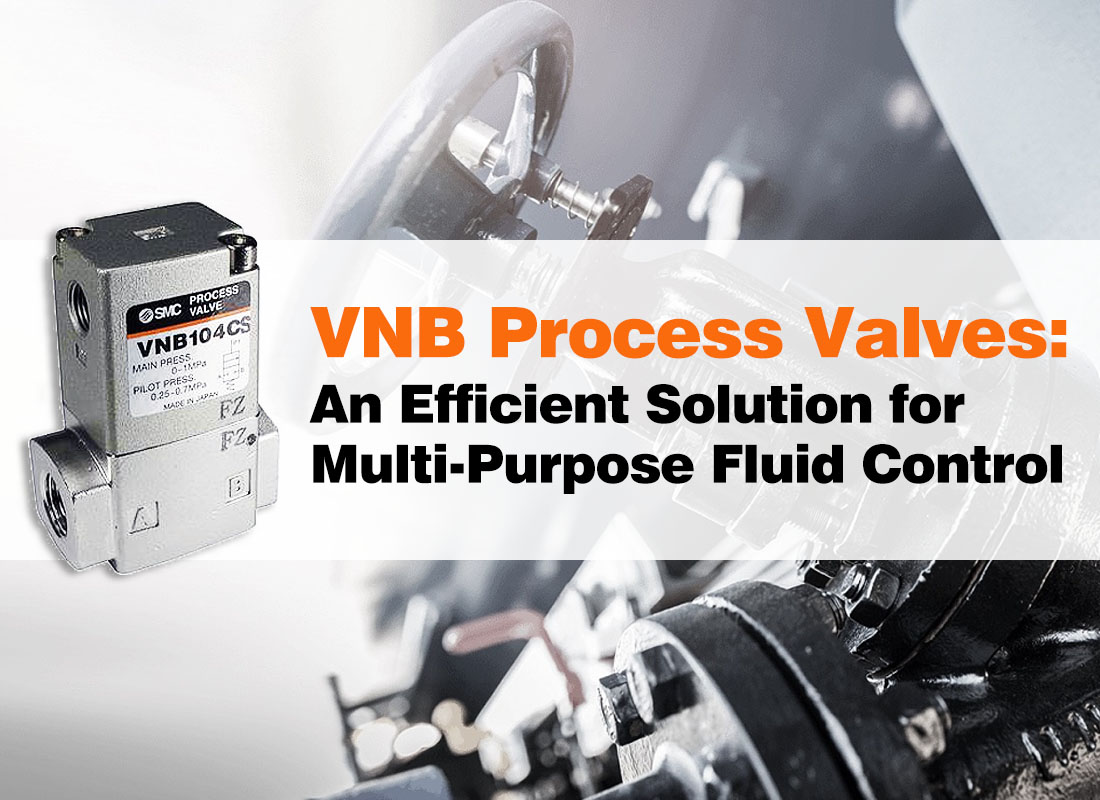
Industrial equipment often needs to manage different media within the same production environment. Compressed air may drive actuators, water may circulate through cooling circuits, and oil may supply lubrication or operate auxiliary mechanisms. Selecting a suitable valve for each circuit is essential for maintaining stable operation and simplifying equipment design.
The VNB process valve series from SMC is designed for fluid control applications involving compatible media such as air, water, and oil. Depending on the specific model and configuration, these valves can support different operating conditions and connection requirements, making them useful in manufacturing machinery, process equipment, and industrial automation systems.
A process valve must maintain reliable switching performance while resisting the effects of its working medium. The valve body, internal moving components, and sealing elements all influence its service performance.
VNB series configurations may use different body materials and sealing arrangements depending on the model. Brass and stainless steel are commonly used in industrial valve construction because they provide different combinations of mechanical strength, corrosion resistance, and cost.
Seal selection is equally important:
● NBR: Commonly used with air and many mineral-oil applications. Its compatibility depends on the oil composition and operating temperature.
● FKM: Offers resistance to many oils, fuels, and chemicals, although compatibility must be checked for the specific medium.
● EPDM: Often suitable for water, hot water, and certain chemical solutions, but generally unsuitable for petroleum-based oils.
Choosing the correct material combination helps reduce seal deterioration, internal leakage, and premature component replacement.
One advantage of process valves is their ability to control different media when the valve construction is suitable for the application. In industrial equipment, this may include compressed-air supply, water circulation, lubrication systems, and selected vacuum circuits.
However, media compatibility should never be determined by the valve series name alone. Engineers need to check the model's permitted medium, pressure range, temperature limits, and sealing materials before installation.
For example, water-control applications require attention to corrosion resistance and sealing compatibility. Oil circuits require suitable elastomers and operating-pressure verification. Vacuum systems need a valve specifically rated for the intended vacuum conditions, with acceptable leakage performance.
Viscosity and contamination also influence operation. High-viscosity fluids may require additional consideration of flow capacity, while particles or deposits can interfere with internal sealing surfaces and moving components. Appropriate filtration and regular inspection help maintain reliable switching.
Maintenance requirements depend on operating frequency, fluid cleanliness, temperature, and pressure conditions. A valve used in a clean compressed-air circuit may experience different wear patterns from one handling water containing particles or oil with deposits.
For routine maintenance, technicians should inspect external connections for leakage, check electrical connections where applicable, and monitor switching response. If performance becomes unstable, internal passages and sealing components may need inspection according to the manufacturer's service instructions.
Before disassembly, isolate the power supply and shut off and depressurize the relevant fluid circuit. Use compatible replacement seals and follow the specified assembly procedure to avoid damaging internal components.
Standardized threaded connections and suitable replacement parts can also simplify maintenance planning and reduce unnecessary equipment downtime.
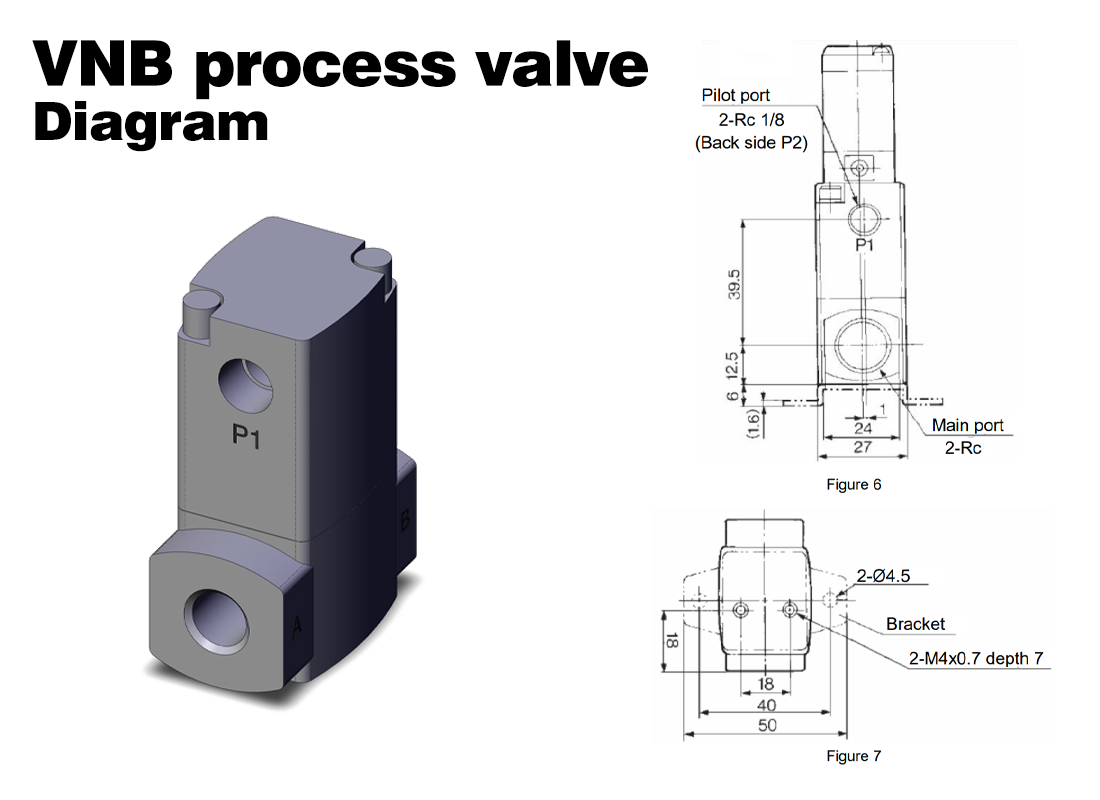
Correct installation helps prevent leakage, mechanical stress, and unstable operation. Before fitting a VNB process valve, confirm the port size, thread standard, flow direction, mounting requirements, and electrical configuration of the selected model.
The installation position should follow the manufacturer's instructions. Although some valve designs allow flexible mounting orientations, this should not be assumed for every model or operating condition.
For electrically operated configurations, verify the coil voltage, connector type, and protection requirements. In environments exposed to moisture, oil mist, or dust, the electrical protection rating must match the actual installation conditions.
When integrating the valve into an existing pipeline, ensure that connected tubing and fittings do not place excessive mechanical loads on the valve body.
The following table summarizes parameters that should be checked when evaluating the VNB series. Values are selection references rather than universal specifications for every model.
| Parameter | Selection consideration |
| Port size | Confirm the exact model's thread size and standard |
| Operating pressure | Verify the rated pressure and differential pressure requirements |
| Working medium | Check compatibility with air, water, oil, or the intended fluid |
| Seal material | Select NBR, FKM, EPDM, or the specified alternative according to the medium |
| Flow configuration | Confirm the required 2-port or 3-port arrangement where available |
| Electrical specifications | Match coil voltage, connector, and protection rating |
| Temperature range | Check the permitted medium and ambient temperature limits |
For accurate selection, consult the manufacturer's technical documentation for the exact VNB model rather than relying on general series-level descriptions.
VNB process valves can be considered for various fluid-control tasks in automated equipment, provided the operating conditions match the product specifications.
Typical application areas include:
● Filling and dispensing machinery: Controlling compatible liquids or auxiliary air in automated filling processes.
● Plastic molding equipment: Managing cooling-water circuits and selected auxiliary fluid lines.
● Metalworking machinery: Switching lubrication or cooling fluids in machining equipment.
● Packaging systems: Controlling compatible media in automated packaging and vacuum-related circuits.
● Electronics manufacturing: Supporting auxiliary water, air, and fluid-control processes where material compatibility is confirmed.
The actual suitability of a valve depends on the fluid properties, pressure, temperature, required flow rate, and operating frequency.
A versatile process valve can simplify pipeline layouts and reduce the number of different components required across equipment systems. However, broad application potential does not eliminate the need for model-specific engineering checks.
When selecting an SMC VNB process valve, prioritize medium compatibility, pressure and temperature ratings, flow requirements, sealing materials, and installation conditions. Matching these parameters to the actual working environment helps maintain dependable fluid control and makes maintenance more predictable over the equipment's service life.
(FK9025)
 Normally Open or Normally Closed? Angle Seat Valve Selection Guide
 Why CNC Coolant Systems Prefer VNC Valves? A Reliable Solution for Leak Prevention
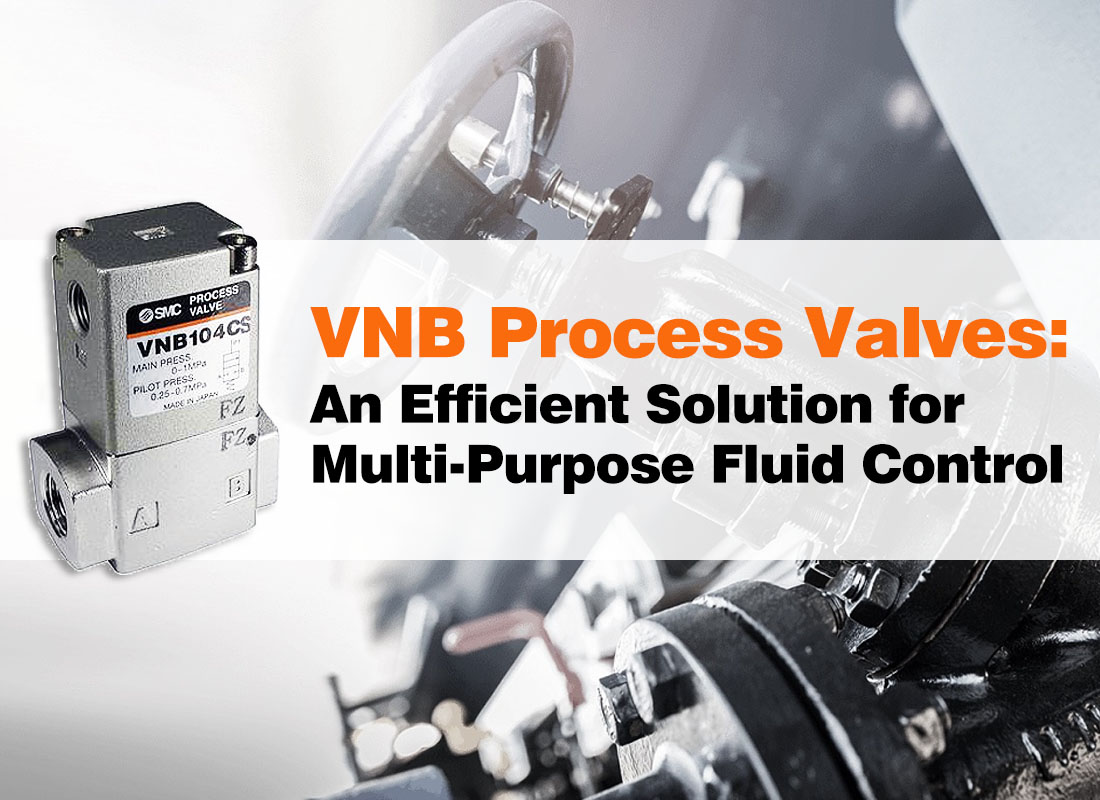 VNB Process Valves: An Efficient Solution for Multi-Purpose Fluid Control
 Valve Freezing Prevention Tips for Winter Maintenance
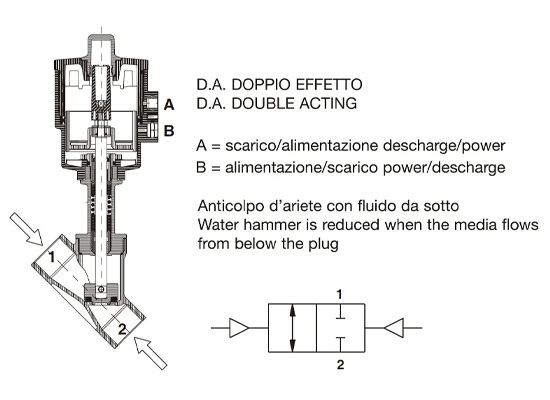 How to determine valve seat angle
You May Interest In

Dec 02, 2025 Blog
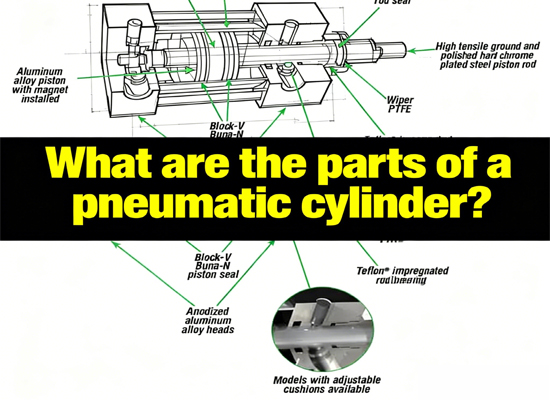
What are the parts of a pneumatic cylinder?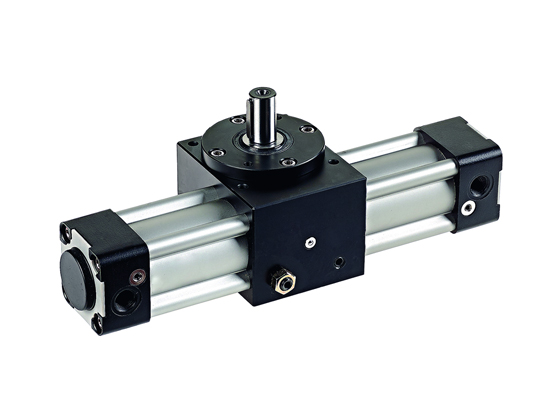



Apr 18, 2025 Blog
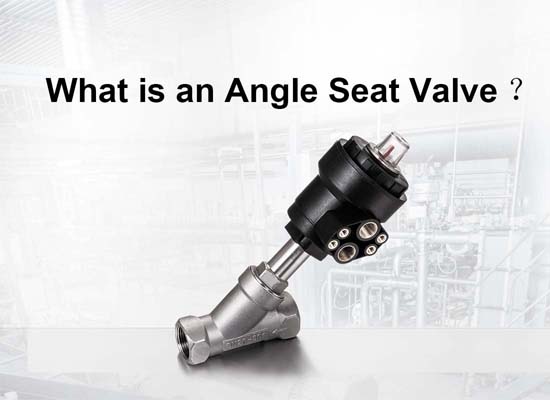
What is an Angle Seat Valve?
Get a free sample

Fokca is a brand of Ningbo Fokca Automation Co., Ltd.
Looking for custom pneumatic cylinder solutions? Visit our sister brand, Fescolo.→
© 2026 Ningbo Fokca Automation Co., Ltd. All rights reserved. Sitemap