Nov 17, 2026
In pneumatic systems, tubing selection affects more than compressed air delivery. It also influences installation flexibility, connection reliability, maintenance frequency, and overall equipment service life. When comparing PVC tubing vs polyurethane tubing, the key consideration is how well each material performs under actual operating conditions.
PVC tubing is commonly selected for its affordability and availability, particularly in stationary air distribution systems. Polyurethane (PU) tubing, on the other hand, is widely used in modern automation equipment where frequent movement, tight bending radii, and resistance to mechanical wear are important.
For machine manufacturers, distributors, and pneumatic system designers, understanding these differences helps avoid unnecessary replacements and select a suitable air hose for long-term operation.
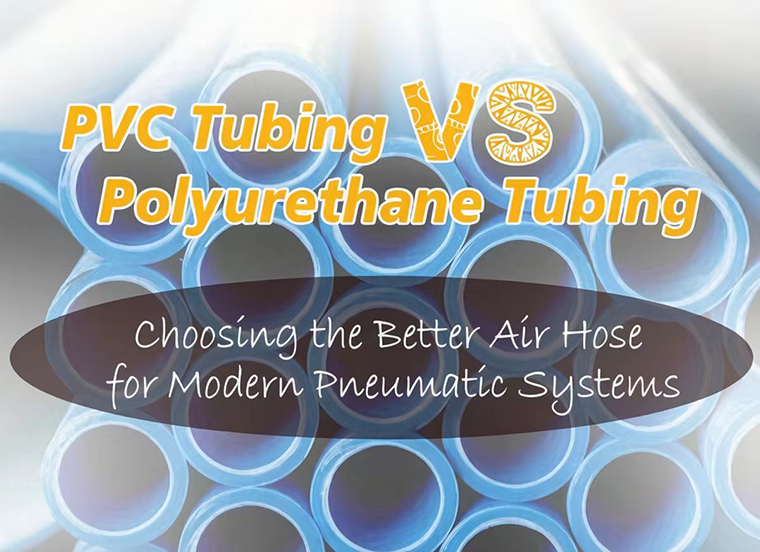
Although both materials are used in pneumatic applications, their mechanical characteristics are different.
PVC is a thermoplastic material that offers reasonable flexibility, chemical resistance, and cost efficiency. Its performance depends on the formulation, plasticizer content, wall thickness, and operating temperature. Over time, certain PVC formulations may lose flexibility due to plasticizer migration, aging, or environmental exposure.
Polyurethane is an elastomeric polymer known for its elasticity, wear resistance, and ability to withstand repeated deformation. These characteristics make PU pneumatic tubing particularly suitable for equipment with moving components.
The following table highlights their typical performance differences.
Performance Factor
PVC Tubing
Polyurethane Tubing (PU)
| Performance | PVC Tubing | PU Tubing |
Flexibility | Moderate, depending on formulation | High |
Elastic Recovery | Moderate | Excellent |
Bending Fatigue Resistance | Generally lower | Generally higher |
Abrasion Resistance | Moderate | Excellent |
Kink Resistance | Depends on wall structure | Generally better |
Weight | Depends on dimensions | Lightweight |
Low-Temperature Performance | Formulation dependent | Generally maintains better flexibility |
Typical Applications | Fixed air lines | Moving pneumatic connections |
Actual performance varies with material grade, hardness, tube dimensions, wall thickness, and working conditions. Neither material should be selected based on a general comparison alone.
As automated machinery becomes more compact, pneumatic tubing must fit into increasingly restricted installation spaces. It may also need to move continuously alongside cylinders, robotic arms, and other actuators.
This is where the advantages of polyurethane become more apparent.
Polyurethane tubing can bend around machine structures and fit into compact installation spaces without requiring excessive connection points.
Its elasticity also helps the tubing recover its original shape after bending. This is particularly useful in robotic equipment, pick-and-place machines, and automated assembly lines where tubing follows repeated movement paths.
PVC tubing can also be manufactured in flexible grades, but its bending performance and recovery characteristics depend heavily on formulation and construction.
In pneumatic systems with moving components, tubing is exposed to repeated bending and mechanical stress.
Over time, unsuitable tubing may develop permanent deformation, surface cracks, or fatigue-related damage. These problems can eventually cause compressed air leakage and unexpected maintenance.
PU pneumatic tubing generally offers better resistance to repeated flexing, making it a practical choice for applications involving continuous movement.
However, the actual fatigue life also depends on bending radius, operating frequency, pressure, and installation conditions.
Tubing installed inside cable carriers, drag chains, and moving equipment may constantly contact surrounding surfaces.
Polyurethane has good abrasion resistance, helping it withstand friction and mechanical wear during operation. This reduces the likelihood of premature surface damage when the tubing is installed and supported correctly.
For machinery operating with frequent movement, this characteristic can help extend replacement intervals and improve maintenance efficiency.
Weight and installation space are important considerations in modern automation.
PU tubing provides a lightweight and flexible connection between pneumatic components. This is particularly useful for moving assemblies, where excessive tubing weight can increase the mechanical load on moving parts.
For equipment manufacturers, using suitable PU tubing can simplify pneumatic routing while maintaining a compact system layout.
The right choice depends on whether the tubing remains stationary or experiences repeated mechanical movement.
Application
Recommended Tubing
Main Selection Consideration
| Application | Recommended | Main Selection Consideration |
Fixed compressed air distribution | PVC or PU | Cost and pressure requirements |
Robotic arms | PU Tubing | Repeated bending and flexibility |
Packaging machinery | PU Tubing | Continuous movement |
CNC equipment | PU Tubing | Compact routing and abrasion |
Textile machinery | PU Tubing | Flexibility and mechanical wear |
Stationary workshop air lines | PVC Tubing | Installation cost |
Compact automation equipment | PU Tubing | Small bending radius and lightweight design |
Moving pneumatic actuators | PU Tubing | Flex fatigue resistance |
For many industrial facilities, replacing all existing PVC tubing is unnecessary. A more practical approach is to retain PVC in suitable stationary sections and upgrade high-movement connections to PU tubing.
This allows equipment manufacturers and maintenance teams to improve reliability in critical areas without making extensive changes to the entire pneumatic circuit.
For more information about available configurations, explore FOKCA's PU Pneumatic Tubing and Push-in Pneumatic Fittings product ranges.
PVC tubing remains a reasonable option for applications with stable installation conditions and moderate mechanical demands. However, several operating conditions indicate that PU may be a more suitable alternative.
Consider switching from PVC to polyurethane when:
• Frequent movement: Tubing moves repeatedly with pneumatic cylinders or automated mechanisms.
• Continuous vibration: Connections are exposed to persistent equipment vibration.
• Limited installation space: Tubing must follow compact routing paths or tighter bends.
• Mechanical friction: Tubing runs through cable carriers or contacts moving machine structures.
• Frequent maintenance: Existing tubing requires regular replacement due to cracking, deformation, or wear.
• Weight reduction: Lightweight connections are preferred for moving assemblies.
Before replacing existing tubing, engineers should also verify the working pressure, temperature range, tube dimensions, and compatibility with the installed fittings.
Changing the tubing material without checking these parameters may introduce new problems, even when the replacement material has better mechanical properties.
Choosing polyurethane tubing involves more than selecting an outside diameter. Several specifications directly influence installation quality and operating reliability.
The inside diameter determines the available airflow passage, while the outside diameter must match the pneumatic fitting.
Incorrect dimensions can restrict airflow or cause poor sealing at push-in connections. Wall thickness also affects pressure capacity and resistance to deformation.
Always check the rated working pressure at the intended operating temperature.
Temperature changes can affect the mechanical properties of polymer tubing. Therefore, the material's specified temperature range and pressure ratings should be evaluated together rather than independently.
PU tubing is available in different hardness grades. Softer tubing generally offers greater flexibility, while harder formulations may provide better resistance to deformation.
The appropriate hardness depends on installation space, movement frequency, pressure requirements, and the mechanical demands of the application.
Tubing and fittings must be matched in terms of outside diameter, dimensional tolerance, and sealing structure.
For push-in pneumatic fittings, consistent tube dimensions and a suitable surface finish are essential for reliable connections.
Different tubing colors can help identify pneumatic circuits and simplify equipment maintenance. Depending on the application, manufacturers may also require customized lengths, hardness, colors, or special material formulations.
These specifications should be confirmed before production to ensure consistency across replacement orders.
Even when the correct polymer is selected, inconsistent extrusion quality can affect the performance of an entire pneumatic connection.
Variations in outside diameter, wall thickness, surface finish, and material hardness may cause installation difficulties or air leakage. For OEM equipment manufacturers and distributors, stable manufacturing tolerances are therefore just as important as material selection.
FOKCA provides standard and customized pneumatic tubing solutions for industrial automation and compressed air systems. Available options include different dimensions, colors, hardness grades, and material configurations to meet varying installation requirements.
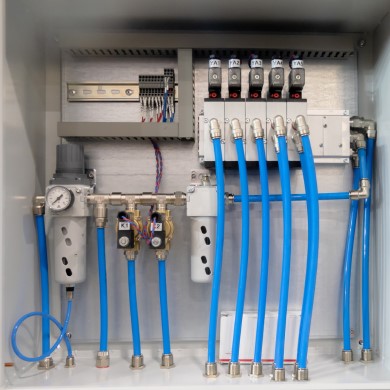
Beyond tubing, FOKCA also supplies pneumatic cylinders, solenoid valves, air preparation units, and push-in fittings, supporting the integration of complete pneumatic systems.
Ultimately, the choice between PVC and polyurethane should be based on operating conditions rather than initial purchase price alone. PVC remains suitable for many fixed installations, while PU tubing offers advantages in applications requiring flexibility, repeated movement, and abrasion resistance. Matching the material to the actual working environment is essential for maintaining stable pneumatic performance and controlling long-term maintenance costs.
(FK9026)
 Normally Open or Normally Closed? Angle Seat Valve Selection Guide
 Why CNC Coolant Systems Prefer VNC Valves? A Reliable Solution for Leak Prevention
 VNB Process Valves: An Efficient Solution for Multi-Purpose Fluid Control
 Valve Freezing Prevention Tips for Winter Maintenance
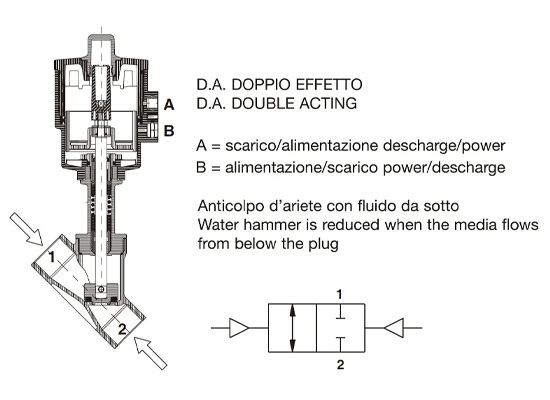 How to determine valve seat angle
You May Interest In

Dec 02, 2025 Blog
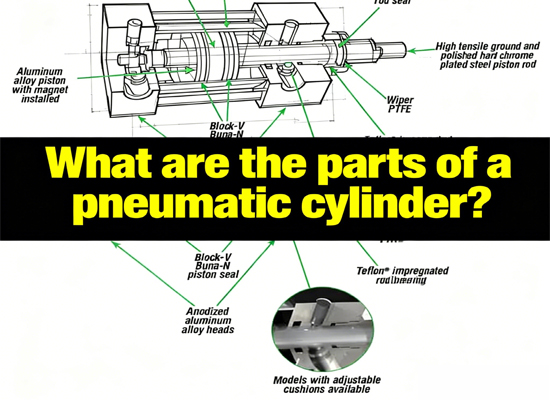
What are the parts of a pneumatic cylinder?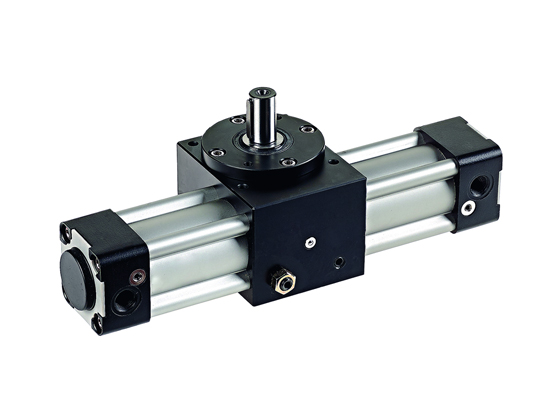
Apr 18, 2025 Blog
What is an Angle Seat Valve?
Get a free sample

Fokca is a brand of Ningbo Fokca Automation Co., Ltd.
Looking for custom pneumatic cylinder solutions? Visit our sister brand, Fescolo.→
© 2026 Ningbo Fokca Automation Co., Ltd. All rights reserved. Sitemap