Aug 28, 2026
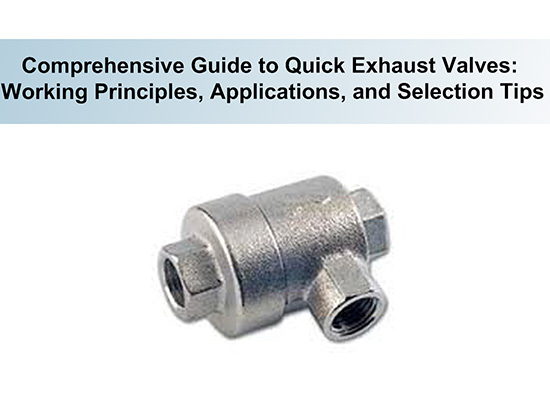
In pneumatic equipment, cylinder speed depends not only on the compressed air supply but also on how efficiently exhaust air can leave the actuator. When air must return through a directional control valve and long connecting pipes, flow resistance can restrict exhaust capacity and slow down cylinder movement.
A quick exhaust valve addresses this issue by providing a shorter discharge route close to the cylinder. It allows compressed air to escape directly into the atmosphere instead of passing back through the directional valve. This arrangement is particularly useful in high-speed automation, packaging machinery, stamping equipment, and other applications requiring rapid cylinder movement.
A quick exhaust valve is a pneumatic flow-control component designed to accelerate the discharge of compressed air from a cylinder or other pneumatic actuator. Its typical structure includes three ports: a supply port connected to the directional control valve, a cylinder port connected to the actuator, and an exhaust port that releases air into the atmosphere.
The valve automatically changes its internal flow path according to pressure conditions. During air supply, compressed air passes from the control valve through the quick exhaust valve into the cylinder. During exhaust, air from the cylinder opens the direct exhaust passage, allowing it to leave through the nearby exhaust port.
By bypassing the directional valve and part of the connecting pipeline during exhaust, the valve reduces flow resistance and can improve actuator response. The actual speed improvement depends on cylinder size, operating pressure, valve flow capacity, tubing dimensions, and load conditions.
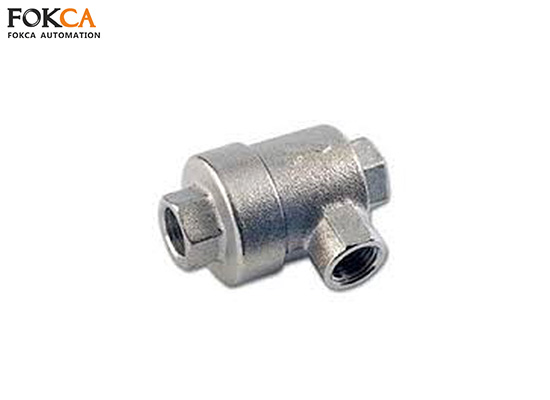
Quick exhaust valves offer several practical benefits in pneumatic systems:
● Faster cylinder movement: A direct exhaust route helps reduce the time required to release air from the cylinder, supporting faster return strokes and shorter operating cycles.
● Reduced exhaust resistance: Air does not need to travel back through the entire directional control circuit, which can be beneficial when piping is long or flow demand is high.
● Improved response: Faster pressure release can help pneumatic actuators respond more quickly during frequent switching operations.
● Compact installation: Many models can be mounted directly near a cylinder port, reducing the need for additional exhaust piping.
● Simple mechanical operation: The valve responds automatically to pressure changes and generally requires no separate electrical control.
A quick exhaust valve does not automatically reduce compressed-air consumption. Faster cylinder cycling may actually increase air demand if the machine completes more cycles per minute. Energy performance should therefore be evaluated at the system level.
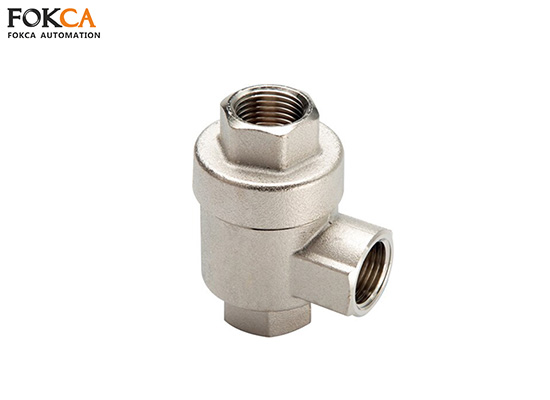
Although internal designs vary, a typical quick exhaust valve contains the following elements:
● Supply port (P): Receives compressed air from the directional control valve.
● Cylinder port (A): Connects the valve to the cylinder.
● Exhaust port (R): Provides a direct outlet for discharged air.
● Valve element: A spool, diaphragm, or poppet that changes position according to pressure differences.
● Spring: Used in some designs to assist the valve element's positioning or return.
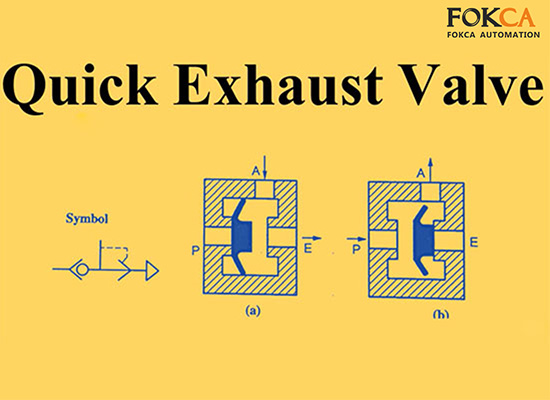
The valve operates through two main flow conditions.
Air supply: When the directional control valve sends compressed air toward the cylinder, pressure enters the supply port. The internal valve element moves to close the exhaust passage and establish communication between the supply port and cylinder port. Air then flows into the cylinder to move the piston.
Air exhaust: When the directional control valve switches and the cylinder begins exhausting, pressure at the cylinder port changes the force balance inside the quick exhaust valve. The valve element moves to isolate the supply side and open the direct passage between the cylinder port and exhaust port. Air leaves the cylinder through this nearby outlet rather than returning through the directional control valve.
The main advantage is the shorter exhaust path. The quick exhaust valve does not independently determine the cylinder's direction of travel; that function remains with the directional control circuit.
Quick exhaust valves are primarily used to improve pneumatic exhaust performance. Their main functions include:
● Accelerating cylinder return: Helps release air more quickly from the exhausting chamber, reducing delays during the return stroke.
● Shortening the exhaust route: Bypasses restrictions in directional valves and long pipelines.
● Supporting high-frequency operation: Helps maintain responsive movement in machinery with repeated pneumatic cycles.
● Improving circuit flexibility: Provides a local exhaust point without requiring a separate electrical control signal.
The valve's effect should be assessed alongside flow controls, cushioning, and cylinder load requirements. Excessively rapid exhaust can also increase noise or cause abrupt actuator movement.
Choosing a suitable valve requires more than matching the connection thread. Consider the following factors:
| Selection factor | What to check |
| Port size | Match the supply and cylinder connections, such as G1/8, G1/4, or G3/8, as specified by the model |
| Flow capacity | Select sufficient exhaust capacity for the cylinder bore, stroke, and required cycle speed |
| Working pressure | Confirm that the valve's permitted pressure range covers the system's operating conditions |
| Valve construction | Check the installation dimensions, port arrangement, and compatibility with the cylinder |
| Materials and seals | Consider air quality, ambient temperature, moisture, dust, and chemical exposure |
| Noise control | Determine whether a silencer is required and whether its backpressure will affect exhaust performance |
A valve with larger ports does not necessarily deliver the required performance in every installation. Actual flow capacity and the resistance of connected fittings and silencers should also be considered.
Quick exhaust valves are commonly installed in pneumatic systems where cylinder exhaust speed limits machine performance.
Typical applications include:
● High-speed cylinder return: Packaging, sorting, and assembly equipment requiring short operating cycles.
● Large-bore cylinders: Actuators with larger air volumes that need adequate exhaust capacity.
● Long pneumatic pipelines: Systems where the distance between the directional valve and cylinder creates additional exhaust resistance.
● Stamping and material-handling machinery: Equipment requiring rapid actuator retraction or repeated movement.
● Pneumatic control systems: Applications where faster local exhaust is useful without adding electrical control components.
In hazardous areas, pneumatic actuation may help reduce the need for electrical control at the actuator, but the suitability of the complete installation must still be assessed against applicable hazardous-area requirements.
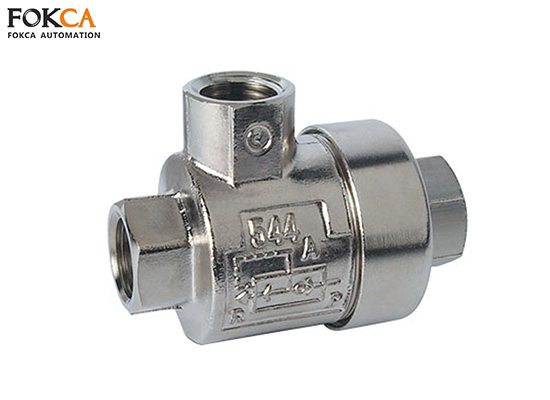
Correct installation is essential for achieving the expected exhaust performance.
Choose the mounting position: Install the valve as close as practical to the cylinder port to minimize the exhaust distance.
① Identify each port: Follow the manufacturer's markings or flow diagram to distinguish the supply, cylinder, and exhaust connections.
② Connect the pipelines: Connect the directional control valve to the supply port and the cylinder to the cylinder port. Keep the exhaust port unobstructed.
③ Secure the valve: Ensure the body and fittings are properly supported to prevent vibration or mechanical stress.
④ Check the exhaust outlet: If a silencer is installed, confirm that it is suitable for the required flow and does not create excessive backpressure.
⑤ Test the system: Restore the air supply gradually, check for leakage, and observe cylinder movement and exhaust performance under normal operating conditions.
A correctly selected and installed quick exhaust valve can improve pneumatic actuator response by reducing exhaust restrictions. Matching its flow capacity, connection size, and installation position to the actual cylinder and operating cycle is essential for reliable performance.
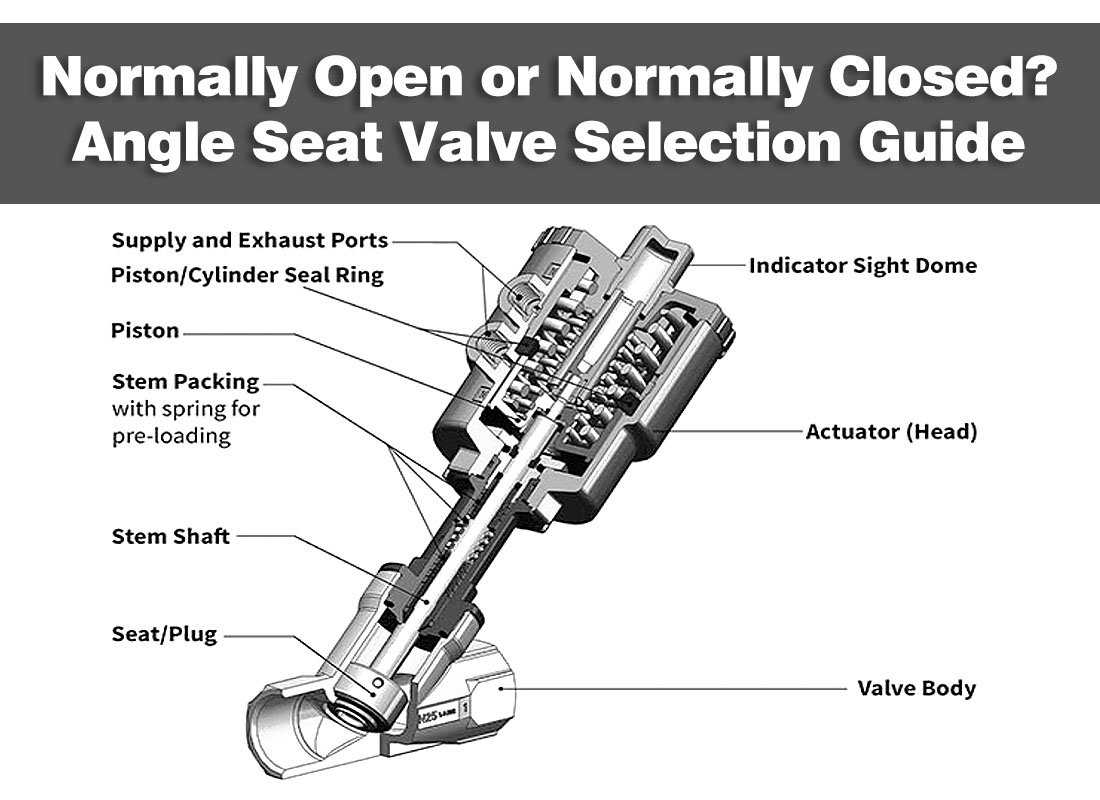 Normally Open or Normally Closed? Angle Seat Valve Selection Guide
 Why CNC Coolant Systems Prefer VNC Valves? A Reliable Solution for Leak Prevention
 VNB Process Valves: An Efficient Solution for Multi-Purpose Fluid Control
 Valve Freezing Prevention Tips for Winter Maintenance
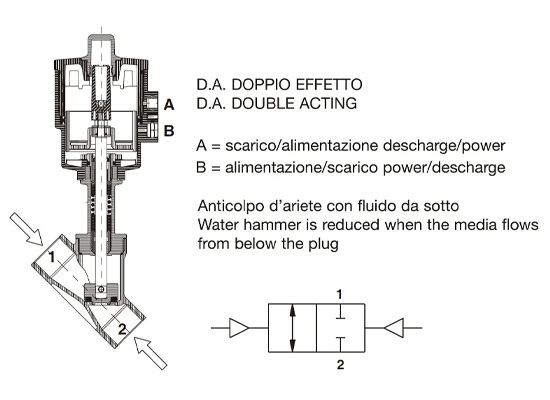 How to determine valve seat angle
You May Interest In

Dec 02, 2025 Blog
What are the parts of a pneumatic cylinder?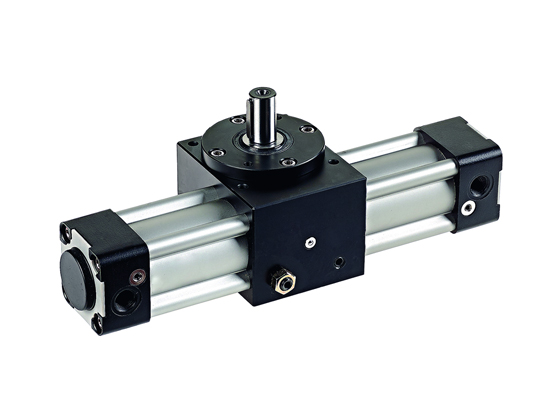



Apr 18, 2025 Blog
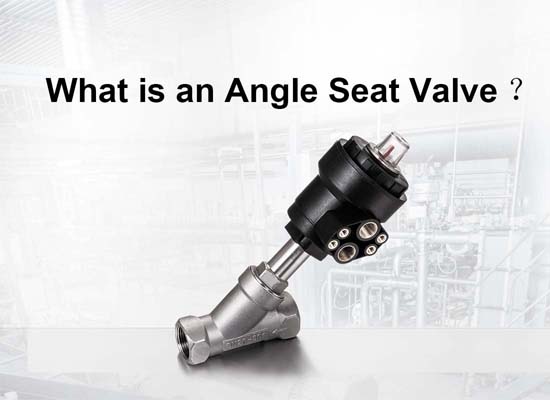
What is an Angle Seat Valve?
Get a free sample

Fokca is a brand of Ningbo Fokca Automation Co., Ltd.
Looking for custom pneumatic cylinder solutions? Visit our sister brand, Fescolo.→
© 2026 Ningbo Fokca Automation Co., Ltd. All rights reserved. Sitemap