Aug 18, 2026
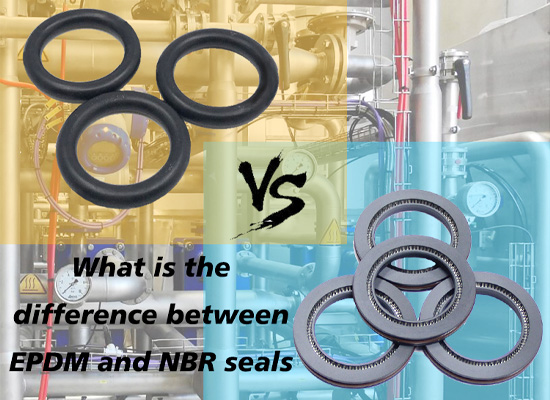
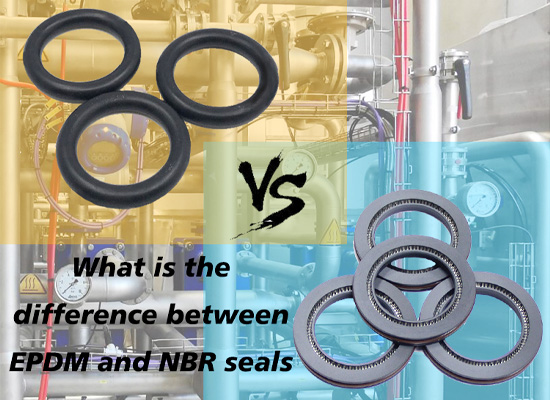
Sealing rings are essential components in pneumatic fittings, pipe connections, valves, and industrial equipment. They prevent fluid or gas leakage by maintaining contact between connected surfaces, even when pressure, temperature, or operating conditions change.
Two commonly used sealing materials are EPDM (Ethylene Propylene Diene Monomer) and NBR (Nitrile Butadiene Rubber). Although both are synthetic rubbers used to manufacture O-rings and other seals, their chemical structures give them different performance characteristics.
The main difference is their resistance to operating media: NBR is generally preferred for oils and petroleum-based fluids, while EPDM is better suited to water, steam, weather exposure, and many aqueous chemicals. Understanding these differences helps engineers select the right seal for a particular application.
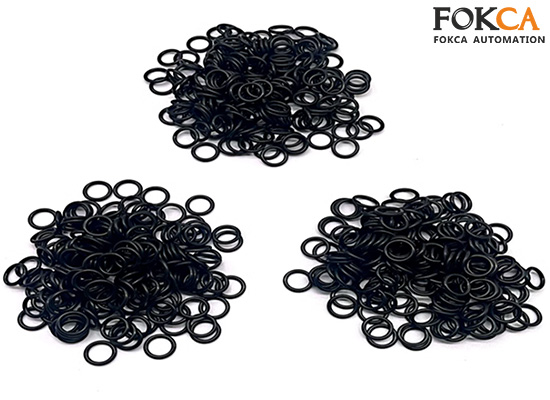
NBR is a synthetic rubber produced by copolymerizing acrylonitrile and butadiene. Its acrylonitrile content influences its oil resistance: higher acrylonitrile content generally improves resistance to oils and fuels, although it can reduce low-temperature flexibility.
NBR is widely used in industrial sealing applications because it offers a useful combination of oil resistance, mechanical strength, and abrasion resistance.
EPDM is produced from ethylene, propylene, and a small amount of a diene component. Its molecular structure provides excellent resistance to ozone, ultraviolet radiation, oxygen, and weathering. It also performs well in contact with water, hot water, steam, and many dilute acids and alkalis.
However, EPDM is generally unsuitable for petroleum-based oils and fuels, while NBR is not ideal for prolonged outdoor exposure without additional protection.
Chemical compatibility is one of the most important factors when choosing between EPDM and NBR seals.
NBR seals offer good resistance to mineral oils, lubricants, greases, and many petroleum-based fuels. This makes them suitable for hydraulic equipment, lubrication systems, fuel-handling components, and machinery that operates with oil-based media.
However, NBR has limited resistance to ozone, strong oxidizing agents, and certain aggressive chemicals. Its compatibility with fuels and solvents also varies according to the formulation and chemical composition of the fluid.
EPDM seals are generally more suitable for water-based applications. They provide good resistance to hot water, steam, many cleaning solutions, dilute acids, and alkalis. These properties make EPDM a common choice for water supply equipment, heating systems, and applications involving detergents.
EPDM generally has poor resistance to mineral oils, petroleum fuels, and many hydrocarbon-based fluids. Therefore, it should not be selected for oil-contact applications without specific compatibility confirmation.
Both materials are available in different formulations, and their operating temperature limits depend on the compound, seal design, and exposure conditions.
Typical reference ranges are shown below:
| Performance | NBR | EPDM |
| Typical temperature range | Approximately -30°C to +100°C | Approximately -40°C to +125°C |
| Special formulations | Some grades extend beyond +100°C | Some grades can reach approximately +150°C |
| Low-temperature flexibility | Depends on acrylonitrile content | Generally good |
| Hot water and steam | Generally limited | Good with suitable grades |
| Oil resistance | Good to excellent | Poor for most petroleum oils |
These figures are indicative rather than universal limits. Continuous operation, pressure, compression, and the specific medium can affect seal performance. For example, an EPDM compound suitable for hot water may not necessarily be suitable for high-temperature steam.
When selecting a seal, always check the manufacturer's temperature rating for the specific compound.
EPDM has a clear advantage in outdoor environments. It offers excellent resistance to ozone, ultraviolet radiation, oxygen, and weathering. As a result, EPDM seals can maintain their properties for extended periods when exposed to sunlight and changing weather conditions.
NBR, by comparison, has relatively poor resistance to ozone and UV exposure. Prolonged outdoor exposure can cause hardening, cracking, and deterioration. Protective measures or alternative materials may be necessary when NBR is used in exposed environments.
For this reason, EPDM is widely used in building seals, outdoor equipment, and automotive weatherstripping, while NBR is more commonly found in enclosed machinery and oil-contact systems.
NBR is widely valued for its tensile strength, elasticity, and resistance to abrasion. These properties make it suitable for dynamic sealing applications where seals experience repeated movement or contact with lubricated components.
EPDM also offers good elasticity and flexibility, particularly in applications involving temperature changes and environmental exposure. Its mechanical performance varies with hardness and formulation, so it should not automatically be considered inferior to NBR in every application.
For both materials, seal hardness, compression set, tensile strength, and wear resistance should be evaluated according to the actual working conditions.
Compression set is particularly important: it describes how much permanent deformation remains after a seal has been compressed. A high compression set can reduce the contact force between sealing surfaces and eventually cause leakage.
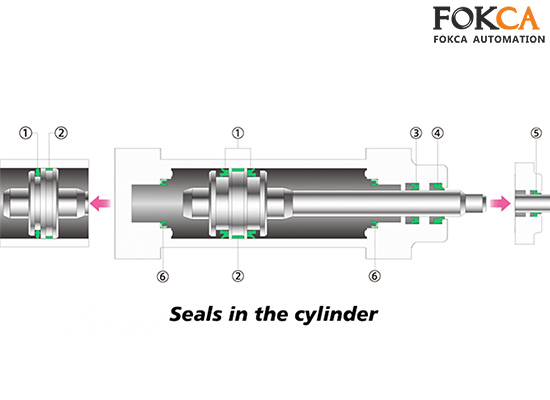
The different properties of these materials determine where they are commonly used.
Common NBR seal applications include:
● Hydraulic cylinders and hydraulic systems
● Oil seals and lubricating equipment
● Fuel pipelines and fuel-handling components
● Industrial machinery and pneumatic fittings
● O-rings exposed to mineral oils and petroleum-based fluids
Common EPDM seal applications include:
● Water supply and plumbing systems
● Hot water and heating equipment
● Automotive cooling systems
● Washing machines and household appliances
● Outdoor sealing and building applications
● Equipment exposed to suitable cleaning solutions
The material should always be checked against the actual fluid, temperature, pressure, and operating cycle rather than selected solely by application category.
NBR is often an economical choice for standard oil-resistant sealing applications. EPDM may have a different material cost depending on its formulation and performance requirements. However, purchase price should not be the only selection criterion.
A seal that is incompatible with its working medium may deteriorate quickly, causing leakage, equipment downtime, and replacement costs. Choosing a suitable material from the beginning is usually more economical over the equipment's service life.
The following table highlights the main differences:
| Comparison | NBR Seals | EPDM Seals |
| Oil and fuel resistance | Excellent for many petroleum-based fluids | Poor |
| Water resistance | Generally good | Excellent |
| Steam resistance | Limited | Good with suitable grades |
| UV and ozone resistance | Poor | Excellent |
| Weather resistance | Limited | Excellent |
| Abrasion resistance | Generally good | Compound-dependent |
| Typical applications | Hydraulic systems, oil seals, fuel equipment | Water systems, cooling systems, outdoor seals |
The choice between EPDM and NBR depends primarily on the medium that the seal will contact. For applications involving mineral oils, lubricants, or petroleum-based fuels, NBR is generally the more suitable option. For water, hot water, suitable steam applications, and outdoor environments, EPDM is often the better choice.
Before making a final decision, check the fluid compatibility, operating temperature, working pressure, seal hardness, compression set, and expected service life. Also consider whether the seal will experience static compression or repeated movement.
Neither material is universally better. The right choice is the one that maintains reliable sealing performance under the actual operating conditions.
You May Interest In

Dec 02, 2025 Blog
What are the parts of a pneumatic cylinder?


Apr 18, 2025 Blog
What is an Angle Seat Valve?
Get a free sample

Fokca is a brand of Ningbo Fokca Automation Co., Ltd.
Looking for custom pneumatic cylinder solutions? Visit our sister brand, Fescolo.→
© 2026 Ningbo Fokca Automation Co., Ltd. All rights reserved. Sitemap




 None