Nov 09, 2026
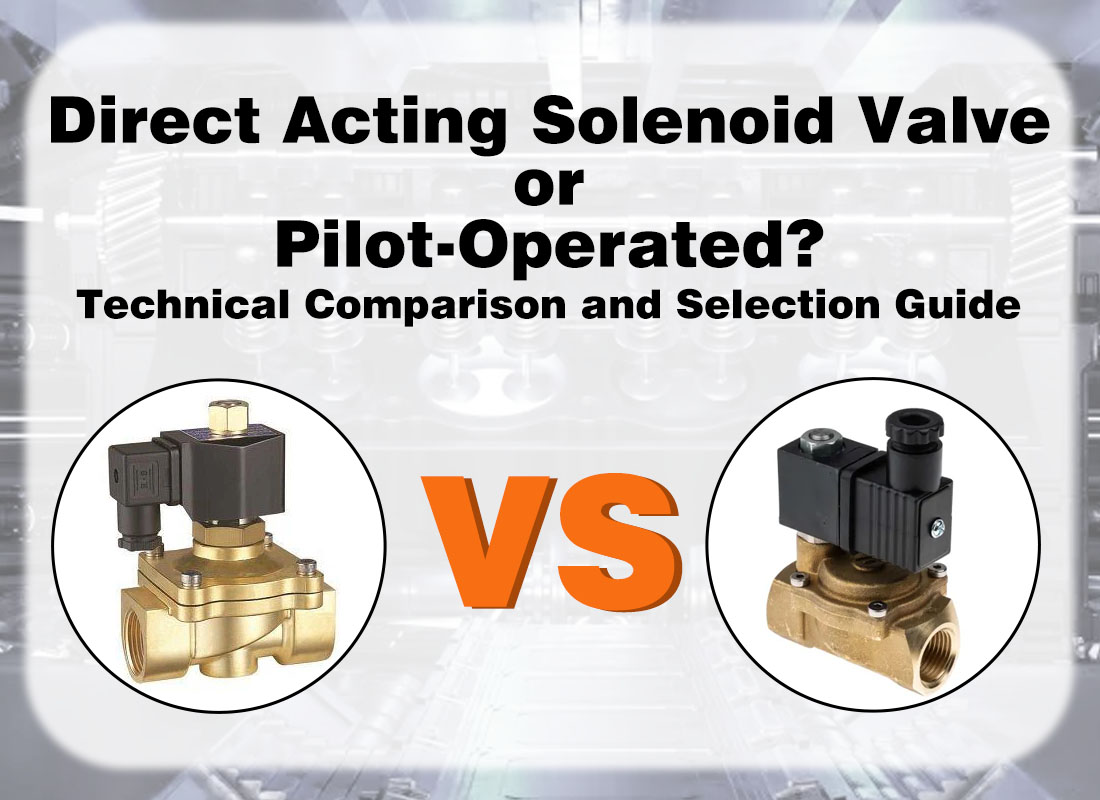
When selecting a solenoid valve for a pneumatic or fluid control system, the internal operating mechanism is just as important as port size, connection type, and pressure rating. Direct acting and pilot-operated solenoid valves use different driving principles, which affect their minimum operating pressure, flow capacity, energy consumption, and application range.
Choosing an unsuitable structure may lead to unreliable switching, insufficient flow, or unnecessary energy consumption. Understanding how these two designs work helps engineers select a valve that matches actual system requirements.
A direct acting solenoid valve uses electromagnetic force to move the valve plunger or sealing element directly. When the coil is energized, the magnetic field pulls or pushes the plunger, opening or closing the flow passage. When power is removed, a spring or another return mechanism moves the valve back to its normal position, depending on the design.
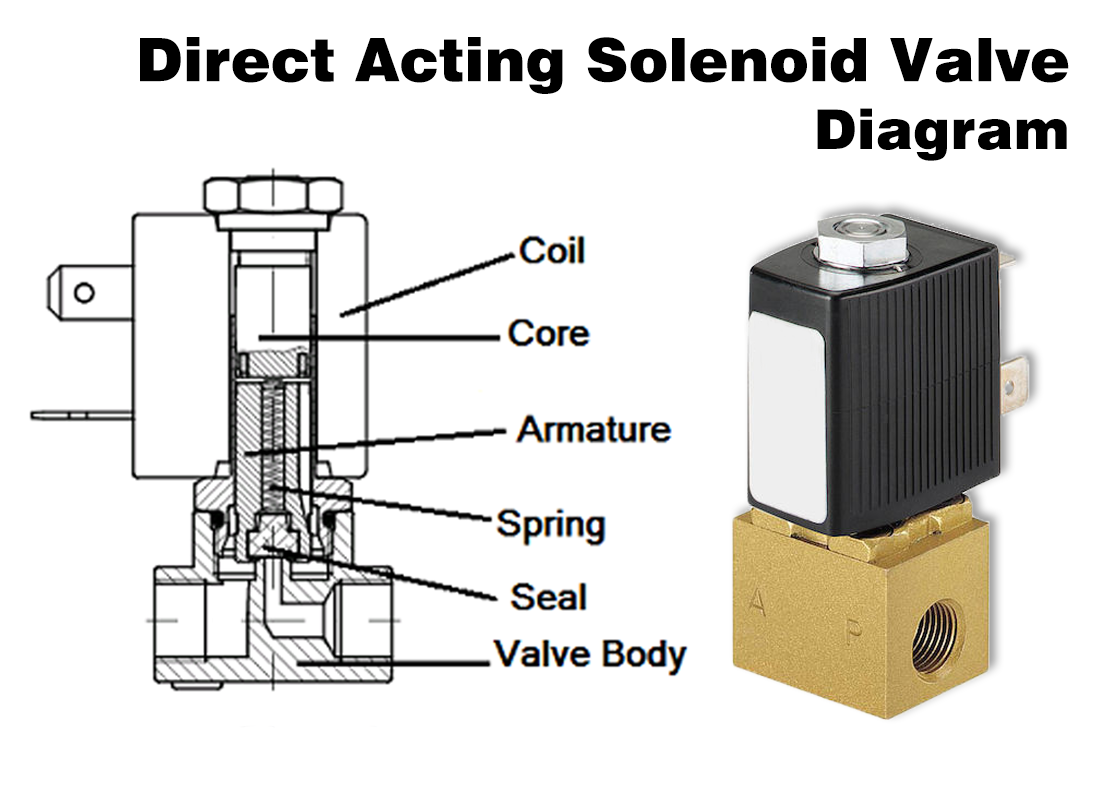
Since the electromagnetic force acts directly on the main valve element, operation does not depend on upstream pressure to generate the switching force. Many direct acting models can therefore operate at zero differential pressure, making them suitable for systems with very low or fluctuating supply pressure.
Typical applications include:
● Laboratory and analytical instruments
● Miniature pneumatic devices and fixtures
● Low-pressure fluid or air control circuits
● Equipment with small flow passages and limited installation space
The main limitation is that the coil must generate sufficient force to overcome the spring force and pressure-related forces acting on the valve element. As the required flow capacity and valve size increase, the necessary electromagnetic force may also increase. This can result in higher coil power requirements and greater heat generation.
A pilot-operated solenoid valve uses the electromagnetic coil to control a small pilot passage rather than moving the main valve element directly.
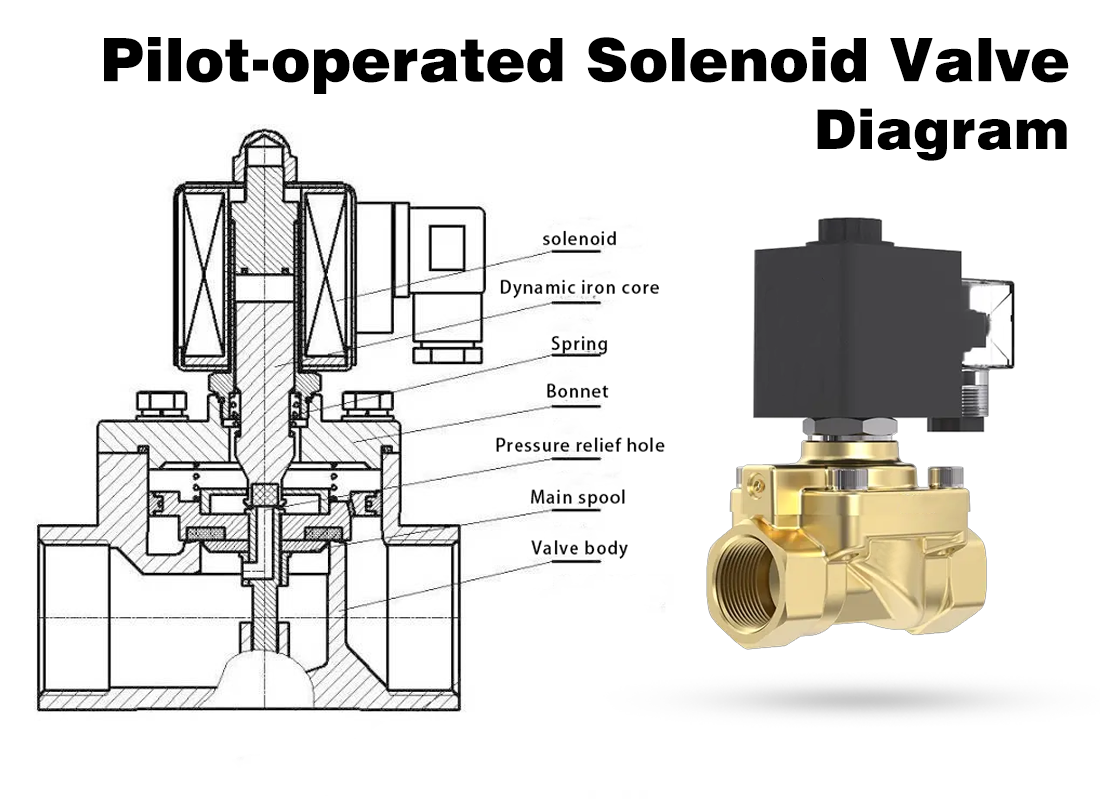
When the coil is energized, it opens or closes the pilot orifice. In a typical internally piloted design, this changes the pressure distribution across a diaphragm or piston. The resulting pressure difference moves the main valve element and controls the larger flow passage.
This arrangement allows a relatively small electromagnetic force to control a valve with greater flow capacity. Pilot-operated solenoid valves are therefore widely used in compressed-air distribution systems, automatic production lines, packaging machinery, and material-handling equipment.
However, conventional internally piloted valves generally require a minimum operating pressure or pressure differential. If the supply pressure is insufficient, the diaphragm or piston may not move reliably.
Some designs use external pilot air or alternative internal structures to meet specific operating requirements. Therefore, the minimum pilot pressure should always be checked in the manufacturer's technical specifications.
The two structures have different operating characteristics. Their typical differences are summarized below.
| Feature | Direct Acting | Pilot-Operated |
| Driving force | Electromagnetic force | Pressure difference or pilot pressure |
| Minimum operating pressure | Many models support zero differential pressure | Usually requires minimum differential pressure |
| Flow capacity | Generally suited to smaller flow passages | Generally supports larger flow capacity |
| Main valve movement | Driven directly by the coil | Driven by pressure acting on a diaphragm or piston |
| Coil requirements | Must move the main valve element | Primarily controls the pilot mechanism |
| Typical applications | Instruments, miniature devices, low-pressure circuits | Production lines, air distribution, larger flow circuits |
These are general design characteristics rather than universal specifications. Actual flow capacity, response time, power consumption, and operating pressure depend on the valve's structure and model.
A direct acting solenoid valve is often the better choice when the system cannot guarantee sufficient operating pressure. It is also suitable for applications requiring relatively low flow rates, compact dimensions, or reliable switching under changing pressure conditions.
For example, laboratory equipment and small pneumatic fixtures may need to control air or other compatible media before the system reaches its normal working pressure. A direct acting valve can perform this function without relying on a pressure difference to move its main sealing element.
It is also important to consider switching frequency and energizing time. In applications involving frequent switching or continuous energization, check the coil's rated power, allowable duty cycle, and temperature limits.
Pilot-operated solenoid valves are generally more suitable for systems with a stable pressure supply and higher flow requirements. Their pilot mechanism allows a relatively small coil to control a larger main flow passage.
Typical applications include pneumatic manifolds, automated packaging lines, industrial air distribution, and machinery operating multiple pneumatic actuators.
Before selecting this structure, confirm the minimum operating pressure, required pressure differential, flow characteristics, and installation conditions. Insufficient pilot pressure can prevent reliable switching even when the electrical signal is correct.
Selecting the right valve involves more than comparing its operating mechanism. Engineers should evaluate the complete working conditions:
① Operating pressure: Check minimum and maximum working pressures, including start-up conditions and pressure fluctuations.
② Required flow rate: Compare the valve's flow coefficient, such as Cv or Kv, with the system's actual demand.
③ Switching frequency: Consider response requirements, coil duty cycle, and expected operating cycles.
④ Electrical specifications: Match voltage, power rating, and electrical connections to the control system.
⑤ Medium compatibility: Check whether the valve body and sealing materials are suitable for the working medium and temperature.
⑥ Installation conditions: Confirm port configuration, mounting requirements, available space, and maintenance access.
The choice between direct acting and pilot-operated solenoid valves ultimately depends on the balance between pressure conditions and flow demand. Direct acting designs offer greater independence from supply pressure, while pilot-operated designs provide higher flow capacity when sufficient pilot pressure is available. Matching the valve structure to the actual operating conditions is essential for stable switching and reliable system performance.
(FK9025)
You May Interest In

Dec 02, 2025 Blog
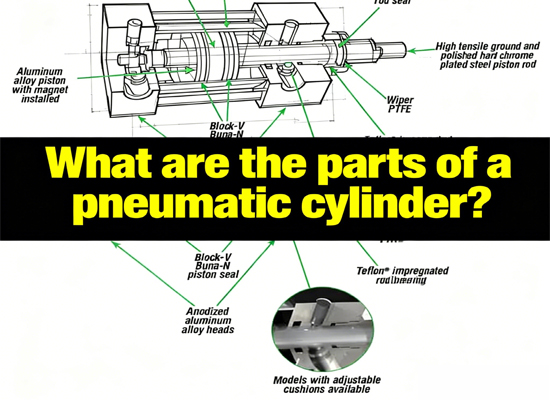
What are the parts of a pneumatic cylinder?




Apr 18, 2025 Blog
What is an Angle Seat Valve?
Get a free sample

Fokca is a brand of Ningbo Fokca Automation Co., Ltd.
Looking for custom pneumatic cylinder solutions? Visit our sister brand, Fescolo.→
© 2026 Ningbo Fokca Automation Co., Ltd. All rights reserved. Sitemap




 None