Aug 28, 2026
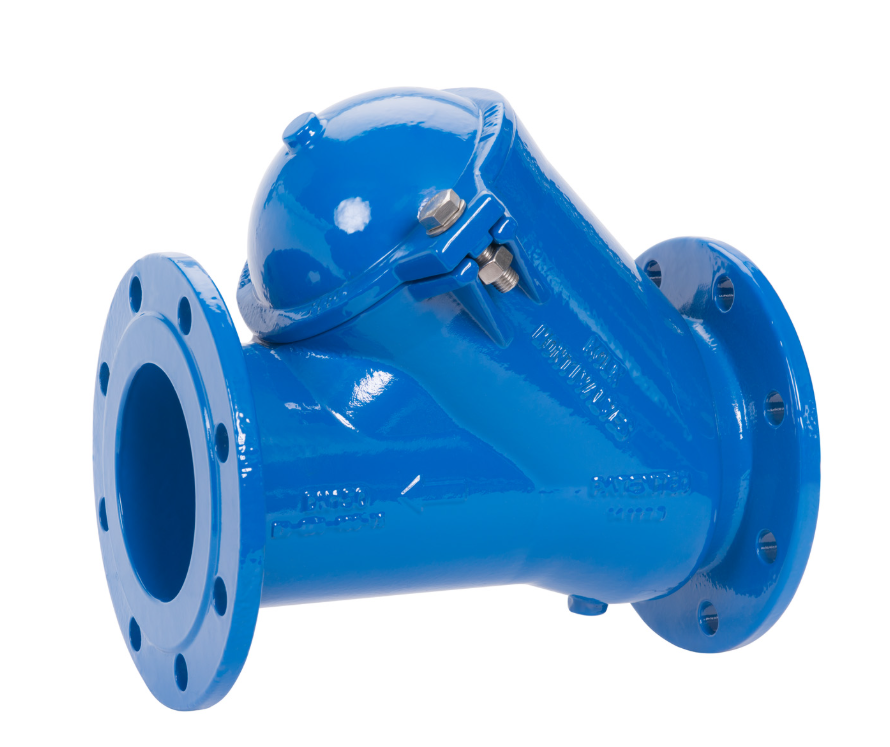
Check valves are essential components in fluid systems where reverse flow can damage equipment, interrupt operation, or affect process stability. Unlike manually operated or electrically controlled valves, they respond automatically to changes in fluid pressure and flow direction.
Also known as non-return valves or one-way valves, check valves are widely used in water supply systems, pumps, hydraulic circuits, compressed-air pipelines, and industrial fluid processing. Choosing the right design and installing it correctly are important for reliable operation.
A check valve allows fluid to travel in one direction while restricting flow in the opposite direction. Its internal moving element responds to the pressure difference across the valve without requiring an external control signal.
When inlet pressure is sufficient to overcome downstream pressure and the valve's closing force, the valve opens. When forward flow decreases or reverse pressure develops, the internal element returns toward the valve seat.
Its main functions include:
● Preventing reverse flow in pipelines.
● Protecting pumps and other equipment from backflow.
● Helping maintain pressure in selected pipeline sections.
● Preventing unwanted fluid movement when equipment stops.
The operating principle is based on pressure difference and the movement of an internal closing element.
During normal operation, upstream pressure pushes a disc, ball, piston, or other sealing element away from its seat. Fluid can then pass through the valve.
When the forward pressure drops, the closing element moves back toward the seat under gravity, spring force, or reverse fluid pressure. Once seated, it restricts reverse flow.
The exact closing behavior depends on the valve design. Some models close gradually, while spring-assisted designs are intended to respond more quickly.
Different internal mechanisms suit different flow conditions and installation requirements.
Spring-loaded check valve: Uses a spring to assist closure. Its compact construction supports various installation arrangements when permitted by the manufacturer.
Lift check valve: Uses a disc or piston that moves vertically away from its seat. It is commonly used in applications where pressure and flow conditions support this movement.
Swing check valve: Contains a hinged disc that swings open under forward flow and returns toward the seat when flow reverses. It is often used in larger pipelines with relatively stable flow.
Ball check valve: Uses a ball as the closing element. It is found in certain pump, drainage, and fluid-handling systems.
Diaphragm check valve: Uses a flexible diaphragm to control one-way flow, depending on the design and application.
Inline or axial check valve: Guides the closing element along the pipeline axis, often providing a compact installation and relatively short closing movement.
Several assumptions can lead to incorrect valve selection.
Swing check valves are not suitable for every pipeline. Their hinged disc can close relatively slowly. In systems with rapid flow reversal, this may contribute to water hammer.
Spring-assisted valves do not eliminate water hammer completely. Faster closure can help reduce reverse-flow velocity before the valve shuts, but actual pressure surges also depend on pipeline length, fluid velocity, pump operation, and system layout.
All check valves do not share the same installation requirements. Some designs require horizontal installation, while others support vertical or multiple orientations. Always follow the manufacturer's instructions.
Maintenance remains necessary. Deposits, corrosion, worn seats, and damaged springs can prevent proper closure and cause leakage.
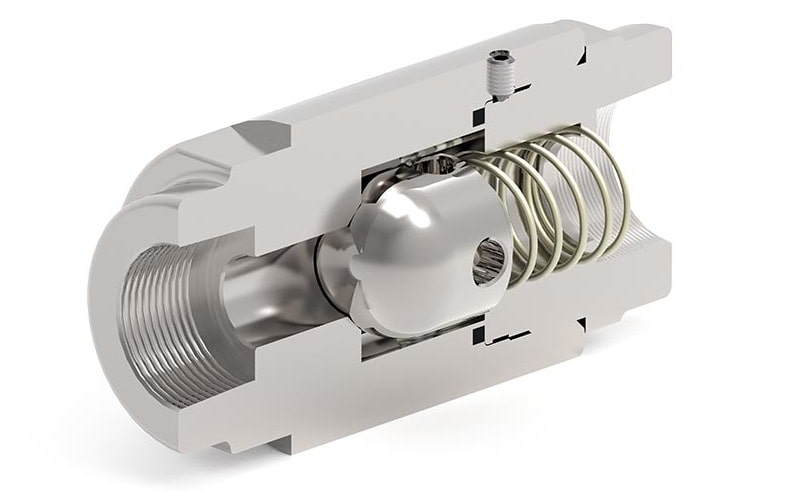
| Feature | Inline check valve | Swing check valve |
| Closing mechanism | Axial movement | Hinged disc |
| Installation space | Generally compact | Requires more clearance |
| Closing response | Often faster | Generally slower |
| Typical application | Compact pipelines and systems requiring controlled closure | Larger pipelines with suitable flow conditions |
The appropriate choice depends on flow rate, pressure loss, installation position, and the risk of reverse-flow impact.
Start by identifying the medium, operating pressure, temperature, and required flow capacity.
For corrosive fluids, consider compatible plastic, lined, or corrosion-resistant metal bodies. PTFE may be used for certain wetted components, but its suitability depends on the complete valve construction and process conditions.
For higher-pressure or higher-temperature service, stainless steel or other appropriately rated metal designs may be suitable. Check the valve's pressure-temperature rating rather than selecting material based on appearance alone.
Where installation space is limited or rapid closure is important, an inline spring-assisted design may be worth considering. For larger pipelines with suitable flow conditions, a swing check valve may be more appropriate.
Correct installation is essential for reliable check valve operation.
● Follow the flow arrow: Install the valve according to the direction marked on its body.
● Check installation orientation: Confirm whether the model supports horizontal, vertical, or other mounting positions.
● Allow suitable pipe clearance: Follow manufacturer recommendations for upstream and downstream piping arrangements.
● Check pressure and cavitation conditions: Confirm that the valve operates within its rated range and that system pressure is suitable for the medium.
● Inspect internal components: Look for damaged seats, worn seals, corrosion, and accumulated deposits.
● Clean when necessary: Remove contamination according to the manufacturer's maintenance instructions. Lubricate only components for which lubrication is specified.
Check valves are used across many industries:
● Water pumps and water supply systems
● Chemical processing and fluid transfer
● HVAC circulation and cooling systems
● Oil and gas pipelines
● Pharmaceutical and specialized fluid equipment
● Hydraulic and pneumatic circuits
FOKCA offers several check valve configurations, including CV100 Series 2PC Spring Vertical Lift Check Valves, CV300 Series Y-Spring Vertical Lift Check Valves, and other CV and KA Series check valves.
Identify the flow direction arrow, confirm the required mounting position, and connect the valve using compatible fittings and sealing methods. Avoid excessive tightening and follow the manufacturer's installation instructions.
Forward pressure opens the internal closing element. When flow stops or reverses, gravity, spring force, or reverse pressure moves the element toward its seat to restrict reverse flow.
An automotive PCV (positive crankcase ventilation) valve is different from an industrial pipeline check valve. Its inspection method depends on the vehicle design. Check for blockages, oil deposits, and abnormal operation using the vehicle manufacturer's service procedure.
Selecting a suitable check valve requires consideration of more than pipe diameter. Flow conditions, closing characteristics, material compatibility, pressure ratings, and installation orientation all influence performance. Matching these factors to the actual system helps reduce backflow problems and supports dependable long-term operation.
 The Complete Guide to Safety Valves: Types, Operation, Standards & Maintenance
 The Ultimate Guide to Check Valves: How They Work, Common Mistakes, and Smart Selection Tips
 Mastering Precision: Why Air Pressure Regulators Are Essential in Pneumatic Systems
 How Pilot-Operated Pulse Solenoid Valves Improve Dust Collection Efficiency
 Angle Seat Valve vs Ball Valve: Which Is Better for Automated Production Lines?
You May Interest In

Dec 02, 2025 Blog
What are the parts of a pneumatic cylinder?



Apr 18, 2025 Blog
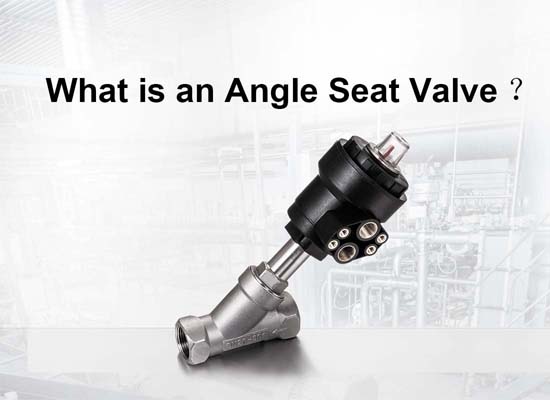
What is an Angle Seat Valve?
Get a free sample

Fokca is a brand of Ningbo Fokca Automation Co., Ltd.
Looking for custom pneumatic cylinder solutions? Visit our sister brand, Fescolo.→
© 2026 Ningbo Fokca Automation Co., Ltd. All rights reserved. Sitemap




 None