Aug 20, 2026
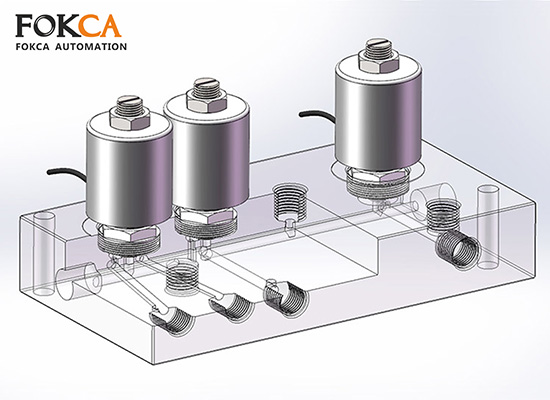
As industrial automation becomes more integrated, equipment manufacturers increasingly need compact pneumatic manifolds to simplify air circuit connections and control multiple functions within limited space.
A customized manifold can combine air distribution, flow control, pressure regulation, and solenoid valve connections in one assembly. However, achieving the right configuration requires more than machining internal passages. Port dimensions, airflow capacity, mounting interfaces, sealing materials, and compatibility with existing components must all be considered.
This FOKCA customer case demonstrates how engineering adjustments and sample testing helped develop a manifold that met specific equipment requirements.
The customer wanted to simplify the pneumatic structure of their equipment while integrating several functions, including airflow control, air circuit switching, and pressure regulation.
After discussing the application and installation requirements, FOKCA's engineering team prepared an initial design.
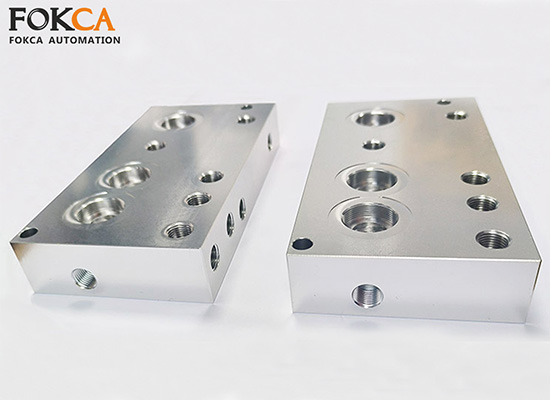
The manifold body was manufactured from aluminum alloy to provide a balance of strength and weight. Its surface was anodized to improve surface durability and corrosion resistance.
Inside the manifold, multiple air passages connected the inlets and outlets to the solenoid valve positions. This arrangement allowed different pneumatic circuits to be controlled through a compact assembly.
During the design stage, the engineering team worked with the customer to refine the drawings. Adjustments included:
● Internal air passage positions and configurations
● Mounting dimensions and installation methods
● Thread specifications and connection interfaces
● Component arrangement and assembly requirements
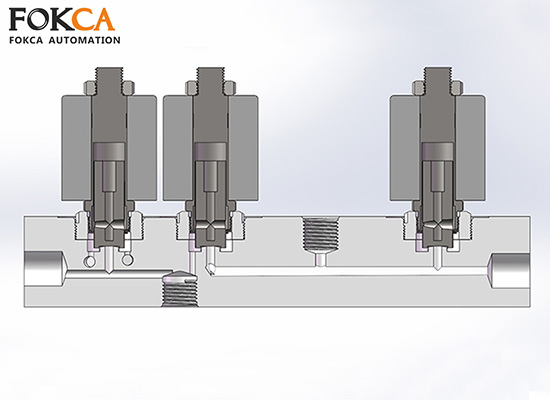
After confirming the initial design, FOKCA produced two complete samples. Each assembly included one manifold, three coils, and three pilot guides.
The samples were sent to the customer for installation and functional testing. Although the main components operated correctly, testing identified two areas requiring further improvement.
Higher airflow capacity: The customer needed larger internal air passages to support increased airflow.
Coil compatibility: The customer's existing coils used a different assembly interface. They wanted to retain the original mounting positions while allowing different coil configurations to be installed.
These requirements called for modifications to both the manifold and its accessories.
To address the airflow requirement, FOKCA enlarged the internal air holes to more than 1/8 inch. The machined passages were also carefully deburred to remove loose material and reduce the risk of internal obstructions.
For coil compatibility, the engineering team developed a dedicated adapter.
The adapter featured:
● An internal thread matching the pilot guide
● An external thread matching the manifold
● Appropriate sealing rings at the connection interfaces
● Two small holes designed for installation and removal using circlip pliers
Two additional sealing rings were fitted between the adapter and manifold to help maintain airtight connections.
FOKCA also modified the top of the original pilot guide by adding a groove, making installation and removal more convenient in the customer's equipment.
These changes allowed the customer to use different coil interfaces without changing the original manifold hole positions.
After receiving the revised samples, the customer completed another round of testing and confirmed that the components worked as required. The first batch order was then placed.
During preparation for the second batch, FOKCA made two further improvements.
First, the adapter structure was simplified, and a hexagonal section was added to make tightening and installation easier with standard tools.
Second, at the customer's request, the standard NBR sealing rings were replaced with EPDM seals. EPDM generally offers better resistance to outdoor weathering, ozone, and many hot-water applications than NBR. Its suitability for the customer's actual operating temperature and medium was also an important consideration.
This project shows that manifold customization involves more than changing external dimensions. Internal airflow paths, component interfaces, sealing arrangements, and assembly convenience can all affect the performance and usability of the final product.
Through drawing revisions, sample manufacturing, customer testing, and subsequent improvements, FOKCA developed a manifold assembly around the customer's existing equipment and component requirements.
For equipment manufacturers, this iterative engineering process helps reduce interface conflicts, improve installation convenience, and create pneumatic assemblies that better match actual operating conditions.
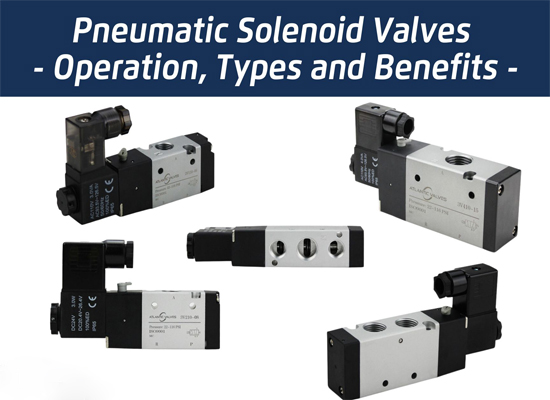 Pneumatic Solenoid Valves: Working Principles, Types and Applications
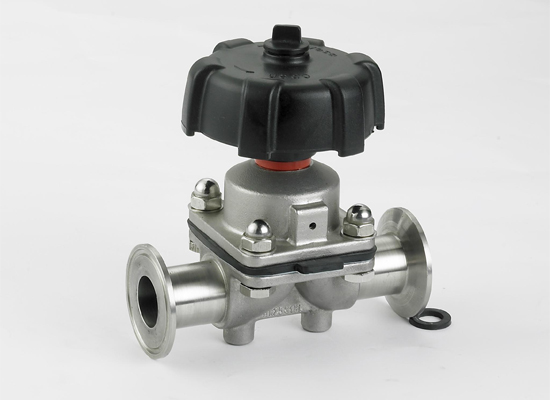 A Basic Guide to Diaphragm Valves: Features, Types and Applications
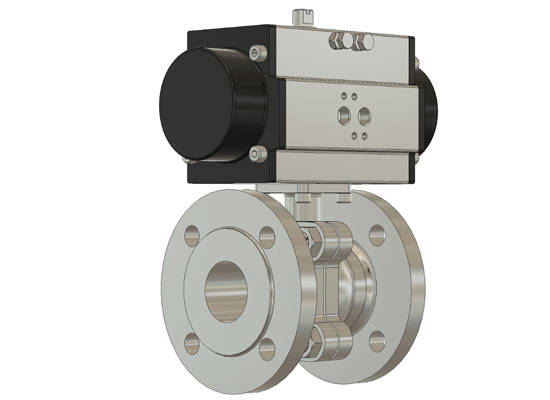 How Does a Pneumatic Ball Valve Operate? A Practical Guide
 Why Does Transparent PU Tubing Turn Yellow
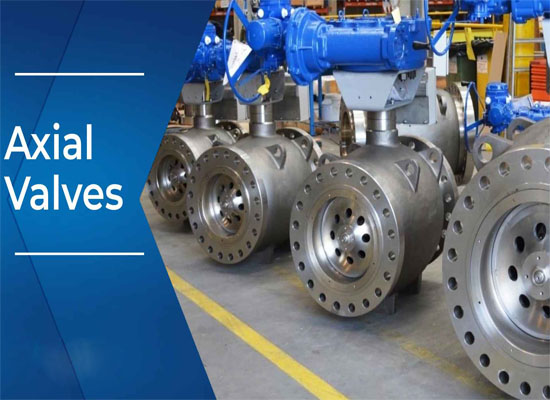 Comprehensive Analysis of Pneumatic Axial Flow Control Valves
You May Interest In

Dec 02, 2025 Blog
What are the parts of a pneumatic cylinder?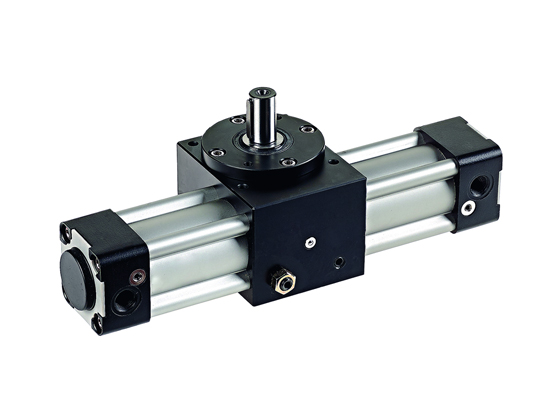

Apr 18, 2025 Blog
What is an Angle Seat Valve?
Get a free sample

Fokca is a brand of Ningbo Fokca Automation Co., Ltd.
Looking for custom pneumatic cylinder solutions? Visit our sister brand, Fescolo.→
© 2026 Ningbo Fokca Automation Co., Ltd. All rights reserved. Sitemap