Aug 26, 2026
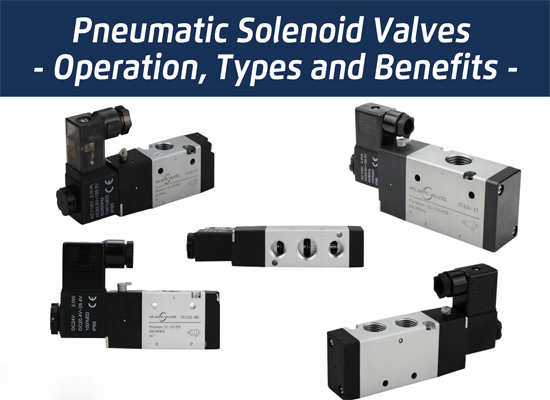
Pneumatic systems rely on compressed air to produce mechanical movement, but controlling when and where that air flows requires an effective switching component. A pneumatic solenoid valve performs this task by converting an electrical command into a change in airflow direction or state. It connects electrical control systems with pneumatic actuators, making automated equipment easier to operate and coordinate.
With compact designs, rapid switching, and straightforward electrical integration, pneumatic solenoid valves are widely used in industrial automation, packaging machinery, assembly equipment, and other compressed-air applications.
A pneumatic solenoid valve is an electrically operated directional control valve designed to manage compressed air in a pneumatic circuit. When its coil receives an electrical signal, electromagnetic force moves an internal plunger or pilot mechanism, changing the connection between the valve ports.
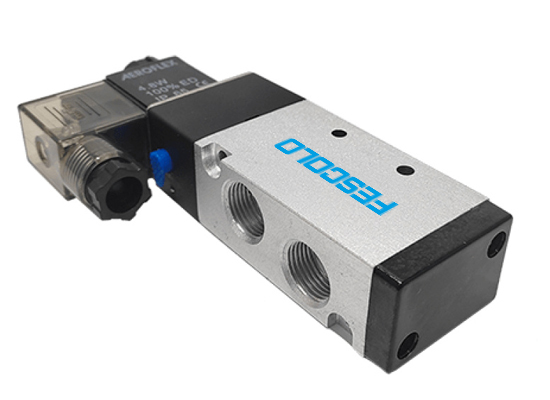
Depending on its configuration, the valve can start or stop airflow, direct compressed air to different actuator chambers, or release air through an exhaust port.
Unlike a pressure regulator, which adjusts downstream pressure, a pneumatic solenoid valve primarily controls airflow paths. It therefore plays an important role in coordinating cylinders, grippers, pneumatic motors, and other air-driven devices.
The functions of a pneumatic solenoid valve depend on its port configuration and internal design.
● Airflow switching: Opens or closes a compressed-air passage to control the supply of air to downstream equipment.
● Directional control: Routes air to different actuator chambers to produce movements such as cylinder extension and retraction.
● Electrical remote control: Allows PLCs, sensors, switches, and other control devices to operate pneumatic equipment through electrical signals.
● System coordination: Supports synchronized actions across multiple pneumatic components when integrated into an automated control system.
● Defined default position: Spring-return designs can move the valve to a predetermined position when electrical power is removed. The resulting actuator response depends on the valve configuration and circuit design.
Pneumatic solenoid valves are commonly classified by the number of ports and switching positions. The port configuration determines how compressed air enters, exits, and moves through the valve.
| Valve configuration | Main characteristics | Typical application |
| 2/2-way | Two ports and two positions; controls airflow on or off | Air supply isolation |
| 3/2-way | Three ports and two positions; includes supply, outlet, and exhaust | Single-acting cylinders |
| 5/2-way | Five ports and two positions; alternately supplies and exhausts two actuator chambers | Double-acting cylinders |
| 5/3-way | Five ports and three positions; includes a defined center position | Applications requiring an intermediate valve state |
A 3/2-way valve is commonly used with a single-acting cylinder, while a 5/2-way valve is widely used to control double-acting cylinders. A 5/3-way valve may provide a closed, exhaust, or pressure center position, depending on its design.
Valves can also be classified by their electrical control arrangement. A single-solenoid valve typically uses a spring to return to its default position after power is removed. A double-solenoid valve uses two coils to switch between positions and may retain its last position after the electrical signal disappears.
The operating principle is based on electromagnetic force. When the coil is energized, it generates a magnetic field that moves the armature or plunger. This movement changes the internal air passages, allowing compressed air to follow the selected route.
When the coil is de-energized, a spring or another return mechanism moves the internal components back, where applicable. In pilot-operated designs, the solenoid controls a pilot passage, and compressed air helps shift the main valve element.
The main components include:
● Solenoid coil: Converts electrical energy into magnetic force.
● Armature or plunger: Moves in response to the magnetic field.
● Spool or sealing element: Changes the connections between internal ports.
● Valve body: Contains the air passages and internal components.
● Spring and seals: Support return movement and help maintain separation between air passages.
The exact operating mechanism varies between direct-acting and pilot-operated designs. Selection should account for operating pressure, airflow demand, electrical specifications, and switching frequency.
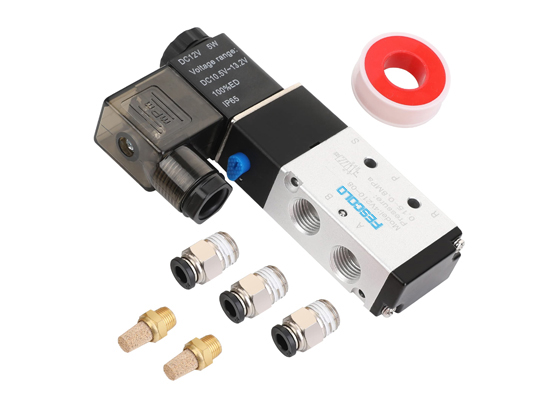
Pneumatic solenoid valves offer several practical benefits in automated systems:
● Easy automation: Electrical signals allow integration with PLCs and other control devices.
● Fast switching: Supports frequent directional changes in many pneumatic applications.
● Compact construction: Fits into control panels, valve manifolds, and space-limited machinery.
● Flexible configurations: Different port arrangements support single-acting and double-acting actuators.
● Convenient maintenance: Modular designs and replaceable coils can simplify servicing, depending on the model.
A solenoid valve does not independently regulate cylinder speed or output force. These parameters are generally adjusted through airflow controls, pressure regulation, actuator sizing, and system design.
Pneumatic solenoid valves are used wherever electrical control needs to operate compressed-air equipment.
● Automated production lines: Switch cylinders used for pushing, positioning, clamping, sorting, and material handling.
● Packaging and assembly machinery: Control pneumatic grippers, cutting mechanisms, positioning devices, and other air-operated components.
● Food and beverage processing: Operate pneumatic actuators in production and packaging equipment. Appropriate materials, compressed-air quality, and hygiene requirements must be considered.
● Medical and laboratory equipment: Control air circuits in specialized devices where precise switching and suitable material compatibility are required. The valve must meet the equipment's applicable safety and regulatory requirements.
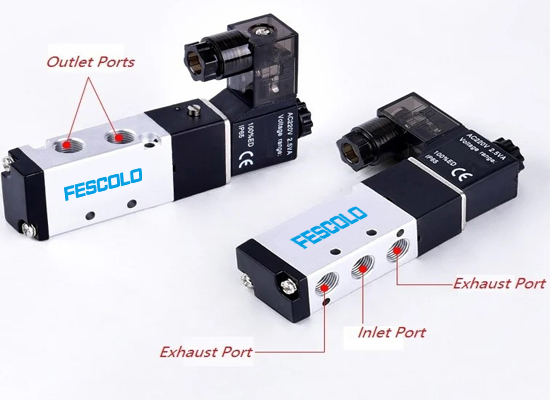
A pneumatic solenoid valve is specifically designed to control compressed air. Other solenoid valves may be designed for liquids, gases, or different process media, with different internal materials and structures.
Common components include the solenoid coil, armature, valve body, spool or sealing element, spring, seals, and connection ports. Some models also include a manual override.
The response depends on the valve design. A spring-return valve usually moves to its default position, while a double-solenoid valve may retain its previous position. The actuator's final state also depends on the pneumatic circuit.
 Brass vs Stainless Steel Pneumatic Fittings: Which Lasts Longer
 Pneumatic Solenoid Valves: Working Principles, Types and Applications
 A Basic Guide to Diaphragm Valves: Features, Types and Applications
 How Does a Pneumatic Ball Valve Operate? A Practical Guide
 Why Does Transparent PU Tubing Turn Yellow
You May Interest In

Dec 02, 2025 Blog
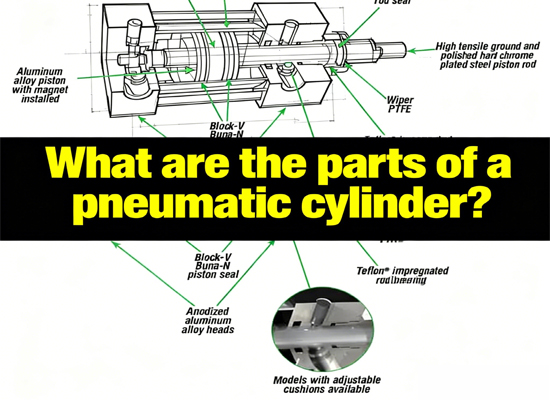
What are the parts of a pneumatic cylinder?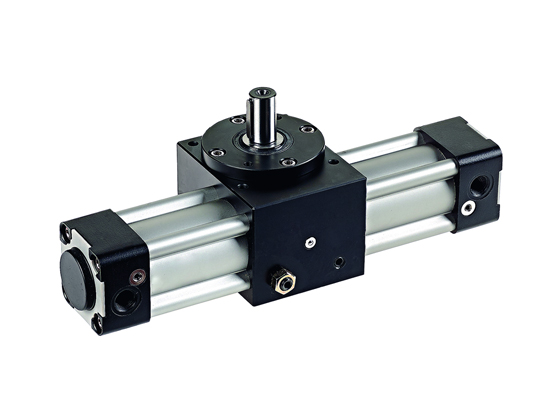

Apr 18, 2025 Blog
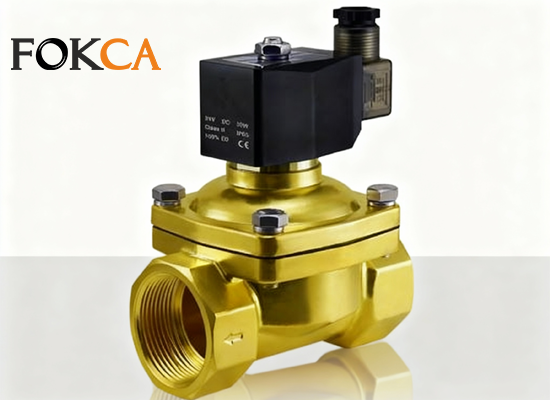
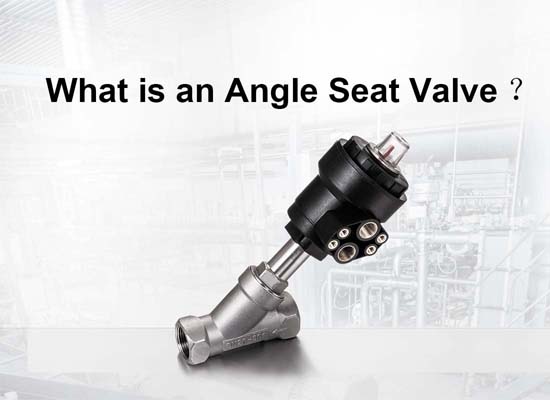
What is an Angle Seat Valve?
Get a free sample

Fokca is a brand of Ningbo Fokca Automation Co., Ltd.
Looking for custom pneumatic cylinder solutions? Visit our sister brand, Fescolo.→
© 2026 Ningbo Fokca Automation Co., Ltd. All rights reserved. Sitemap