Aug 24, 2026
Angle seat valves are widely used in industrial fluid control systems where reliable switching, high flow capacity, and compact installation are important. Their distinctive angled body design provides a different flow arrangement from conventional straight-through valves, while their actuator options allow them to operate in both manual and automated systems.
To understand whether an angle seat valve is suitable for a particular application, it is important to examine its internal construction, driving mechanisms, operating characteristics, and limitations.
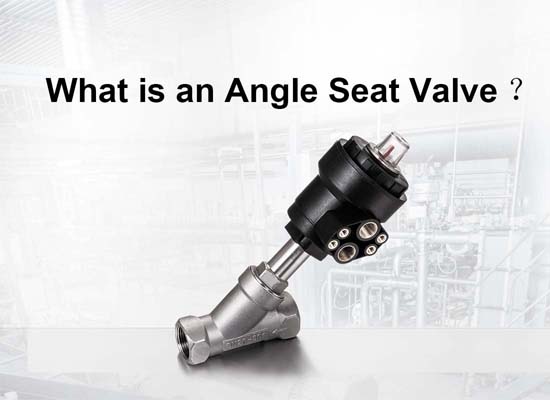
An angle seat valve is a shut-off valve featuring an angled flow passage and a sealing element that moves against a valve seat to control the medium. The inlet and outlet ports are generally arranged at an angle, commonly around 90 degrees, although the internal seat and flow geometry vary between designs.
Unlike a conventional solenoid valve, which uses an electromagnetic coil to move its sealing element directly or through a pilot mechanism, an angle seat valve commonly uses a piston actuator to operate the valve stem and plug. Pneumatic models are particularly common in industrial applications because they can switch quickly and support frequent automated operation.
Depending on its construction and sealing materials, an angle seat valve can control compatible liquids, gases, steam, and other process media.
The main components of an angle seat valve work together to control the flow and maintain a reliable seal.
● Valve body: The body contains the internal flow passage and connects the valve to the pipeline. Stainless steel and other suitable materials are selected according to the medium, pressure, temperature, and corrosion requirements.
● Valve seat and plug: These components form the primary shut-off interface. When the plug presses against the seat, the valve closes. When the plug moves away, the flow passage opens.
● Valve stem: The stem transfers movement from the actuator to the plug. Its design and sealing arrangement help maintain separation between the controlled medium and the actuator mechanism.
● Actuator: The actuator supplies the mechanical force required to open or close the valve. Depending on the model, it can be pneumatic, electric, or manual.
A key design feature is the angled flow path. Compared with some conventional valve arrangements, this geometry can provide a compact pipeline connection and favorable flow capacity. However, actual pressure loss depends on the internal passage, valve opening, medium properties, and flow conditions.
Different drive mechanisms are available depending on the level of automation and operating requirements.
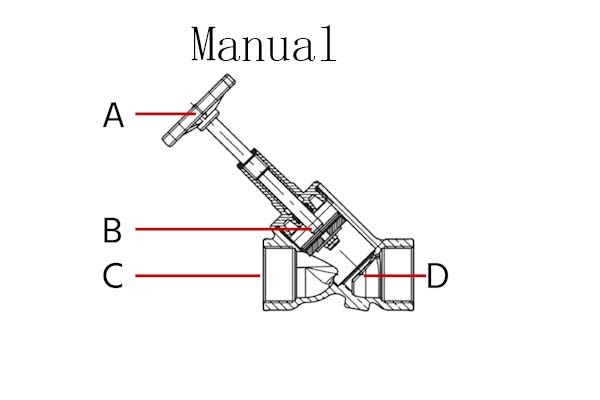
Manual angle seat valves use a handwheel or lever to move the valve stem. Turning the operating mechanism changes the position of the plug relative to the valve seat.
Their simple operating arrangement makes them suitable for pipelines that require occasional switching or where automatic control is unnecessary. However, manual operation is less convenient in systems requiring frequent cycling or remote control.
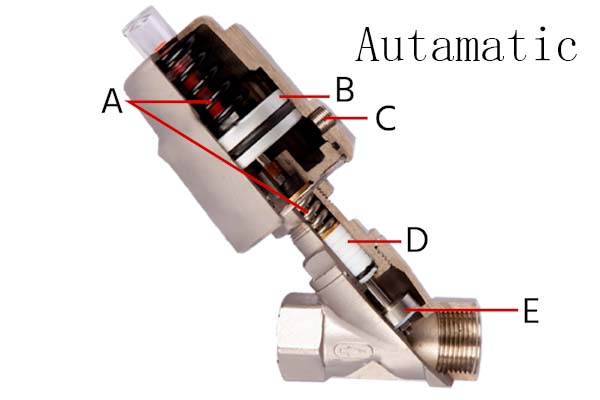
Pneumatic angle seat valves use compressed air to drive a piston inside the actuator housing. The piston converts air pressure into linear movement, which is transmitted through the stem to the valve plug.
A spring-return actuator generally provides two operating configurations:
● Normally Closed (NC): The valve remains closed without actuator air pressure and opens when compressed air is supplied.
● Normally Open (NO): The valve remains open without actuator air pressure and closes when compressed air is supplied.
Double-acting actuators use compressed air to drive movement in both directions rather than relying on a return spring.
Pneumatic operation is widely used in automated production equipment because it supports fast switching and can be integrated with solenoid pilot valves, PLCs, and position feedback devices.
Electric angle seat valves use a motor-driven actuator to move the valve stem. A gearbox may be incorporated to provide the required torque or thrust, while limit switches or position sensors can provide feedback.
Depending on the actuator design, electric models may support on/off operation or proportional positioning. They are useful where electrical control is preferred or compressed air is unavailable. Their selection should account for operating speed, torque, control signals, and environmental protection.
Angle seat valves offer several practical advantages, but their suitability depends on the actual operating conditions.
| Advantages | Limitations |
| Good flow capacity in a compact design | Flow performance varies by internal geometry |
| Fast switching with pneumatic actuation | Requires a suitable compressed-air supply |
| Suitable for frequent operating cycles | Seals and moving components require maintenance |
| Available in different body and seal materials | Material compatibility must be verified |
| Supports automated process control | Actuator and control accessories increase system complexity |
Many angle seat valves are designed with a relatively large flow passage. This can provide favorable flow capacity for their overall size. Pneumatic versions also support rapid opening and closing, making them suitable for repetitive switching operations.
The actual flow capacity should be evaluated using the manufacturer's Cv or Kv data rather than valve connection size alone.
Suitable angle seat valve designs can operate in applications involving elevated temperatures, pressure, and frequent cycling. However, service life depends on the valve structure, sealing material, operating frequency, pressure conditions, and maintenance.
For example, PTFE-based sealing components may be appropriate for certain high-temperature or chemically demanding applications, but their allowable temperature and pressure limits must be checked for the specific product.
Pneumatic actuators require an appropriate air supply, and poor air quality can affect actuator performance. Water hammer, pressure surges, incorrect flow direction, and unsuitable sealing materials may also shorten valve service life.
In addition, larger actuators may be required when operating forces increase. This can affect installation space and overall equipment cost.
Angle seat valves are found in various industries because they can handle different media and support automated switching.
● Food and beverage processing: Used for controlling compatible process liquids, cleaning media, and steam in production and cleaning equipment. Hygienic applications require suitable surface finishes, seals, and regulatory compliance.
● Chemical processing: Applied to fluid transfer and process control where body and sealing materials must withstand the specific chemical medium.
● Oil and gas equipment: Used in suitable auxiliary fluid and gas control systems. Pressure ratings, material compatibility, and hazardous-area requirements must be evaluated.
● Water and wastewater treatment: Used for controlling water, compressed air, and compatible treatment media in filtration and processing equipment.
● Pharmaceutical production: Used in process equipment where material selection, cleanability, and contamination control are important.
● Industrial automation: Integrated into pneumatic machinery, packaging equipment, and automated production lines for repeated fluid switching.
Choosing the correct valve requires evaluating the entire operating environment rather than focusing only on its connection size.
● Connection type and size: Confirm the pipeline dimensions, thread standard, flange or connection arrangement, and installation space.
● Operating pressure: Check the working pressure range and the actuator pressure requirements. These are separate specifications.
● Temperature: Consider both the medium temperature and ambient conditions, including the temperature limits of seals and actuator components.
● Material compatibility: Select suitable body, plug, and sealing materials according to the medium's chemical properties.
● Flow requirements: Evaluate Cv/Kv, required flow rate, and pressure differential to ensure adequate capacity.
● Actuation and control: Determine whether manual, pneumatic, or electric operation is appropriate, and confirm the required default position and control method.
● Maintenance access: Allow sufficient space for actuator removal, seal replacement, and routine inspection.
A pneumatic angle seat valve is an angle-pattern shut-off valve operated by compressed air. Its piston actuator moves the valve stem and plug to open or close the flow passage.
Yes. Certain angle seat valves are designed for steam applications. The valve body, seals, pressure rating, and temperature limits must all be suitable for the actual steam conditions.
Some models can be used for throttling, but conventional angle seat valves are primarily designed for on/off control. If accurate continuous flow regulation is required, a valve specifically designed for modulating service may be more appropriate.
An angle seat valve is defined mainly by its body and flow-path design, whereas a solenoid valve is operated through electromagnetic actuation. Many angle seat valves use pneumatic piston actuators, while solenoid valves use electromagnetic mechanisms. Both can be automated, but their flow characteristics and operating requirements differ.
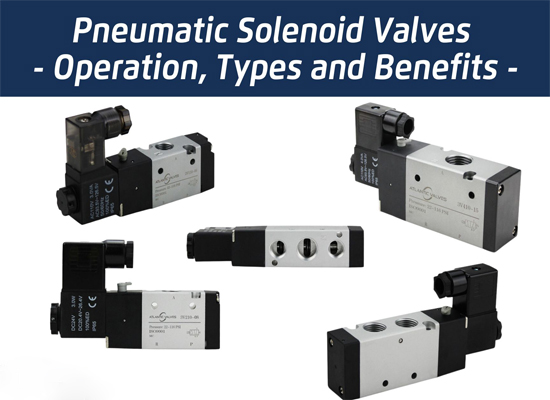 Pneumatic Solenoid Valves: Working Principles, Types and Applications
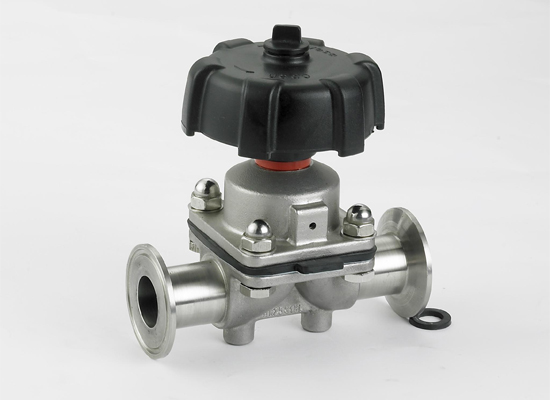 A Basic Guide to Diaphragm Valves: Features, Types and Applications
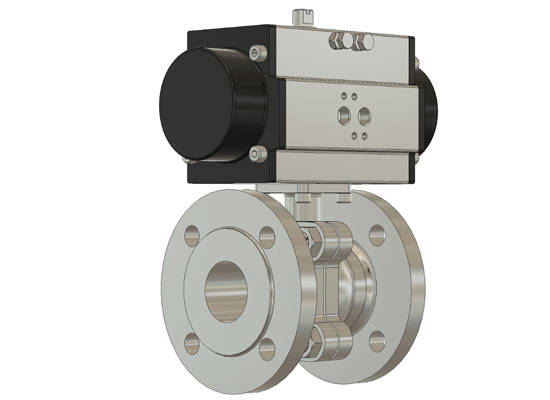 How Does a Pneumatic Ball Valve Operate? A Practical Guide
 Why Does Transparent PU Tubing Turn Yellow
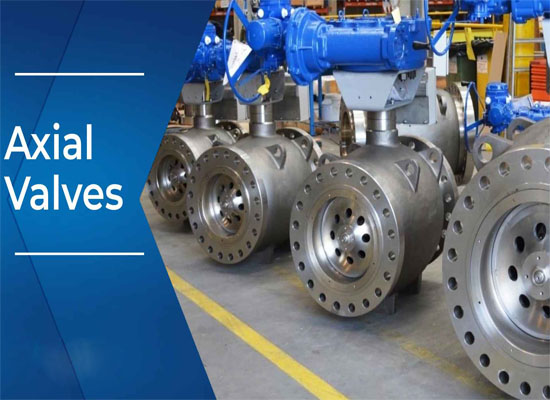 Comprehensive Analysis of Pneumatic Axial Flow Control Valves
You May Interest In


Dec 02, 2025 Blog
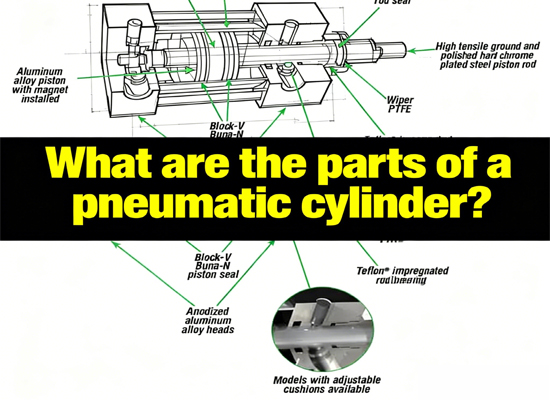
What are the parts of a pneumatic cylinder?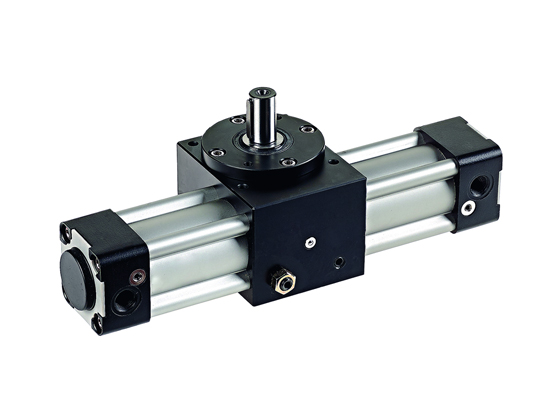


Apr 18, 2025 Blog
What is an Angle Seat Valve?
Get a free sample

Fokca is a brand of Ningbo Fokca Automation Co., Ltd.
Looking for custom pneumatic cylinder solutions? Visit our sister brand, Fescolo.→
© 2026 Ningbo Fokca Automation Co., Ltd. All rights reserved. Sitemap