Nov 06, 2026
When selecting valves for industrial pipelines, you will often see size markings such as DN15, DN20, DN25, DN50, and DN100. These designations appear on ball valves, gate valves, globe valves, diaphragm valves, and automated valve assemblies.
DN, or Nominal Diameter, is an internationally used reference for identifying the nominal size of pipes and valves. Choosing the correct DN helps ensure connection compatibility and provides a starting point for calculating flow capacity and pressure loss.
However, DN does not represent the exact measured inner diameter of a pipe or valve. Understanding what these numbers mean—and how they affect system performance—is essential for selecting the right valve.
DN stands for Diamètre Nominal, a nominal size designation used in piping and valve standards. It identifies the approximate size category of a pipeline component rather than specifying its exact internal or external diameter.
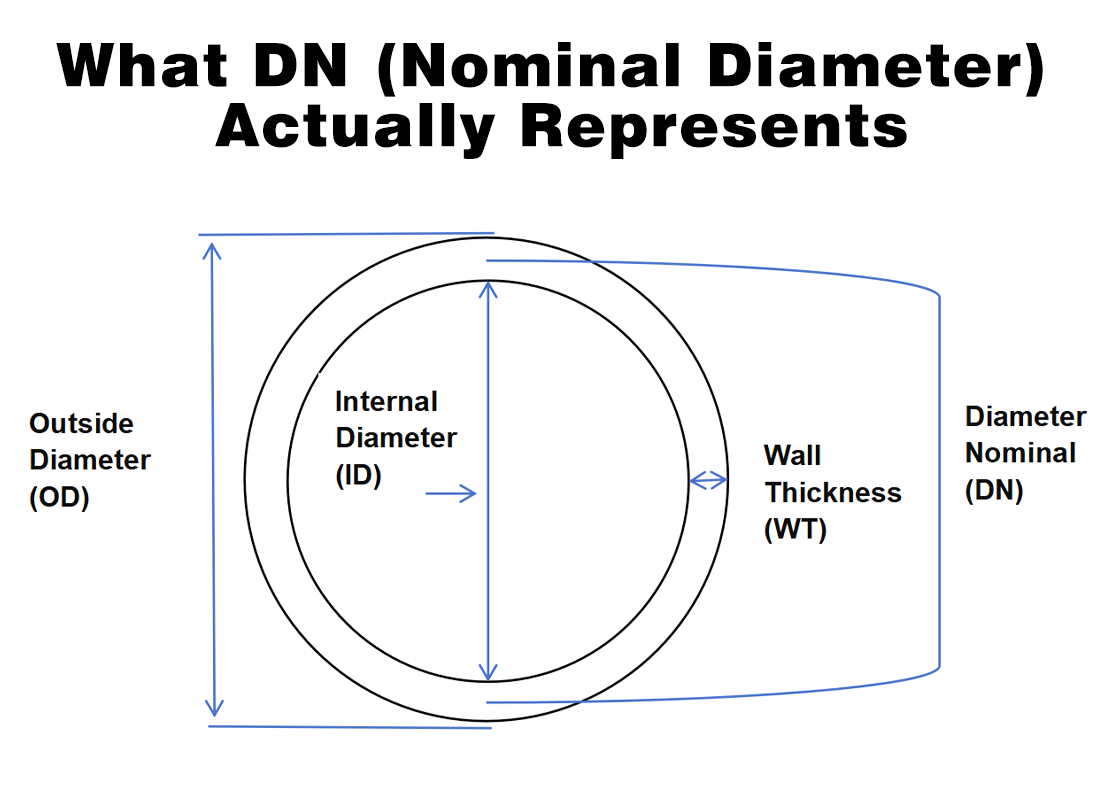
For example, DN15, DN20, and DN25 are commonly associated with nominal inch sizes of 1/2 inch, 3/4 inch, and 1 inch, respectively.
The actual internal diameter can vary depending on pipe material, wall thickness, pressure class, and product design. Similarly, the bore of a valve may differ from its nominal connection size. A full-port ball valve generally has a flow passage close to the connected pipe bore, while a reduced-port valve has a smaller opening.
| Nominal Size | Common Inch Equivalent | Typical Description |
| DN15 | 1/2 inch | Half-inch |
| DN20 | 3/4 inch | Three-quarter-inch |
| DN25 | 1 inch | One-inch |
| DN32 | 1 1/4 inches | One-and-a-quarter-inch |
| DN40 | 1 1/2 inches | One-and-a-half-inch |
| DN50 | 2 inches | Two-inch |
| DN65 | 2 1/2 inches | Two-and-a-half-inch |
| DN80 | 3 inches | Three-inch |
| DN100 | 4 inches | Four-inch |
These are common nominal size correspondences, not exact dimensional conversions. For installation, always check the applicable pipe and valve standards, including connection type, thread specification, flange dimensions, and pressure rating.
DN affects more than the physical size of a valve. It also influences flow capacity, pressure loss, equipment dimensions, and overall system cost.
A larger flow passage provides a greater cross-sectional area, allowing more fluid to pass at the same average velocity.
For a circular passage, the cross-sectional area is:
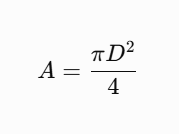
If the actual internal diameter increases, the available flow area increases with the square of the diameter.
For illustration, a circular passage with an actual diameter of 25 mm has approximately 2.78 times the cross-sectional area of one with a 15 mm diameter. However, this does not mean a DN25 valve always delivers 2.78 times the flow of a DN15 valve. Actual DN sizes do not necessarily equal measured bore diameters, and valve flow characteristics also matter.
For accurate selection, engineers should use the valve's Cv or Kv flow coefficient, together with the required flow rate and available pressure differential.
When fluid passes through a valve, resistance is created by friction, changes in flow direction, and restrictions within the valve body.
An undersized valve may cause excessive velocity and pressure loss, particularly in systems with high flow demand. Selecting a suitable larger bore can reduce flow resistance and help maintain the required downstream pressure.
However, increasing DN does not automatically eliminate cavitation or improve system efficiency. These problems also depend on fluid properties, pressure conditions, valve design, and operating flow rate.
For compressed air systems, appropriately sized valves and pipelines can reduce pressure loss and help pneumatic equipment receive sufficient air.
Larger valves generally require more material and occupy more installation space. They may also have higher purchase, transportation, and maintenance costs.
For automated valves, the actuator must be selected according to the valve's actual operating torque rather than DN alone. Larger valves often require greater torque, but differential pressure, seat design, medium properties, and valve type can significantly influence the requirement.
Therefore, DN should be considered together with the valve's pressure rating, flow characteristics, and actuator specifications.
Different industries use DN sizes according to their flow requirements, piping layouts, and equipment specifications.
| Application | Common DN Range | Selection Considerations |
| Beverage dispensing and small dosing systems | DN15–DN20 | Low flow and accurate delivery |
| Industrial water and chemical lines | DN20–DN50 | Flow demand and medium compatibility |
| Factory compressed air distribution | DN15–DN40 | Air consumption and pressure loss |
| HVAC chilled-water systems | DN25–DN50 and larger | Flow rate and allowable pressure drop |
| Industrial pump pipelines | DN50 and above | Pump capacity and pipeline design |
These ranges are examples rather than fixed industry requirements. The correct size must be determined from the actual system design.
When choosing between DN15, DN20, DN25, or larger sizes, consider the following factors:
Determine the maximum and normal operating flow rates. Use the manufacturer's Cv or Kv data to check whether the valve can meet the required capacity without excessive pressure loss.
The valve connection must match the pipeline in nominal size and connection standard. Check thread types, flange dimensions, and pressure ratings before ordering. DN compatibility alone does not guarantee that two components can be connected.
Consider the pressure available upstream and the minimum pressure required downstream. An undersized valve may restrict flow and increase energy consumption.
A full-port ball valve, reduced-port ball valve, globe valve, and diaphragm valve can have different flow characteristics even when they share the same DN designation. Select according to the required flow capacity and control function.
Avoid choosing an unnecessarily large valve. Oversizing can increase initial cost and installation requirements, and may also affect control performance in throttling applications.
DN15, DN20, DN25, and other nominal diameter designations are essential references in industrial piping systems. They help identify compatible component sizes, but they do not directly specify the actual internal diameter or flow capacity of a valve.
For reliable selection, engineers should evaluate pipeline dimensions, required flow rate, pressure drop, valve flow characteristics, and operating conditions together.
FOKCA provides industrial valves and pneumatic components in various sizes and configurations. Contact our team with your pipeline size, medium, working pressure, and flow requirements to identify a suitable valve solution.
(FK9025)
 Valve DN Explained: What Size Is DN15, DN20, DN25 and How to Choose?
 How a pneumatic system works-Fokca Automation
 FRL: A 5-Minute Illustrated Selection Guide
 Pneumatic Ball Valves Explained: How It Works, Valve Types, and Key Selection Factors
 Selecting a Pneumatic Actuator: Key Differences Between Single Acting and Double Acting Designs
You May Interest In



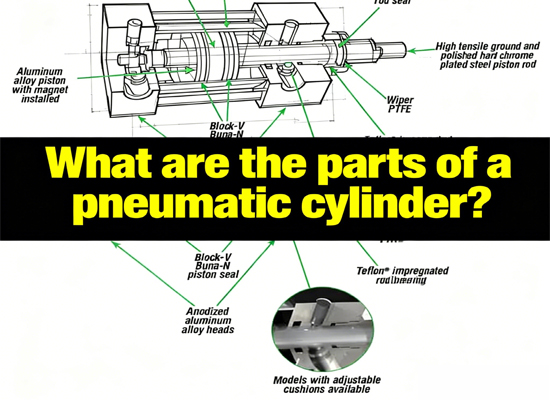
Dec 02, 2025 Blog
What are the parts of a pneumatic cylinder?







Apr 18, 2025 Blog
What is an Angle Seat Valve?
Get a free sample

Fokca is a brand of Ningbo Fokca Automation Co., Ltd.
Looking for custom pneumatic cylinder solutions? Visit our sister brand, Fescolo.→
© 2026 Ningbo Fokca Automation Co., Ltd. All rights reserved. Sitemap




 None