Aug 25, 2026
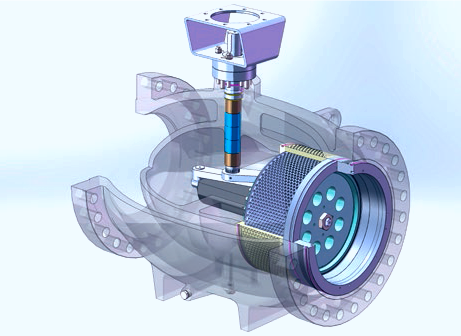
In industrial fluid systems, valve design affects more than flow control. Pressure loss, switching speed, installation space, and operating reliability can all influence overall system performance. Pneumatic axial valves address these requirements through a streamlined flow passage and a linearly moving valve element.
Unlike conventional globe valves, which typically redirect fluid through an internal change in direction, an axial flow valve is designed to guide the medium along a relatively straight path. Combined with pneumatic actuation, this construction can provide efficient flow control in applications requiring rapid switching and relatively high flow capacity.
A pneumatic axial valve is a fluid control valve operated by compressed air. It uses a valve core or internal control element that moves linearly along the valve's central axis to open, restrict, or close the flow passage.
Its straight-through flow arrangement can reduce changes in flow direction and help limit pressure losses compared with some conventional valve designs. However, actual flow resistance depends on the internal geometry, valve opening, and flow conditions.
The pneumatic actuator supplies the mechanical force needed to move the valve element. This makes the valve suitable for automated systems where remote operation, repeatable switching, and integration with control equipment are required.
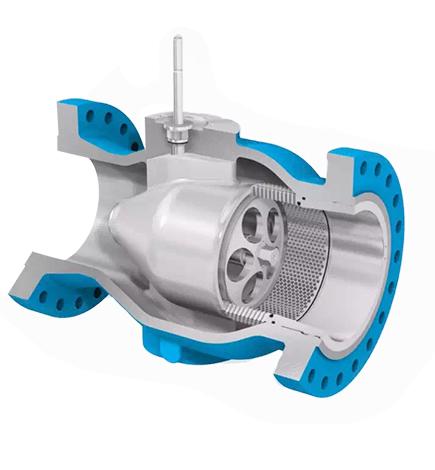
The construction of a pneumatic axial valve combines a flow-control assembly with a linear actuator. Its main components include:
● Valve body: Contains the flow passage and supports the internal components. Its material and pressure rating must match the operating medium and system conditions.
● Valve core: Moves along the central axis to change the available flow area and control the medium.
● Valve seat and sealing elements: Form the sealing interface when the valve closes, helping prevent internal leakage.
● Pneumatic actuator: Converts compressed air pressure into linear mechanical force.
● Piston rod: Transfers actuator movement to the valve core.
● Spring: Provides the return force in spring-return, single-acting configurations.
● Guide sleeve and packing: Support smooth linear movement and help maintain sealing around moving components.
The exact arrangement varies by manufacturer and valve model. Some designs integrate the actuator and valve assembly into a compact unit, while others use different guiding and sealing structures.
The operating principle is based on converting compressed air into linear movement. The actuator piston moves inside its cylinder, and the connected piston rod transfers this movement to the valve core.
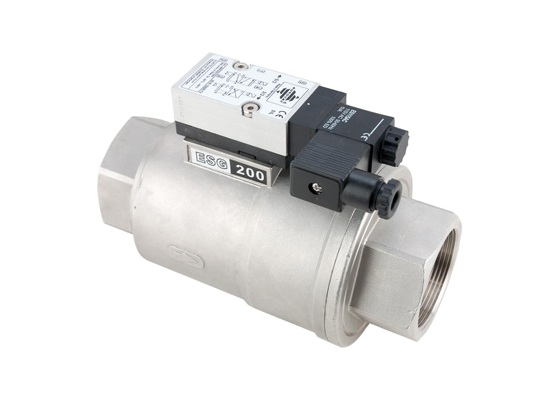
When the control system supplies compressed air to the actuator, pressure builds inside the actuator chamber and generates force on the piston. The piston moves, driving the piston rod and connected valve core away from the closed position. As the valve core moves, the flow passage opens and the medium can pass through the valve.
The closing method depends on the actuator configuration.
In a single-acting design, compressed air drives the actuator in one direction, while a spring provides the return movement when the air pressure is released. In a double-acting design, compressed air is supplied alternately to opposite sides of the piston to control movement in both directions.
As the valve core returns to the closed position, it contacts the seat and restricts the flow passage. The final sealing performance depends on the condition and design of the sealing surfaces.
Pneumatic axial valves offer several design characteristics that can be useful in industrial fluid systems.
● Straight-through flow path: The axial passage helps reduce unnecessary changes in flow direction. This can contribute to lower pressure loss, depending on the valve's internal design and operating conditions.
● Linear actuation: The valve core moves directly along the central axis. This arrangement supports controlled opening and closing without requiring rotary movement.
● Fast pneumatic operation: Compressed air provides the driving force, allowing rapid switching when the actuator, control valve, and air supply are correctly sized.
● Compact integration: Some axial valve designs combine a streamlined body with an integrated actuator, helping reduce installation space.
● Reliable shutoff: Properly designed sealing components provide effective closure. Leakage performance should be assessed using the manufacturer's specified leakage class rather than assuming every model provides zero leakage.
Pneumatic axial valves can be considered for automated fluid systems where a straight flow path, fast switching, and pneumatic control are important.
● Oil and gas: Pipeline isolation and flow switching, subject to the valve's pressure rating, material compatibility, and applicable industry requirements.
● Chemical processing: Control of process fluids where the body and sealing materials are compatible with the medium.
● Power generation: Fluid and gas control in auxiliary systems, with pressure and temperature ratings verified for the specific service.
● Food and pharmaceutical processing: Fluid switching in systems requiring suitable hygienic materials, surface finishes, and cleaning compatibility.
● Industrial automation: Automated switching and flow control in production equipment and pneumatic systems.
Not every axial valve is suitable for every application. High-viscosity fluids, abrasive particles, corrosive chemicals, steam, and high-pressure service require particular attention to internal design, sealing materials, and operating limits.
Before choosing a model, evaluate the following requirements:
● Medium: Identify the fluid or gas, including its chemical properties, viscosity, and particle content.
● Pressure and temperature: Confirm that both the valve body and sealing components can withstand the actual operating range.
● Flow capacity: Check the valve's rated flow characteristics and pressure drop under expected operating conditions.
● Actuator configuration: Choose single-acting or double-acting operation according to the required control method and failure position.
● Switching frequency: Ensure the actuator and valve are suitable for the expected operating cycle.
● Installation requirements: Check connection dimensions, available space, air supply, and maintenance access.
A pneumatic axial valve should be selected according to the complete operating conditions rather than flow direction or nominal pipe size alone. Correct matching of the valve body, internal components, actuator, and control system is essential for dependable performance.
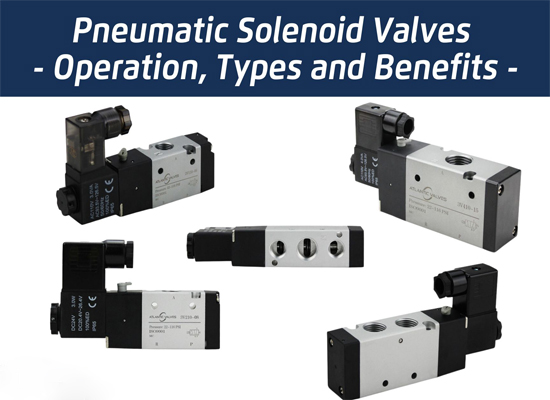 Pneumatic Solenoid Valves: Working Principles, Types and Applications
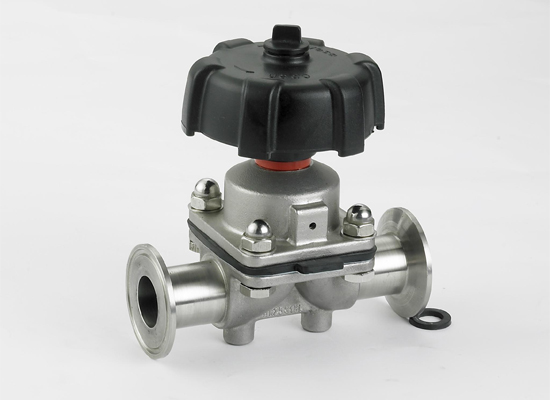 A Basic Guide to Diaphragm Valves: Features, Types and Applications
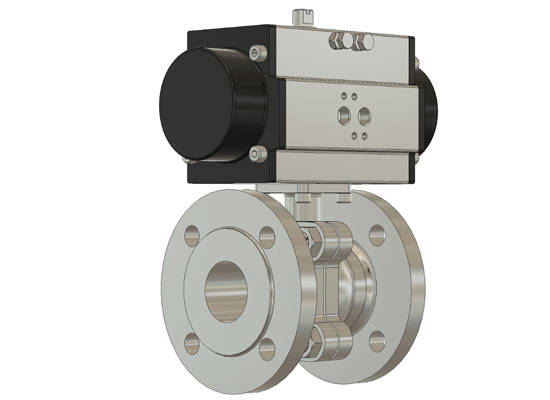 How Does a Pneumatic Ball Valve Operate? A Practical Guide
 Why Does Transparent PU Tubing Turn Yellow
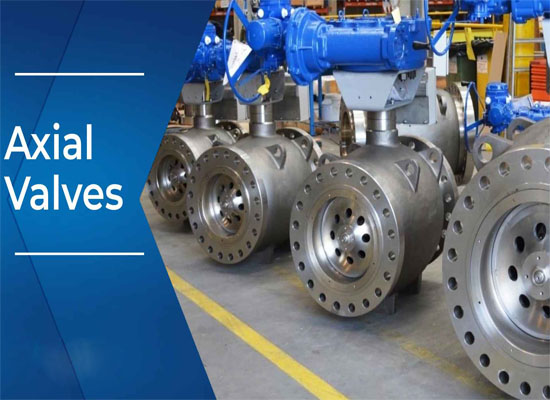 Comprehensive Analysis of Pneumatic Axial Flow Control Valves
You May Interest In

Dec 02, 2025 Blog
What are the parts of a pneumatic cylinder?



Apr 18, 2025 Blog
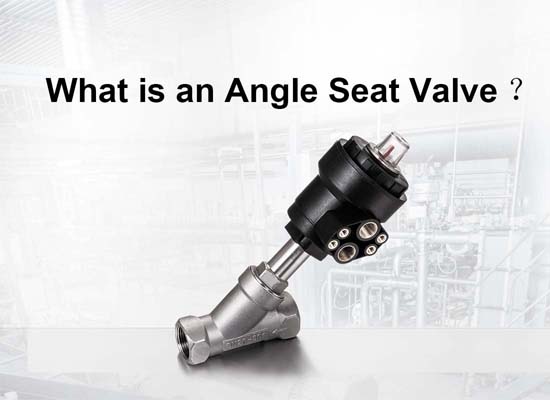
What is an Angle Seat Valve?
Get a free sample

Fokca is a brand of Ningbo Fokca Automation Co., Ltd.
Looking for custom pneumatic cylinder solutions? Visit our sister brand, Fescolo.→
© 2026 Ningbo Fokca Automation Co., Ltd. All rights reserved. Sitemap