Aug 26, 2026
Air cylinder tubing is a core component of a pneumatic cylinder. It forms the cylinder barrel that houses the piston and guides its movement during operation. The inner surface must be smooth and accurately machined to minimize friction, prevent air leakage, and support stable cylinder performance.
Aluminum is one of the most common materials for air cylinder tubing because it combines low weight, good corrosion resistance, thermal conductivity, and easy machinability. It is widely used in industrial automation, pneumatic equipment, packaging machinery, and other air-powered systems.
The pneumatic cylinder barrel directly affects the reliability and service life of a cylinder. Its main advantages include:
•Lightweight: Aluminum barrels reduce cylinder weight, making equipment easier to install and operate.
•Corrosion Resistance: Aluminum alloy offers good resistance to moisture and general corrosion.
•Good Thermal Conductivity: Aluminum helps dissipate heat generated during repeated cylinder operation.
•Durability: Proper anodizing or surface treatment improves wear resistance and extends service life.
•Smooth Internal Surface: A precision-finished bore reduces friction and supports smooth piston movement.
Air cylinder tubing is primarily used to form the working chamber of pneumatic cylinders. It is commonly found in:
•Pneumatic Cylinders: Housing the piston and providing the chamber for compressed air to generate linear motion.
•Automated Equipment: Used in robotic systems, conveyors, assembly machines, and packaging equipment.
•Industrial Machinery: Supporting repetitive motion and positioning operations in manufacturing systems.
•Special Pneumatic Applications: Customized tubing can be produced for specific cylinder dimensions and operating conditions.
Air cylinder tubing is available in different bore sizes, including common dimensions such as 32 mm, 40 mm, and 50 mm. However, the tube length does not necessarily need to follow a fixed standard.
For applications requiring special stroke lengths or installation dimensions, FOKCA (FESCOLO) can provide customized air cylinder tubing according to the cylinder design, operating conditions, and customer requirements.
Cylinder tubes are generally classified according to their material, with aluminum alloy and stainless steel being two common options.
Aluminum alloy cylinder tubes are widely used in standard pneumatic cylinders. 6063 aluminum alloy is particularly common because it offers a good balance of strength, corrosion resistance, machinability, and weight.
These tubes are lightweight, easy to process, and suitable for general industrial automation, pneumatic control systems, and equipment where weight reduction is important.
Stainless steel cylinder tubes are selected when higher corrosion resistance, strength, or durability is required. 304 stainless steel is a commonly used option.
Compared with aluminum, stainless steel provides better resistance to harsh environments and mechanical wear. It is therefore suitable for food processing, chemical equipment, and applications exposed to demanding operating conditions.
6063 T5 aluminum is commonly selected for air cylinder tubing because it provides a practical combination of performance and manufacturing efficiency.
Its excellent extrudability allows manufacturers to produce accurate tube profiles, while its good corrosion resistance makes it suitable for humid industrial environments. It also provides sufficient strength for many pneumatic applications without adding unnecessary weight.
Compared with higher-strength aluminum alloys, 6063 T5 can offer a more economical solution while maintaining the properties required for most pneumatic cylinder barrels.
Depending on the cylinder structure and application, aluminum pneumatic cylinder tubing can be manufactured in different designs:
•Smooth Bore Tubes: Provide a precise internal surface for smooth piston movement.
•Hard Coat Anodized Tubes: Improve surface hardness and wear resistance for high-cycle applications.
•Flanged or Threaded Tubes: Designed for specific cylinder assembly and mounting requirements.
•Customized Tubes: Produced according to required bore diameter, length, profile, and cylinder structure.
Surface treatment is an important factor when selecting air cylinder tubing.
Hard coat anodizing creates a harder and more wear-resistant surface, making it suitable for pneumatic cylinders operating under frequent cycling or demanding conditions.
Sandblast anodizing provides a matte and uniform appearance while offering corrosion protection. It is often selected when both surface appearance and general durability are important.
The right treatment should be chosen according to the cylinder's operating frequency, environment, and expected service life.
Choosing the right pneumatic cylinder barrel requires more than selecting a material. Bore size, tube length, surface treatment, internal finish, operating environment, and cylinder structure all affect performance.
FOKCA provides customized air cylinder tubing and complete cylinder solutions, including custom sizing, anodizing and hard-coat treatments, cylinder assembly, and quality testing. With professional engineering support, customers can select or customize cylinder barrels for different pneumatic applications.
For more technical questions, you can also refer to the Fokca Fescolo Aluminum Cylinder Tube FAQ.
(FK9026)
 AV700 Series Fill Valve: A Comprehensive Application Guide
 Pilot Pressure vs Working Pressure in Industrial Valves: Key Differences and Selection Guide
 Water Hammer Explained: Why Angle Seat Valves Are the Optimal Solution
 Valve Flow Rate Comparison: An Analysis of Four Common Valve Types
 The Temperature Limit of Valves: How Seal Material Affects Valve Body Performance
You May Interest In

Dec 02, 2025 Blog
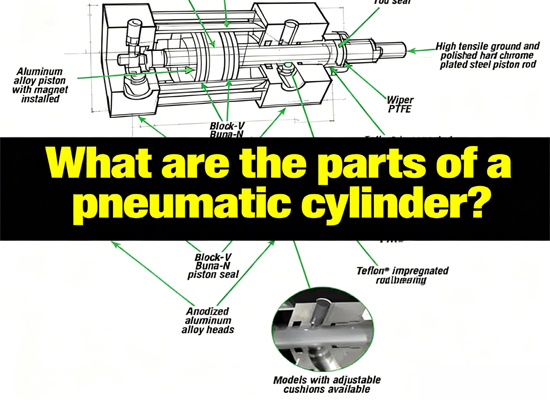
What are the parts of a pneumatic cylinder?

Apr 18, 2025 Blog
What is an Angle Seat Valve?
Get a free sample

Fokca is a brand of Ningbo Fokca Automation Co., Ltd.
Looking for custom pneumatic cylinder solutions? Visit our sister brand, Fescolo.→
© 2026 Ningbo Fokca Automation Co., Ltd. All rights reserved. Sitemap