Nov 24, 2026
Vacuum technology is widely used in automated packaging, material handling, electronic manufacturing, and industrial workholding. In these systems, pneumatic valves may be required to control vacuum generation, suction, release, or other switching functions.
A common question during component selection is whether an ordinary pneumatic valve can operate under negative pressure. The answer is yes, but not every pneumatic valve is designed for vacuum service. Its suitability depends on the internal sealing structure, leakage performance, pressure range, and intended function.
Most industrial pressure gauges display gauge pressure, which measures pressure relative to the surrounding atmosphere. At sea level, standard atmospheric pressure is approximately 101.325 kPa absolute.
When a gauge reads 0 bar, the system is normally at atmospheric pressure rather than in a vacuum. Vacuum exists when the absolute pressure falls below atmospheric pressure.
The relationship can be expressed as:
Absolute pressure = Atmospheric pressure + Gauge pressure
For example, a reading of -0.9 bar gauge corresponds to approximately 0.1 bar absolute under standard atmospheric conditions.
This distinction is important when reading valve specifications. A working pressure range starting at 0 MPa usually describes a positive-pressure rating. It does not automatically confirm that the valve can maintain a vacuum. The manufacturer's negative-pressure or vacuum rating must be checked separately.
The operating principle of a pneumatic directional valve does not fundamentally change when it is installed in a vacuum circuit. Compressed air supplied to the actuator moves the internal spool or poppet, changing the connections between ports.
However, the medium and pressure conditions inside the controlled passage are different. Instead of supplying compressed air to a cylinder, the valve may connect a vacuum line to a suction device or allow atmospheric air to enter a circuit to release a workpiece.
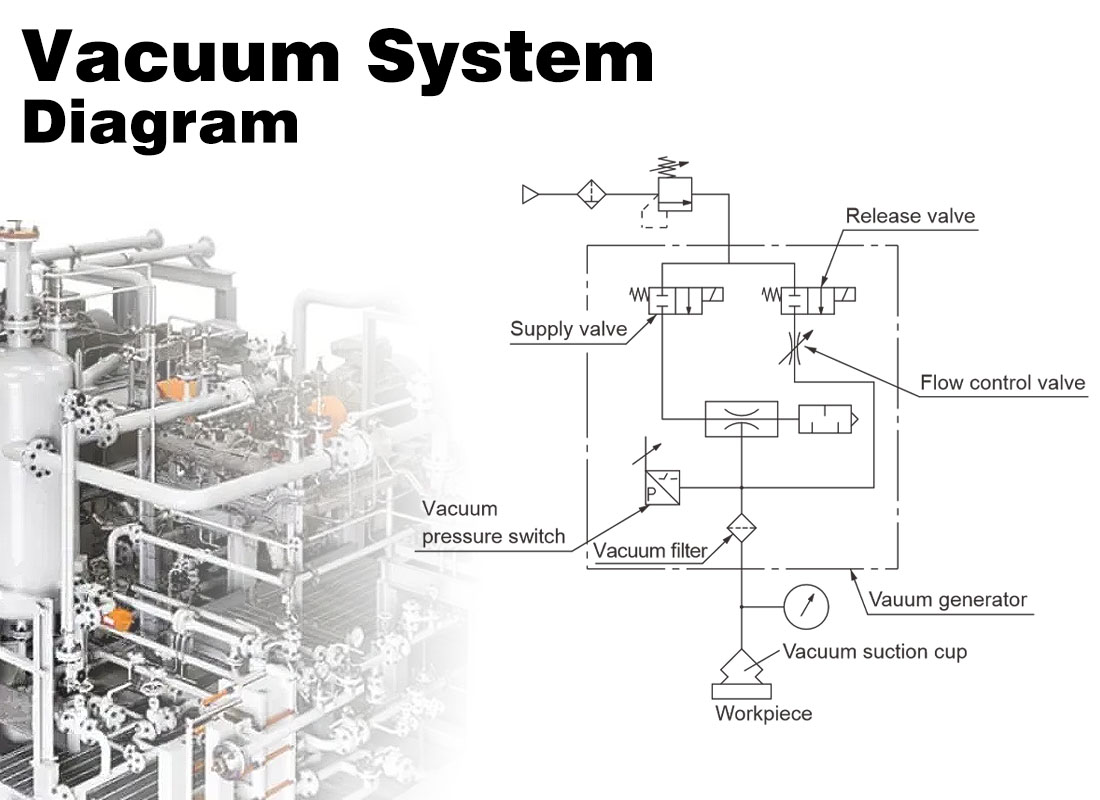
Common applications include:
● Controlling vacuum suction cups during material handling
● Switching vacuum lines in automated packaging equipment
● Controlling suction and release in pick-and-place machines
● Operating vacuum circuits for workpiece positioning and clamping
The control-air supply and the vacuum passage should be evaluated separately. A valve may have a pneumatic actuator that operates normally while its internal seals still allow excessive air leakage into the vacuum circuit.
Vacuum specifications may use absolute pressure, gauge pressure, or a percentage of vacuum. These values should not be compared without checking their reference points.
For example, under standard atmospheric conditions:
| Gauge Pressure | Approx. Absolute Pressure |
| 0 bar | 1.013 bar |
| -0.5 bar | 0.513 bar |
| -0.8 bar | 0.213 bar |
| -0.9 bar | 0.113 bar |
| -0.95 bar | 0.063 bar |
A lower absolute pressure indicates a stronger vacuum. As the pressure approaches zero absolute, the vacuum level increases.
Industrial vacuum equipment often operates at different pressure levels depending on the process. Rather than assuming that a standard pneumatic valve supports a particular vacuum range, engineers should compare the required absolute pressure with the valve manufacturer's specified limits.
Although pneumatic valves can be used in vacuum applications, several design details determine whether they will perform reliably.
Vacuum systems are sensitive to air entering through internal or external leakage paths. Check the spool seals, valve seats, O-rings, and other sealing interfaces. A valve suitable for positive-pressure operation may not provide sufficient vacuum retention.
Air can enter through joints, threaded connections, damaged seals, or other potential leakage points. The complete valve assembly must maintain the required vacuum level, including its fittings and connecting pipes.
For pilot-operated valves, confirm that the control-air pressure meets the manufacturer's requirements. The vacuum in the process passage should not be confused with the pressure needed to actuate the valve.
General industrial vacuum handling and high-vacuum applications have different leakage requirements. Standard pneumatic components may be suitable for certain suction and handling circuits, while semiconductor processing or other demanding applications may require dedicated vacuum valves.
Pneumatic valves are frequently integrated into vacuum automation because they provide convenient switching and can work with existing compressed-air control systems.
Their practical advantages include relatively fast response, compact installation, and compatibility with automated control circuits. When connected to a vacuum ejector, for example, a directional valve can control the compressed-air supply used to generate vacuum. Another valve may manage suction or release functions, depending on the circuit design.
This arrangement is common in robotic handling, carton packaging, electronic component assembly, and automated loading equipment.
However, reliable operation also depends on vacuum generator capacity, tubing dimensions, suction-cup sealing, filtration, and the switching sequence.
Before installing a pneumatic valve in a vacuum circuit, verify its permitted vacuum range, leakage specifications, connection configuration, sealing materials, and operating conditions. Also determine whether the valve controls the vacuum passage directly or only switches the compressed-air supply to a vacuum generator.
A pressure rating beginning at 0 MPa should never be treated as proof of vacuum compatibility. The correct approach is to select a valve specifically approved for the required negative-pressure conditions.
With suitable sealing performance, compatible connections, and a properly designed control circuit, pneumatic valves can provide reliable switching in many industrial vacuum applications. For more demanding vacuum processes, dedicated vacuum-rated valves offer a more appropriate solution.
(FK9025)
 How Viscous Fluid Influence Valve Flow Rate Calculation
 Can Pneumatic Valves Operate in Vacuum? Key Insights for Industrial Automation
 VND Series Valves for Steam Applications: High Temperature, Low Maintenance
 Common Pressure Unit Conversion Guide: bar, MPa, psi, and kgf
 Decoding Solenoid Valve Types: Key Differences of 4V, 3V, and 2V
You May Interest In

Dec 02, 2025 Blog
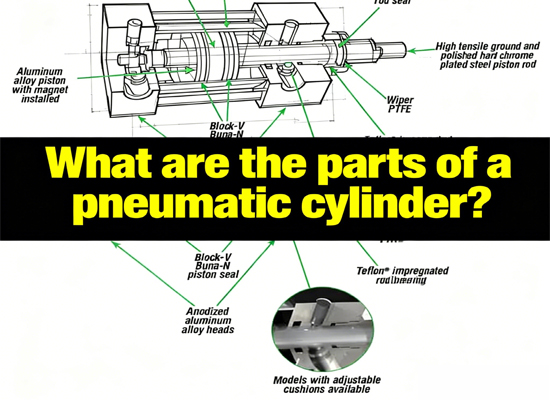
What are the parts of a pneumatic cylinder?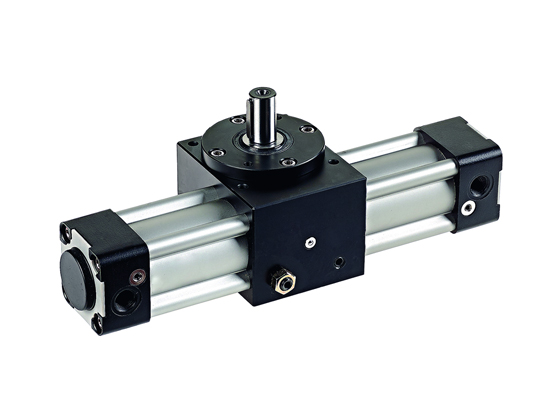

Apr 18, 2025 Blog
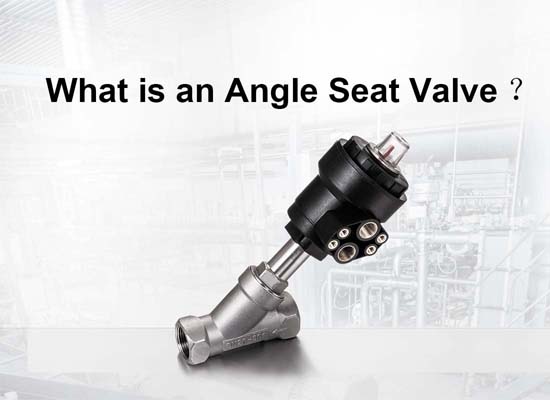
What is an Angle Seat Valve?
Get a free sample

Fokca is a brand of Ningbo Fokca Automation Co., Ltd.
Looking for custom pneumatic cylinder solutions? Visit our sister brand, Fescolo.→
© 2026 Ningbo Fokca Automation Co., Ltd. All rights reserved. Sitemap