Mar 06, 2026
When selecting flexible hoses for outdoor use, material performance under UV exposure, low temperatures, and repeated bending is crucial. UV Resistant Polyurethane Tubing offers superior durability and flexibility, while PVC tubing remains a cost-effective option for less demanding conditions. Understanding their differences helps distributors, engineers, and procurement managers make informed choices for long-term reliability versus budget considerations.
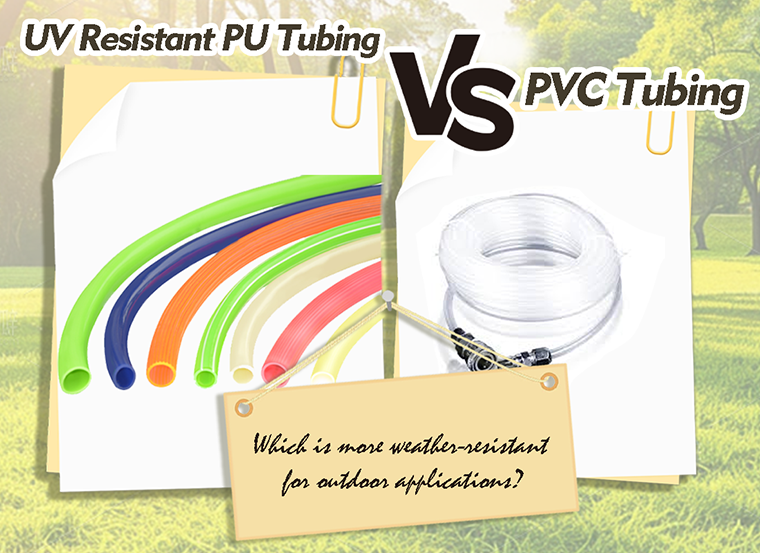
Polyurethane tubing maintains excellent flexibility even at temperatures as low as -40°C, reducing the risk of kinking or cracking. In contrast, PVC flexible hose tends to harden in cold environments, which can compromise performance and increase maintenance needs. For applications in cold climates or seasonal outdoor exposure, UV Resistant Polyurethane Tubing ensures smoother air flow and longer operational life.
Outdoor hoses face constant sunlight and environmental stress. PVC tubing, while affordable, can become brittle and discolor after prolonged UV exposure. UV Resistant Polyurethane Tubing, engineered with UV-stable additives, resists degradation, retaining elasticity and color over extended outdoor service. This makes it particularly suitable for applications such as garden irrigation systems, pneumatic outdoor machinery, and air lines exposed to direct sunlight.
| Feature | UV Resistant Polyurethane Tubing | PVC Tubing |
|---|---|---|
| UV Stability | Excellent | Moderate |
| Low-Temperature Flexibility | Maintains flexibility down to -40°C | Hardens below 0°C |
| Bend Fatigue Resistance | High, long service life | Moderate, prone to cracking |
| Cost | Higher initial investment | Lower cost |
Table shows typical outdoor performance comparison.
Repeated bending is common in mobile or automated systems. Polyurethane hoses demonstrate higher resistance to folding and cracking, extending service life significantly. Conversely, PVC tubing may fail earlier under repeated flexing, leading to downtime or replacement costs. For equipment that moves frequently, investing in polyurethane can reduce long-term operational expenses despite a higher upfront cost.
Choosing between PVC tubing and UV Resistant Polyurethane Tubing often comes down to a trade-off between cost and durability. PVC tubing suits short-term, budget-conscious projects, while polyurethane hoses are ideal for industrial outdoor applications where reliability is critical. Distributors and procurement teams can position products accordingly, offering economic solutions versus premium, long-life solutions to different customer segments.
1.Outdoor pneumatic tools:
Polyurethane maintains air flow and flexibility under sun exposure.
2.Factory air lines exposed to the elements:
PVC may suffice for sheltered areas but polyurethane ensures consistent performance.
3.Agricultural irrigation systems:
UV-resistant polyurethane hoses withstand repeated bending and environmental stress, minimizing replacement frequency.
Selecting the right tubing material directly impacts system reliability and maintenance costs. For detailed guidance on air hose selection and custom polyurethane tubing solutions, FOKCA offers a range of UV Resistant Polyurethane Tubing and PVC flexible hoses suitable for diverse industrial and outdoor applications.
(FK9026)
You May Interest In

Dec 02, 2025 Blog
What are the parts of a pneumatic cylinder?


Apr 18, 2025 Blog
What is an Angle Seat Valve?
Get a free sample

Fokca is a brand of Ningbo Fokca Automation Co., Ltd.
Looking for custom pneumatic cylinder solutions? Visit our sister brand, Fescolo.→
© 2026 Ningbo Fokca Automation Co., Ltd. All rights reserved. Sitemap