Nov 23, 2026
Automated assembly equipment is widely used in industries such as automotive manufacturing, electronics, electrical appliances, hardware production, and general industrial manufacturing. As production lines become more automated, equipment manufacturers need reliable motion control solutions to handle repetitive operations, maintain consistent positioning, and improve production efficiency.
Pneumatic components play an important role in these systems. They convert compressed air into mechanical movement and are commonly used for workpiece clamping, part positioning, pressing, insertion, transferring, and ejection. Compared with more complex motion systems, pneumatic actuators offer a relatively simple structure, fast response, and convenient integration into automated machinery.
For industrial automation OEMs, machine builders, and system integrators, selecting suitable pneumatic components is essential for building stable assembly equipment. The right combination of cylinders, solenoid valves, air preparation units, tubing, and fittings helps maintain consistent machine operation while simplifying installation and maintenance.
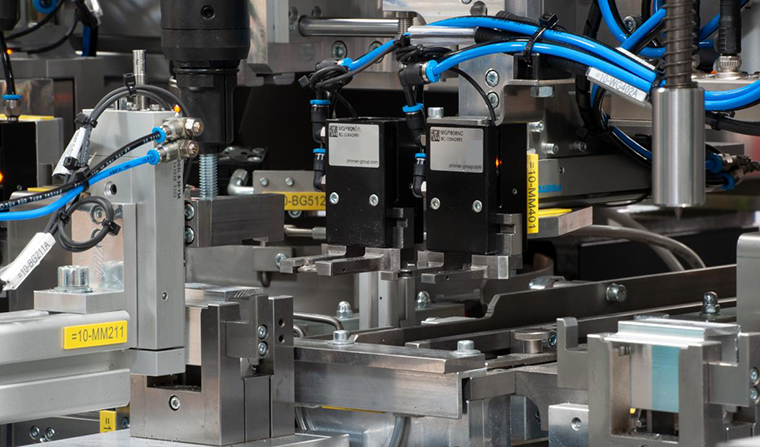
Pneumatic actuators are used throughout different stages of an automated assembly process. Their specific functions depend on the machine structure, workpiece characteristics, and required production cycle.
During assembly, components must remain in the correct position while other operations are performed. Pneumatic cylinders are commonly installed in clamping fixtures to hold workpieces securely during drilling, fastening, inspection, welding, or component installation.
Standard cylinders can operate clamping mechanisms with suitable mounting brackets and connecting structures. Compact cylinders are useful when the available installation space is limited, such as inside small fixtures or multi-station assembly machines.
For positioning applications, cylinders can push workpieces against locating blocks or move mechanical stops into position. Consistent movement helps reduce positioning variation between production cycles.
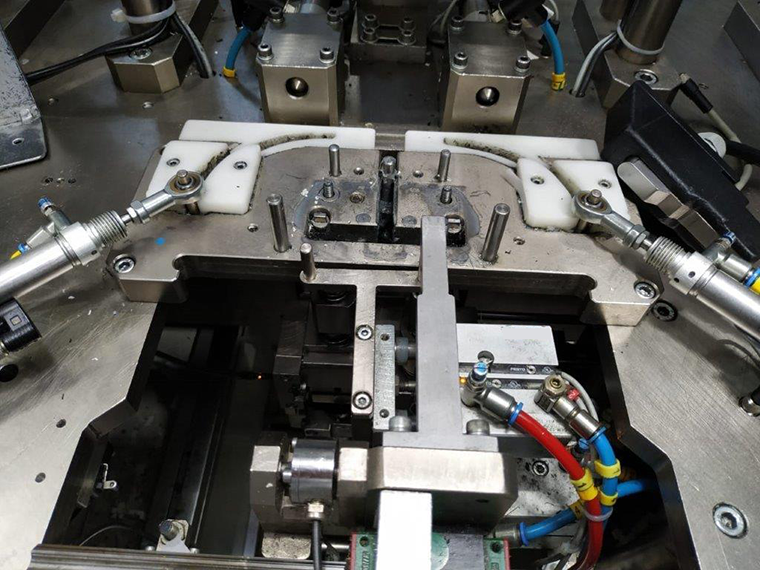
Many assembly processes require one component to be inserted into another. Examples include fitting bearings, inserting pins, installing bushings, and assembling plastic or metal components.
Pneumatic cylinders can provide the linear force required for these operations. Cylinder bore, operating pressure, stroke, and mechanical transmission structure should be selected according to the required insertion force and assembly conditions.
For applications requiring controlled pressing force, high precision, or detailed force monitoring, a conventional pneumatic cylinder may need to work with additional mechanical or electronic control equipment. Pneumatic pressure alone should not be treated as a direct measurement of actual pressing force.
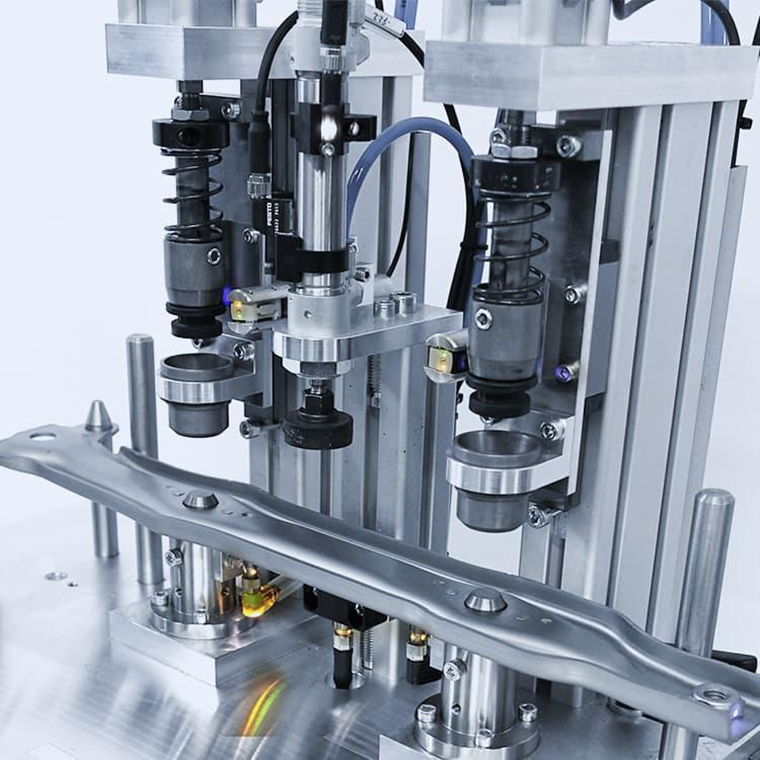
Pick-and-place mechanisms transfer components between conveyors, fixtures, feeders, and assembly stations. Pneumatic cylinders provide linear movement for lifting, extending, retracting, and transferring mechanisms.
Compact cylinders are suitable for short-stroke movements in confined spaces, while guided cylinders can help support loads and reduce unwanted rotation during linear movement. Pneumatic grippers can also be integrated into the handling mechanism when the equipment requires gripping and releasing individual parts.
The required movement speed, workpiece weight, gripping force, and positioning arrangement should all be considered during system design.
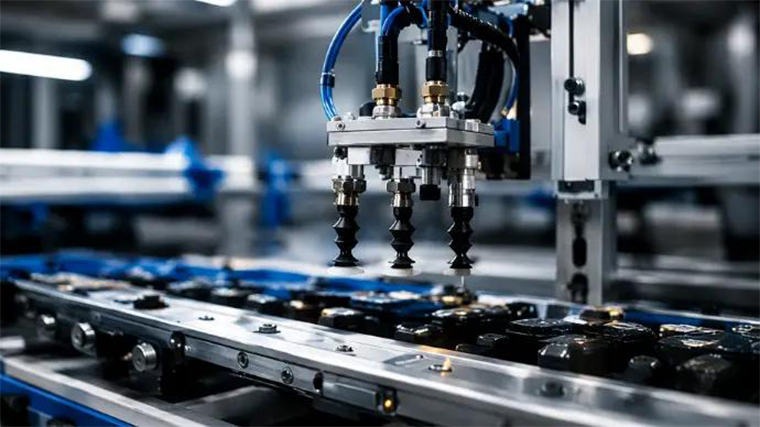
In automated sorting systems, pneumatic cylinders are frequently used to push products into different channels, move components between stations, and remove finished parts from fixtures.
A solenoid valve controls the direction of airflow, allowing the cylinder to extend or retract according to the machine's control signals. Mechanical stops and position sensors can be added to coordinate the movement with conveyor operation.
For high-frequency applications, cylinder durability, valve flow capacity, air consumption, and cushioning performance should be evaluated together.
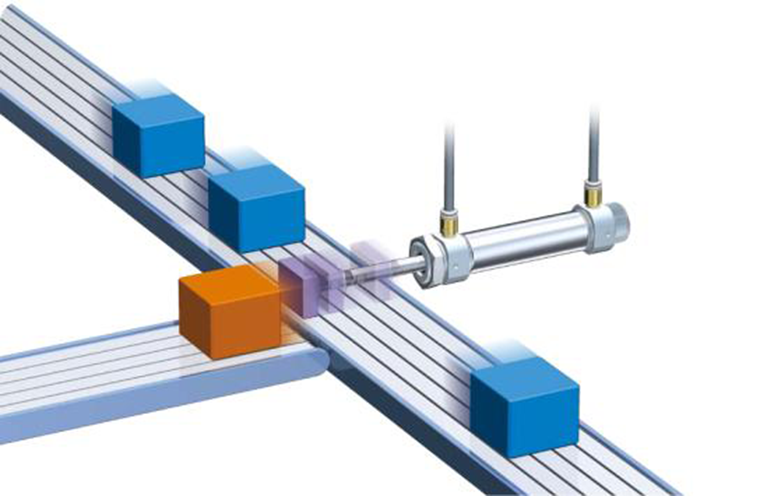
Automated fixtures often contain several pneumatic actuators that perform different actions in a coordinated sequence. These may include clamping, locating, lifting, locking, and releasing workpieces.
Multiple cylinders and valves can be arranged into independent control circuits. This allows each fixture mechanism to operate according to the required assembly sequence.
For equipment manufacturers, standard pneumatic components provide practical options for building modular fixtures and simplifying replacement during maintenance.
Different pneumatic components perform different functions within an automated assembly system. Their selection should be based on the required movement, installation space, operating conditions, and control method.
Pneumatic Component | Main Function | Typical Application |
Standard Cylinders | Provide linear movement and force | Clamping, pushing, transferring |
Compact Cylinders | Provide movement in limited spaces | Small fixtures and positioning mechanisms |
Guided Cylinders | Support loads and improve movement guidance | Pick-and-place and precision fixture mechanisms |
Solenoid Valves | Control airflow through electrical signals | Automatic cylinder control |
Mechanical Valves | Switch airflow through physical contact | Mechanical triggering and sequence control |
FRL Units | Filter, regulate, and prepare compressed air | Main and branch air supply |
Tubing & Fittings | Connect pneumatic components | Air distribution throughout the machine |
Sensors | Detect cylinder or mechanism position | Sequence confirmation and machine interlocking |
Shock Absorbers | Reduce impact at moving mechanisms | Stops, transfer units, and high-speed movements |
Standard cylinders are widely used where straightforward linear movement is required. Compact cylinders help reduce installation space, while guided cylinders are more suitable when the actuator must support external loads or resist unwanted rotation.
Solenoid valves provide electrical control of pneumatic movement and are commonly connected to PLC-based automation systems. Mechanical valves can be used for direct mechanical triggering in suitable applications.
FRL units help maintain suitable air supply conditions. Tubing and fittings connect the individual components, while sensors provide position feedback to the machine controller. Shock absorbers help reduce mechanical impact and improve the operating stability of moving mechanisms.
A typical pneumatic control system in automated assembly equipment follows this structure:
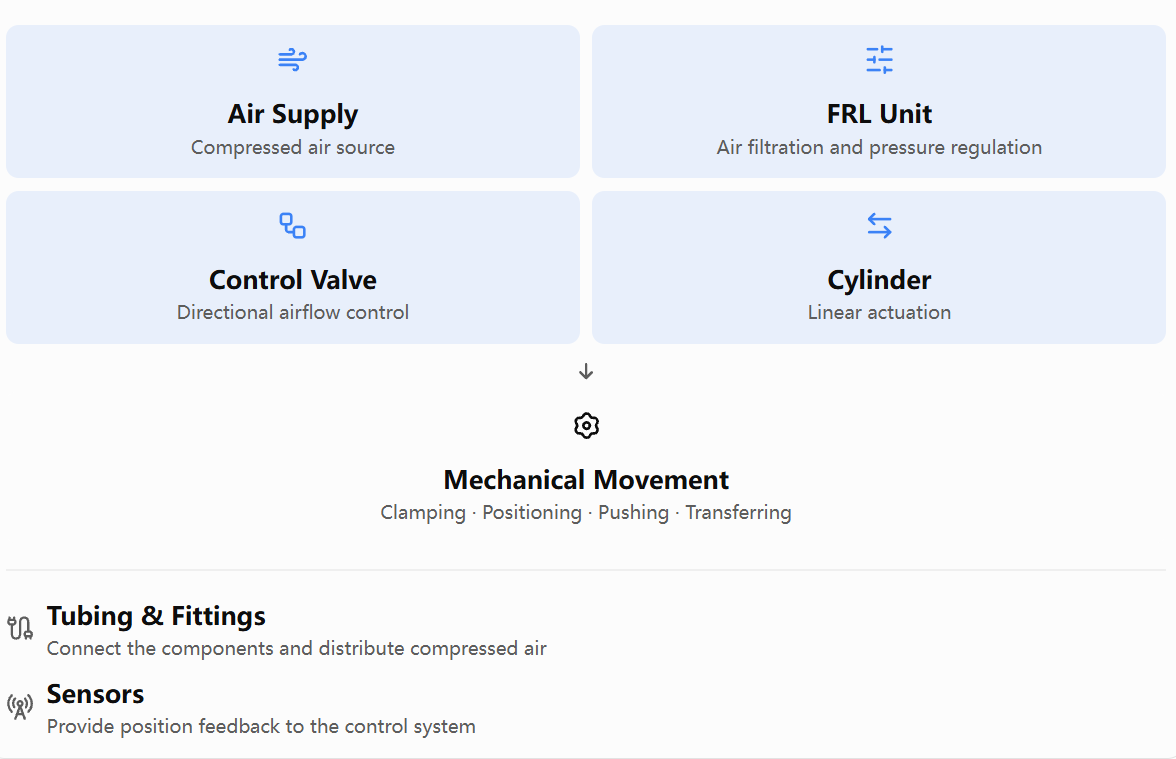
Compressed air first passes through an air preparation unit, where filtration and pressure regulation help maintain suitable operating conditions. The prepared air then flows through tubing and fittings to the control valves.
When the PLC sends an electrical signal, the corresponding solenoid valve switches its internal flow path and directs compressed air to the cylinder. The cylinder extends or retracts to perform the required mechanical action.
Sensors can detect the position of the cylinder or the associated mechanism and send feedback to the controller. This allows the machine to confirm whether an action has been completed before moving to the next stage.
For example, in an automated clamping station, a sensor can confirm that the workpiece is in position before the clamping cylinder extends. Another sensor can confirm that clamping has been completed before the assembly process begins.
This coordination between pneumatic actuators, valves, sensors, and the PLC helps maintain an organized operating sequence and reduces the risk of incorrect machine movements.
Selecting pneumatic components for automated assembly equipment requires more than matching cylinder dimensions. Engineers should consider the complete operating conditions and the relationship between individual components.
Cylinder force depends mainly on operating pressure and effective piston area. For a double-acting cylinder, the extension force and retraction force are different because the piston rod reduces the effective area on the rod side.
The cylinder bore should be selected according to the required force, with an appropriate allowance for mechanical resistance and operating conditions. Stroke length must match the actual travel distance of the mechanism.
The available compressed air pressure must remain within the operating range of the selected components. Pressure fluctuations can affect cylinder force and movement consistency.
Engineers should also consider the air supply capacity, piping dimensions, and pressure losses, particularly when several cylinders operate simultaneously.
Assembly equipment may perform hundreds or thousands of repeated movements during a production shift. High cycle frequency increases the importance of cylinder durability, valve response, air consumption, and heat generation.
The air consumption of each actuator should be considered when calculating the total demand of the machine. This helps prevent insufficient air supply during simultaneous operations.
Cylinder mounting options should match the mechanical structure of the equipment. Standard cylinders offer different mounting arrangements, while compact cylinders are useful in space-restricted assemblies.
Where external loads or side forces are present, guided actuators or additional linear guides may be more appropriate than using a standard cylinder rod alone to support the load.
Solenoid valve selection should consider port size, flow capacity, operating pressure, voltage, and response requirements. An undersized valve or restrictive tubing can slow down actuator movement.
Position sensing requirements should also be evaluated. Magnetic cylinders with compatible sensors can provide end-position feedback, while other machine mechanisms may require separate proximity or position sensors.
Even when individual components meet their specifications, an improperly designed pneumatic system can cause unstable operation.
Common Problem | Possible Cause | Practical Consideration |
Insufficient cylinder force | Undersized bore or low pressure | Recalculate required force and verify working pressure |
Slow actuator movement | Insufficient valve flow or restrictive tubing | Check valve capacity, tube size, and air supply |
Inconsistent movement | Pressure fluctuations or mechanical resistance | Stabilize the air supply and inspect the mechanism |
Air leakage | Loose fittings, damaged tubing, or worn seals | Check connections and replace damaged components |
Frequent component failure | Excessive cycle frequency or unsuitable operating conditions | Review component ratings and duty requirements |
Inaccurate positioning | Poor mechanical guidance or incorrect stroke selection | Check mounting, guidance, and positioning structure |
A reliable pneumatic system requires compatible components and proper installation. For example, selecting a cylinder with sufficient theoretical force does not guarantee stable operation if the valve cannot supply enough air or the tubing creates excessive pressure loss.
Regular inspection of filters, fittings, tubing, and actuator seals also helps identify problems before they affect the entire assembly line.
Automation equipment manufacturers often need several types of pneumatic components for one machine or production line. Sourcing these products from a coordinated supplier can simplify product selection, purchasing, and ongoing maintenance.
FOKCA provides a range of standard pneumatic components for industrial automation applications, including standard cylinders, compact cylinders, solenoid valves, air preparation units, pneumatic tubing, fittings, and related accessories.
For automation OEMs and machine builders, FOKCA can support the following requirements:
● Standard product selection: Identify suitable pneumatic component types and specifications according to equipment requirements, including cylinder dimensions, valve configurations, and connection sizes.
● Multi-category sourcing: Supply different types of pneumatic components to support integrated machine designs and reduce the need to coordinate multiple product suppliers.
● Specification matching: Assist customers in checking product models, mounting dimensions, thread types, operating pressure, and other relevant technical details.
● OEM and distributor cooperation: Support product sourcing and supply arrangements for equipment manufacturers, pneumatic distributors, and importers.
● Repeat purchasing support: Help customers maintain consistent product specifications for recurring equipment production, replacement parts, and maintenance requirements.
For distributors, a practical standard product range can also make it easier to serve different machine-building customers without developing a separate product solution for every application.
Pneumatic components are essential to many automated assembly operations, from workpiece clamping and part positioning to pressing, transferring, and product ejection. Their performance depends not only on individual component specifications but also on proper system design, air supply conditions, valve selection, and mechanical integration.
For equipment manufacturers and automation system integrators, choosing compatible cylinders, valves, FRL units, tubing, and fittings helps create pneumatic systems that are easier to install, operate, and maintain.
Source Your Pneumatic Components with FOKCA.
Whether you are developing new automated assembly equipment, manufacturing fixtures, or sourcing standard pneumatic components for ongoing production, FOKCA can help you identify suitable products for your application.
Contact our team with your product models, technical specifications, or equipment requirements to discuss your pneumatic component sourcing needs.
From cylinders and solenoid valves to FRL units, tubing, and fittings, FOKCA provides standard pneumatic components for industrial automation applications.
Contact our team with your product models, specifications, or sourcing requirements. We can help you identify suitable products for your equipment and support your ongoing supply needs.
Contact FOKCA to discuss your pneumatic component requirements.
Email: sales@fokca.com
WhatsApp: +86 15057491870
You May Interest In
Get a free sample

Fokca is a brand of Ningbo Fokca Automation Co., Ltd.
Looking for custom pneumatic cylinder solutions? Visit our sister brand, Fescolo.→
© 2026 Ningbo Fokca Automation Co., Ltd. All rights reserved. Sitemap




 None