Nov 19, 2026
Packaging machinery relies on coordinated movements to complete filling, sealing, labeling, sorting, and carton handling operations. Across these processes, pneumatic components provide the linear motion, clamping force, positioning, and air control required for repetitive production cycles. From compact filling machines to fully automated packaging lines, pneumatic systems help equipment manufacturers build reliable mechanisms with relatively simple structures and flexible control.
For packaging machiery manufacturers and automation integrators, selecting the right pneumatic components involves more than matching a cylinder to a mechanical movement. Cylinder dimensions, operating pressure, valve flow capacity, air quality, tubing connections, and cycle frequency all influence machine performance. Understanding where each component is used and how it interacts with the rest of the system helps prevent unnecessary downtime and improves production consistency.
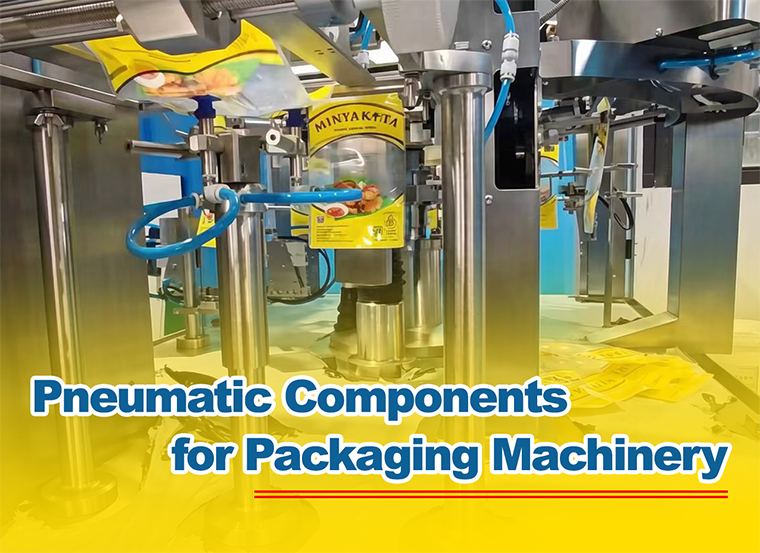
Packaging machines perform multiple operations in sequence. Pneumatic components are commonly installed in individual working stations to control movement, secure products, and coordinate mechanical actions.
In liquid, paste, and granular packaging machines, filling stations must deliver a consistent quantity of material into bottles, containers, or packaging bags.
Pneumatic cylinders are often used to actuate filling valves, raise and lower filling nozzles, operate shut-off mechanisms, and position containers beneath dispensing outlets. When the machine reaches the filling position, a solenoid valve directs compressed air to the corresponding cylinder, allowing the nozzle or valve mechanism to move.
It is important to distinguish between actuation and metering. The actual filling quantity is generally controlled by a metering pump, flow meter, dosing mechanism, or other dedicated filling system. Pneumatic components provide the mechanical movement and valve actuation needed to support this process.
Suitable FOKCA products:
● Standard pneumatic cylinders for nozzle lifting and valve actuation.
● Solenoid valves for controlling cylinder movement.
● FRL units for air filtration and pressure regulation.
● Pneumatic tubing and fittings for connecting the air supply.
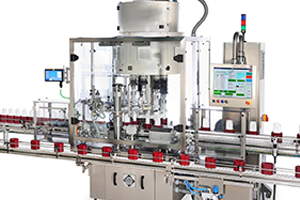
Capping and sealing stations require accurate positioning and controlled mechanical force. Bottles must remain stable while caps are placed, tightened, or sealed.
Pneumatic cylinders can operate bottle clamps, pressing mechanisms, lifting platforms, and positioning devices. During the capping cycle, cylinders hold the container in place while a separate capping mechanism performs the rotational tightening operation.
In heat-sealing or pouch-sealing machines, pneumatic cylinders are frequently used to move sealing jaws toward the packaging material. They provide the linear force needed to close the jaws and maintain contact during the sealing process.
The required cylinder force and stroke depend on the sealing structure, material thickness, and mechanical resistance. For machines with frequent sealing cycles, stable air pressure and consistent movement are particularly important.
Suitable FOKCA products:
● Standard and compact pneumatic cylinders for clamping and pressing.
● Solenoid valves for controlling opening and closing sequences.
● Flow control valves for adjusting cylinder speed.
● Pneumatic fittings and tubing for reliable air connections.
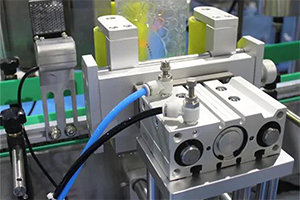
Automatic labeling machines must position bottles, cartons, or other products accurately before applying labels. Even small positioning errors can cause label misalignment or inconsistent product appearance.
Pneumatic cylinders are commonly used to push products against positioning stops, adjust guide mechanisms, and operate product-holding devices. Compact cylinders are particularly useful where installation space is limited.
Vacuum components may also be used to pick up individual labels from a label stack or hold labels during transfer. In these systems, vacuum generators and suction cups create the holding force, while pneumatic valves and control circuits manage the vacuum supply and release.
Sensors detect product arrival and confirm positioning. Their signals are integrated with the machine's electrical control system to determine when the next pneumatic action can begin.
Suitable FOKCA products:
● Compact cylinders for positioning and guiding.
● Mini cylinders for small operating mechanisms.
● Solenoid valves for controlling pneumatic movements.
● Pneumatic tubing and fittings for air distribution.
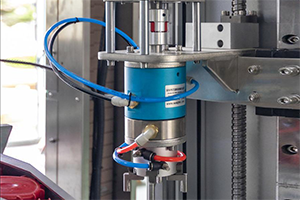
During packaging, products must often remain stationary while another operation takes place. This is common in bottle labeling, carton sealing, printing, and inspection stations.
Pneumatic cylinders provide the movement required to close clamping arms or pressing plates. Depending on the machine structure, they can operate single-sided clamps, opposing clamping mechanisms, or guided fixtures.
For lightweight products, relatively small cylinders may provide sufficient force. Heavier products or applications involving greater resistance require careful calculation of the required clamping force.
Clamping pressure should also be controlled to avoid damaging fragile containers, deforming packaging materials, or affecting product appearance.
Suitable FOKCA products:
● Standard pneumatic cylinders for general clamping.
● Compact cylinders for space-constrained mechanisms.
● Solenoid valves for coordinated clamping sequences.
● Flow control valves for adjusting clamping speed.
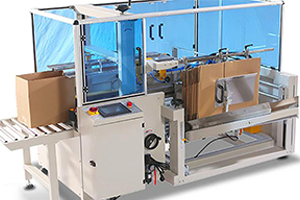
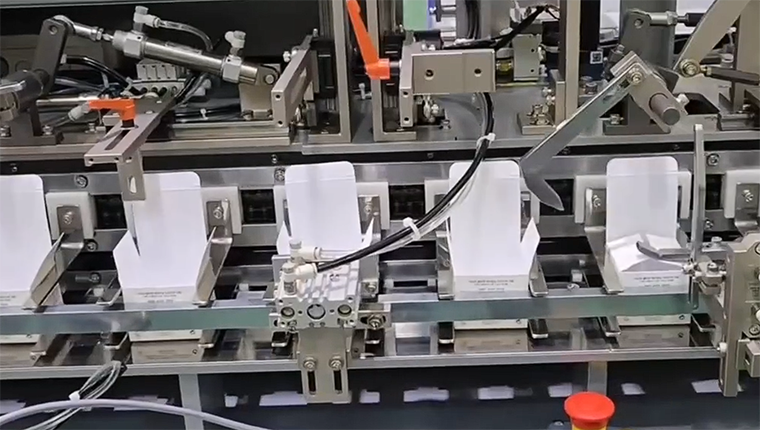
Cartoning and case-packing machines use multiple mechanical movements to open flat cartons, fold flaps, insert products, and prepare packages for sealing.
Pneumatic cylinders are commonly installed in carton-opening mechanisms, folding arms, flap-pushing devices, and positioning stations. Their reciprocating motion makes them suitable for repetitive operations that require straightforward linear actuation.
Solenoid valves control the sequence of these movements. For example, one cylinder may push a carton into position before another cylinder operates the folding mechanism.
The timing of each movement must match the conveyor speed and the machine's production cycle. Incorrect sequencing can result in carton deformation, product jams, or interrupted production.
Suitable FOKCA products:
● Standard cylinders for carton pushing and folding.
● Compact cylinders for integrated mechanical structures.
● Solenoid valves for sequential control.
● FRL units, tubing, and fittings for air preparation and distribution.
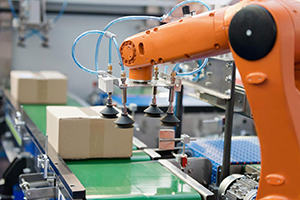
Automated packaging lines frequently include sorting stations that separate products according to size, type, orientation, or other inspection results.
Pneumatic cylinders can push products into different conveyor lanes, operate diverter plates, and move mechanical stops. Their movements are triggered by signals from sensors or the machine controller.
Vacuum handling systems may also be used to pick up lightweight products, packaging films, or cartons and transfer them between stations.
For high-speed sorting equipment, the cylinder response time, valve flow capacity, and air supply stability must be considered together. A cylinder that is correctly sized mechanically may still respond too slowly if the valve or tubing restricts airflow.
Suitable FOKCA products:
● Standard and compact cylinders for pushing and diverting.
● Solenoid valves for movement control.
● Flow control valves for speed adjustment.
● Pneumatic tubing and fittings for air distribution.
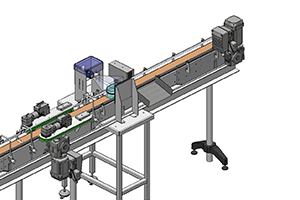
Pneumatic cylinders provide direct linear movement for these operations. Depending on the product dimensions and required travel distance, equipment manufacturers can select standard cylinders or compact models.
For repeated pushing operations, the cylinder bore and stroke must match the load and mechanical travel requirements. End-of-stroke cushioning should also be considered when the piston moves at higher speeds or carries a relatively large load.
Suitable FOKCA products:
● Standard pneumatic cylinders for product ejection.
● Solenoid valves for directional control.
● Flow control valves for movement speed adjustment.
● Pneumatic shock absorbers where additional mechanical impact protection is required.
Different pneumatic components perform different functions within a packaging machine. Understanding their roles helps equipment manufacturers select compatible products and design a more reliable air system.
Component
Main Function in Packaging Machinery
| Component | Main Function in Packaging Machinery |
Pneumatic Cylinders | Generate linear movement for pushing, clamping, lifting, and positioning |
Solenoid Valves | Control airflow direction and cylinder operating sequences |
Mechanical Valves | Provide mechanically triggered pneumatic signals |
FRL Units | Filter compressed air, regulate pressure, and provide lubrication when required |
Pneumatic Tubing & Fittings | Connect air sources, valves, and actuators |
Vacuum Components | Generate holding force for picking and transferring products or packaging materials |
Sensors | Detect product position, cylinder status, and operating conditions |
Shock Absorbers | Reduce mechanical impact and vibration at high-speed movement endpoints |
A few distinctions are important when integrating these components.
Solenoid valves are electrically operated devices that receive signals from a PLC or other control system. Mechanical valves, in contrast, are activated through physical contact or mechanical movement.
FRL units prepare compressed air before it enters the pneumatic circuit. Filtration removes contaminants, pressure regulation maintains the required operating pressure, and lubrication is provided when the connected equipment requires lubricated air.
Vacuum components, sensors, and shock absorbers are complementary devices rather than interchangeable pneumatic actuators. Their specifications must be coordinated with the pneumatic system and the machine's overall control design.
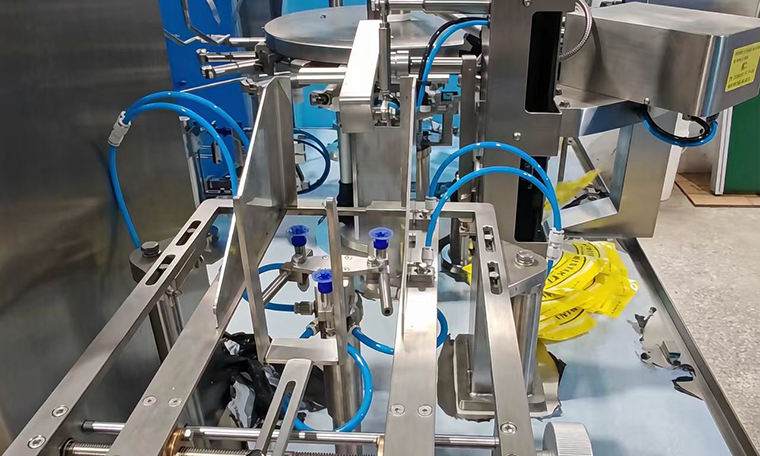
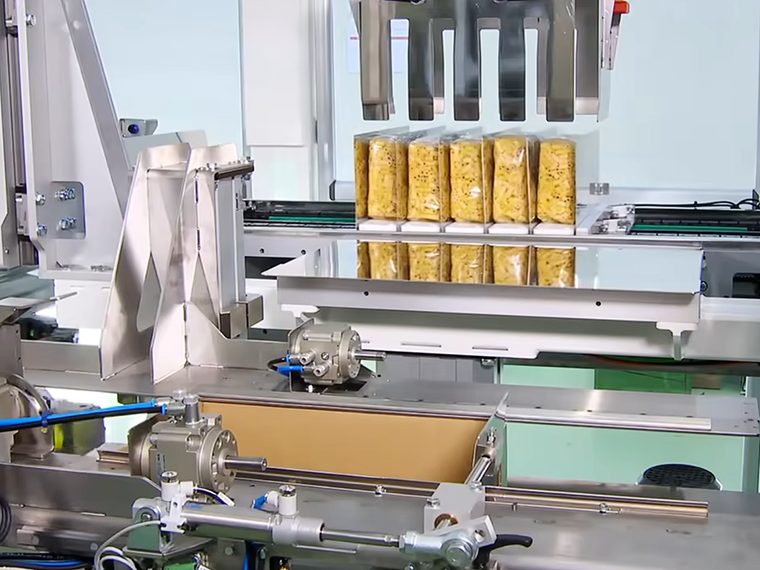
Choosing pneumatic components requires consideration of both individual product specifications and the operating conditions of the complete machine.
The cylinder bore determines the theoretical output force at a given operating pressure, while the stroke determines the available linear travel.
For a standard double-acting cylinder, theoretical extension force can be estimated using:
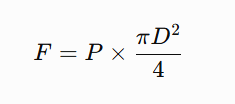
Where:
● (F) = theoretical output force
● (P) = operating pressure
● (D) = cylinder bore diameter
Actual usable force will be lower because of friction and other operating losses. When selecting a cylinder, equipment manufacturers should also consider the load, mounting arrangement, external resistance, and required safety margin.
Packaging machines often contain multiple pneumatic circuits with different force requirements.
A bottle-clamping mechanism may require relatively low force, while a carton-pressing or sealing mechanism may require greater output. The selected cylinder must generate sufficient force without applying excessive pressure to the product.
The pressure rating of cylinders, valves, tubing, and fittings must also be compatible with the machine's compressed air supply.
High-speed packaging lines may perform hundreds of repeated movements per hour or more, depending on machine design.
Cylinder speed depends on factors such as air pressure, load, valve flow capacity, tubing diameter, and flow control settings. Selecting a suitable solenoid valve and maintaining adequate airflow are essential for achieving the required response time.
For high-frequency operations, manufacturers should also evaluate component durability and expected service life.
The solenoid valve must provide sufficient airflow to operate the connected cylinder at the required speed.
An undersized valve can restrict airflow, resulting in slow movement or delayed machine sequences. Valve selection should consider cylinder bore, stroke, operating pressure, required cycle time, and connection size.
The valve's operating voltage and control interface must also match the machine's electrical system.
Pneumatic tubing connects the air preparation unit, valves, and actuators. Incorrect tubing diameter or unsuitable fittings can increase pressure losses and cause unstable cylinder movement.
Equipment manufacturers should confirm:
● Tube outside diameter and material.
● Fitting thread type and port size.
● Operating pressure and temperature range.
● Required flexibility and bending radius.
● Compatibility between tubing and push-in fittings.
PU tubing is commonly used where flexibility and easy installation are important. Nylon tubing may be more suitable for applications requiring greater rigidity or higher temperature resistance, depending on its specifications.
Compressed air may contain moisture, dust, and other contaminants that affect pneumatic component performance.
An appropriately selected filter helps protect valves and cylinders from contamination. Pressure regulators maintain the required downstream pressure, particularly when several machine stations operate simultaneously.
Filter precision and regulator flow capacity should be selected according to the air consumption and cleanliness requirements of the equipment.
Packaging machinery often integrates multiple operating stations into a compact structure.
Compact cylinders and mini cylinders can help reduce installation space, while standard cylinders provide a wider range of bore sizes and stroke configurations.
Mounting dimensions, port orientation, maintenance access, and tubing routing should all be considered during machine design.
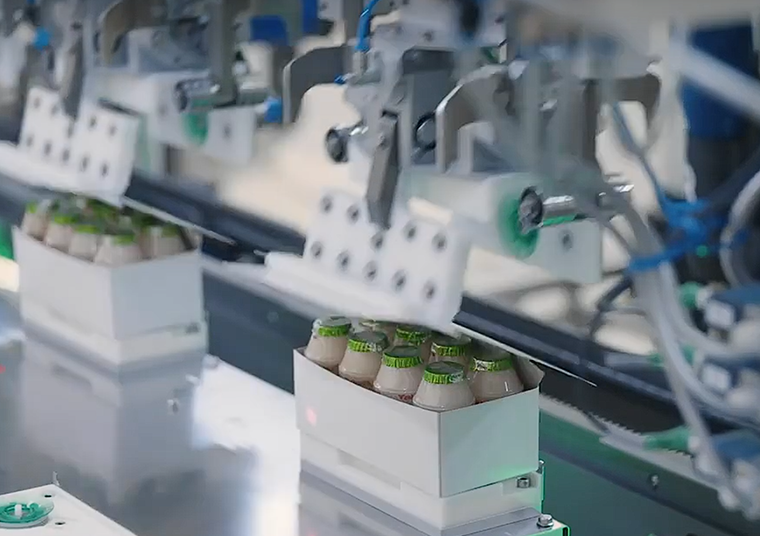
A reliable pneumatic system depends on more than the quality of individual components. Installation, air preparation, product compatibility, and maintenance all influence long-term operating performance.
Maintain stable compressed air quality. Use suitable filtration and pressure regulation to prevent contaminants and pressure fluctuations from affecting pneumatic movements. Drain accumulated condensate from filters when necessary.
Use compatible tubing and fittings. Confirm tube diameter, fitting specifications, thread standards, and pressure ratings before installation. Incorrect connections can cause air leakage and reduce system efficiency.
Avoid excessive cylinder loading. Cylinders should operate within their rated specifications. Side loads, misalignment, and unsuitable mounting arrangements can accelerate seal and bearing wear.
Control movement speed and impact. Adjust flow control valves to achieve smooth cylinder movement. Where mechanical impact remains significant, suitable cushioning or external shock absorbers can help protect machine structures.
Inspect components regularly. Check for air leakage, damaged tubing, loose connections, filter contamination, and inconsistent actuator movement. Preventive maintenance helps identify problems before they interrupt production.
Maintain consistent product specifications. Using compatible components with consistent dimensions, connection standards, and operating parameters makes replacement and maintenance easier, particularly for manufacturers producing multiple machine models.
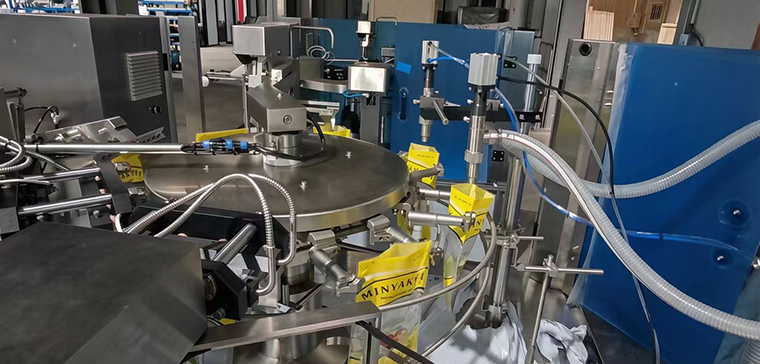
Packaging machinery manufacturers often need multiple pneumatic product categories for a single machine. Managing product specifications and ensuring compatibility between components are important parts of equipment design and procurement.
FOKCA provides standard pneumatic components for industrial automation, supporting packaging machinery manufacturers, OEM equipment builders, and pneumatic distributors with multi-category product supply.
A packaging machine may require cylinders, solenoid valves, air preparation units, tubing, fittings, and other pneumatic accessories.
FOKCA provides a range of standard pneumatic products that helps equipment manufacturers source different components through one supplier and simplify product procurement.
Selecting compatible components is essential for reliable machine operation.
FOKCA can support customers with product selection and specification confirmation, including cylinder dimensions, valve configurations, operating pressure, port sizes, tubing dimensions, and connection requirements.
Providing the machine's operating conditions and required specifications helps narrow down suitable product options.
For equipment manufacturers, importers, and distributors developing their own product lines, OEM and private-label support can help align pneumatic components with their sourcing and branding requirements.
Product specifications, packaging requirements, and related details can be discussed according to the project.
Packaging machinery manufacturers often use the same pneumatic components across different machine models or production batches.
Maintaining consistent product specifications helps simplify repeat purchasing, replacement, and inventory management. Clear model identification and specification confirmation also reduce the risk of ordering incompatible components.
Pneumatic components support many essential operations in packaging machinery, from filling valve actuation and product clamping to carton folding, sorting, and finished-product ejection. Cylinders provide mechanical movement, solenoid valves control airflow, FRL units prepare compressed air, and tubing and fittings connect the entire system.
For packaging machinery manufacturers, reliable performance depends on matching component specifications with the actual operating conditions of each station. Cylinder force and stroke, valve flow capacity, air quality, tubing dimensions, and operating frequency should all be considered during system design.
A well-matched range of standard pneumatic components helps simplify equipment integration, maintenance, and repeat procurement. Working with a supplier that understands these product requirements also makes it easier for OEMs and distributors to maintain consistent specifications across their packaging machinery projects.
Looking for Reliable Pneumatic Components for Your Packaging Machinery?
Contact FOKCA to discuss your product requirements and find suitable standard pneumatic components for your equipment.
Need Help with Your Pneumatic Component Requirements? →
Contact FOKCA with your product requirements. Our team will help you select suitable components and provide reliable solutions for your equipment.
Email: sales@fokca.com
WhatsApp: +86 15057491870
You May Interest In
Get a free sample

Fokca is a brand of Ningbo Fokca Automation Co., Ltd.
Looking for custom pneumatic cylinder solutions? Visit our sister brand, Fescolo.→
© 2026 Ningbo Fokca Automation Co., Ltd. All rights reserved. Sitemap




 None