Proper wiring and installation of a pneumatic solenoid valve are essential to ensure reliable operation, long service life, and safe performance in any pneumatic system.
While solenoid valves are widely used in automation for controlling air flow to cylinders and actuators, incorrect installation or improper electrical connection can lead to malfunctions, reduced efficiency, or even equipment damage.
This article introduces the installation of solenoid valves, including mechanical installation, air circuit connection, circuit wiring, debugging and testing, etc.
Something you should note when installing a solenoid valve
Valve Body Orientation: Ensure the valve is installed in the recommended direction, usually with the coil facing upward.
Cleanliness of Connecting Pipes: The inside of the pipes should be clean, free of dust, metal debris, or oil.
Power Wiring: Connect according to the manual, paying attention to voltage, polarity, and secure fastening.
Mounting and Torque Requirements: Tighten bolts to the recommended torque, avoiding over-tightening or under-tightening.
Preventing Contaminants from Entering the Valve: Take measures during installation to prevent dust or particles from entering the valve.
Part 1:Mechanical installation
Mechanical installation is essential for reliable valve operation; it involves verifying that the solenoid valve meets the required specifications, ensuring the flow direction indicated by the valve matches the system airflow, and confirming that the valve's voltage and power ratings are compatible with the power supply.
Install valve body:
Method 1: Connect directly to the actuator or valve island. This is the simplest way.
Method 2: Use a base (busbar). This is the most recommended and commonly used method. Installing the valve on the base can simplify the connection of pipelines and often integrates speed controllers, pressure sensors, etc.
Method 3: Use a bracket. For some large valves, it may be necessary to use brackets for fixation.
Wrap the raw material tape or use sealant on the valve interface (ensuring compatibility with the pneumatic system), paying attention to the correct winding direction of the raw material tape to avoid debris entering the pipeline.Use a suitable tool (such as a wrench) to tighten the joint, but do not apply excessive force as it may damage the valve body or joint.
Part 2: Air Circuit Connection
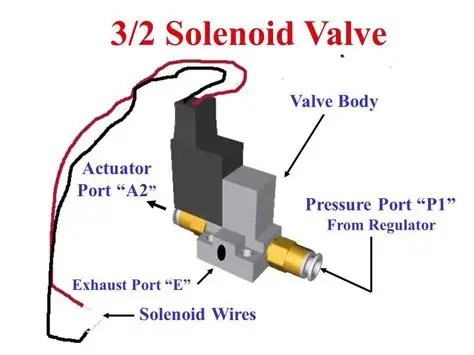
Identify port:
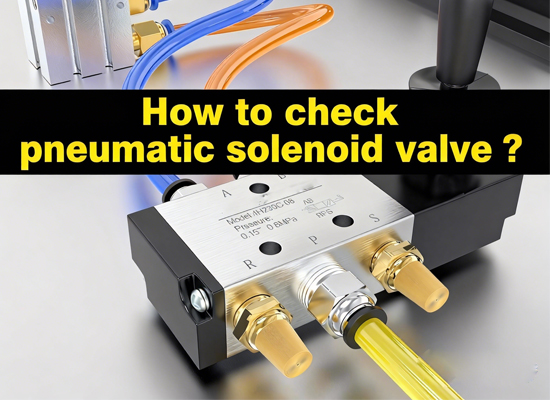
P (Pressure/Inlet): Connect the main pipeline from the air source.
A/B (working port): Two interfaces that connect cylinders or other actuators.
R/S (exhaust port): usually equipped with a muffler, used to discharge gas from the cylinder return.
Connecting pipeline:
Use trachea of appropriate size and pressure rating.
Insert the trachea firmly into the joint, ensuring a tight and leak free connection. Can be fixed with pipe clamps.
Part 3: Circuit Wiring
When wiring pneumatic solenoid valves, the first step is to identify the terminal type: for single coil valves, there are usually two terminals (1 and 2);
For a dual coil valve, it has three terminals (1 is the common terminal, 2 and 3 control coils A and B respectively). Modern valves often adopt a quick plug design. When wiring, suitable multi-core flexible copper wire with appropriate diameter should be selected, and the wiring diagram should be strictly followed: for a single coil valve, connect the live wire (L) of the power supply to one end through a control switch, and connect the neutral wire (N) to the other end; The dual coil valve is connected to the power supply from the common terminal (1), and the two control signals are connected to the coil terminals (2 and 3) respectively. It is strictly prohibited for both coils to be powered on at the same time. Finally, it is necessary to reliably connect the grounding terminal (PE), ensure that the wire ends are securely fastened without exposure, and tightly cover the waterproof box cover to ensure the protection level.
Common Problems and Troubleshooting
Q1.How to check the solenoid valve?
The inspection of a solenoid valve includes three aspects: basic inspection, electrical inspection, and mechanical and sealing inspection.
Q2.How to clean solenoid valve?
The cleaning of a solenoid valve primarily addresses clogging issues caused by impurities. Specific steps include disassembly, cleaning, drying, and reassembly.
Other websites related to manufacturing:
www.localautomation.com
www.proudco.com
www.airtrolinc.com
www.americancylinder.com
www.fainc.net