Nov 16, 2025
In compressed air and hydraulic systems, hose and fitting connection types directly influence sealing reliability, installation efficiency, and long-term safety. For distributors and equipment manufacturers working with automated machinery, a minor mismatch in connection standards can lead to leakage, downtime, or costly rework. Selecting the correct interface is not simply a purchasing decision—it is a structural design choice that determines system performance under pressure stability, vibration, and temperature fluctuation.
As a global pneumatic component supplier, FOKCA Automation focuses on standardized and custom solutions that align with international thread standards defined by the International Organization for Standardization. Compatibility and interchangeability remain key concerns for OEM customers integrating cylinders, valves, and actuators across markets.
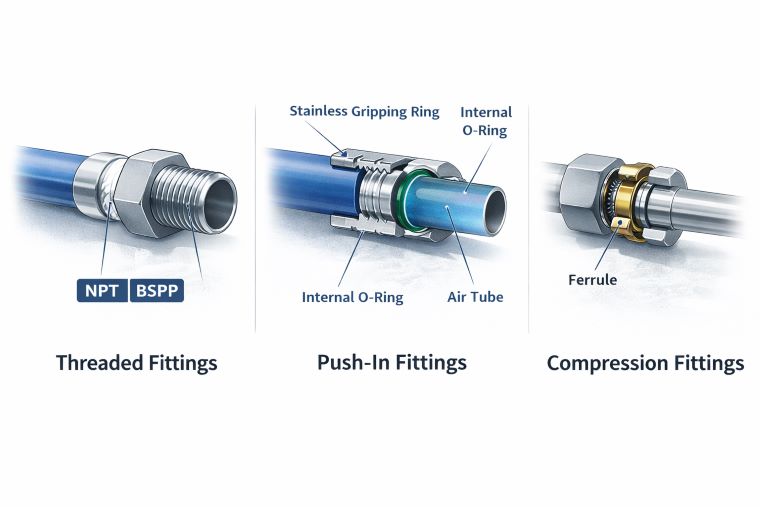
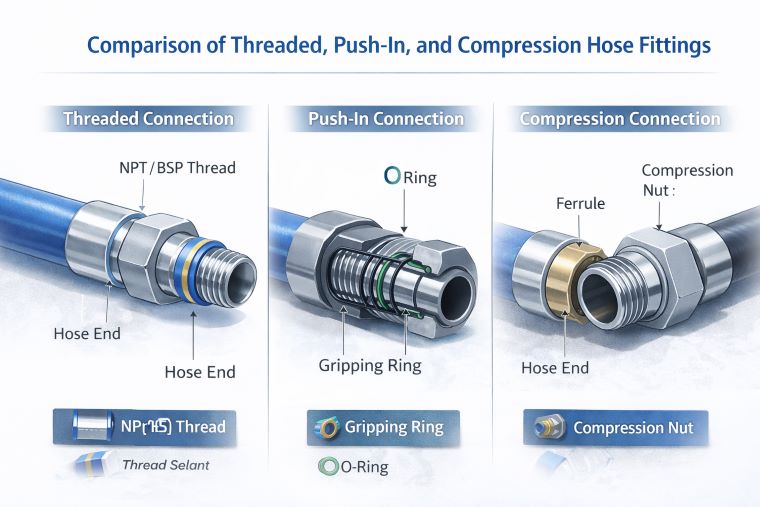
Threaded hose and fitting connection types are still the backbone of fixed pneumatic and hydraulic installations. The challenge engineers often face is ensuring compatibility between NPT, BSPT, BSPP, and Metric threads, especially when exporting equipment across regions.
These fittings create a seal through taper engagement or parallel thread compression with sealing washers. When properly selected, they provide strong mechanical locking and withstand medium to high pressure environments up to 40 MPa in hydraulic systems.
In automation lines combining Air Cylinder and control valves, threaded connections are preferred for stationary modules where vibration is limited and long-term sealing reliability is required.
Heavy-duty presses, hydraulic power packs, and structural steel equipment benefit from threaded interfaces because they resist torque loosening. According to industry sealing studies published by ISO technical committees, improper thread pairing is one of the leading causes of pneumatic leakage in exported machinery. Standard compliance reduces that risk significantly.
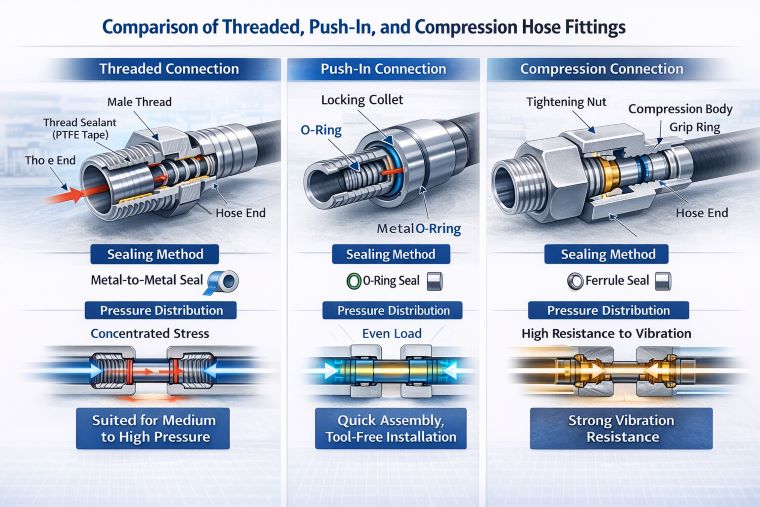
In fast-paced assembly environments, installation time becomes a production cost factor. Push-in hose and fitting connection types solve this issue by allowing technicians to connect tubing without tools. A stainless gripping ring holds the tube, while an internal O-ring ensures airtight sealing.
These fittings are widely used with Pneumatic Push In Fittings and flexible polyurethane air lines. In compact automation modules—such as packaging machines or small robotic units—space saving is critical, and push-in designs reduce installation footprint by up to 30% compared to threaded adapters.
One European packaging equipment distributor required rapid line maintenance with minimal downtime. Switching to push-to-connect hose and fitting connection types reduced service time per unit by nearly 20%, improving overall operational efficiency. For systems integrating Pneumatic Solenoid Valves, quick tube replacement significantly simplifies troubleshooting.
Mobile machinery and hydraulic tools require frequent connection and disconnection. Quick coupling hose and fitting connection types are designed for this environment. With internal check valves, they prevent fluid loss during separation and protect operators from pressure release hazards.
In pneumatic systems, Pneumatic Quick Couplings enable rapid tool changes. In hydraulic circuits, quick couplers support pressures exceeding 300 bar, depending on structural design.
Quick couplings are especially valuable in agricultural and construction equipment where downtime directly affects productivity. Market analyses from fluid power associations indicate that downtime costs in industrial sectors can exceed several thousand dollars per hour. Choosing reliable hose and fitting connection types with automatic shut-off valves minimizes such risks.
Compression fittings use ferrule deformation to create a tight seal around rigid tubing. They perform well under vibration and moderate pressure conditions. These are commonly paired with air preparation systems such as the Air Source Treatment Unit, where air purity and leak prevention are crucial.
Barbed fittings, on the other hand, are cost-effective for low-pressure applications. With hose clamps, they provide acceptable sealing for light-duty air transfer lines. While not suitable for high-pressure hydraulic circuits, they remain practical in auxiliary pneumatic systems.
When evaluating hose and fitting connection types, engineers should assess five technical variables:
Parameter | Recommended Consideration |
Working Pressure | Match fitting rating with system maximum pressure |
Temperature | Confirm seal material compatibility |
Fluid Medium | Air, oil, or mixed fluids affect seal choice |
Vibration Level | Prefer compression or reinforced threads |
Maintenance Frequency | Choose quick couplings for frequent service |
For OEM/ODM clients developing custom cylinders—such as extra-long stroke cylinders or stainless steel mini cylinders—connection compatibility must be determined during early-stage mechanical design. Overlooking this step often results in adapter stacking, which increases leakage risk and weakens structural rigidity.
High-quality hose and fitting connection types do more than connect components; they maintain system integrity across thousands of operating cycles. In pneumatic automation systems that integrate cylinders, actuators, solenoid valves, and air filtration units, even minor leakage can reduce actuator efficiency and increase compressor load.
From a lifecycle cost perspective, investing in precision-machined fittings with corrosion-resistant materials and accurate thread tolerances improves reliability and enhances brand reputation for distributors and equipment manufacturers.
For global buyers and industrial partners, selecting standardized yet customizable hose and fitting connection types ensures compatibility, scalability, and long-term supply stability—key factors in modern automation markets.
(FK9027)
You May Interest In

Dec 02, 2025 Blog
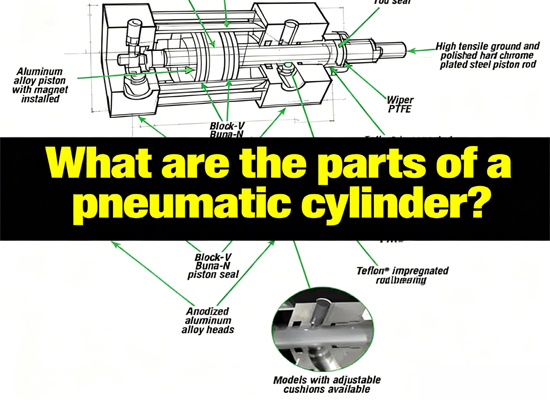
What are the parts of a pneumatic cylinder?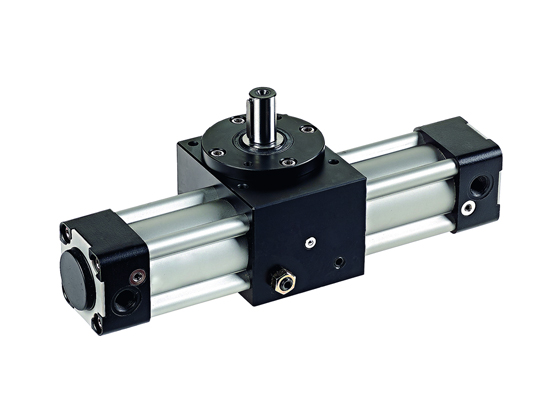
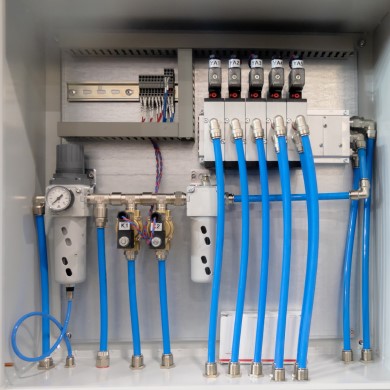
Apr 18, 2025 Blog
What is an Angle Seat Valve?
Get a free sample

Fokca is a brand of Ningbo Fokca Automation Co., Ltd.
Looking for custom pneumatic cylinder solutions? Visit our sister brand, Fescolo.→
© 2026 Ningbo Fokca Automation Co., Ltd. All rights reserved. Sitemap