Jan 20, 2026
In many hydraulic systems, hydraulic quick couplers work reliably at moderate pressure but begin to show micro-leakage once operating pressure increases. The oil does not spray or drip immediately; instead, it appears as surface wetting around the coupling interface, often overlooked until contamination or pressure loss becomes noticeable. Understanding why this happens requires looking beyond “product quality” and into the sealing mechanics of quick coupling designs under high-pressure conditions.
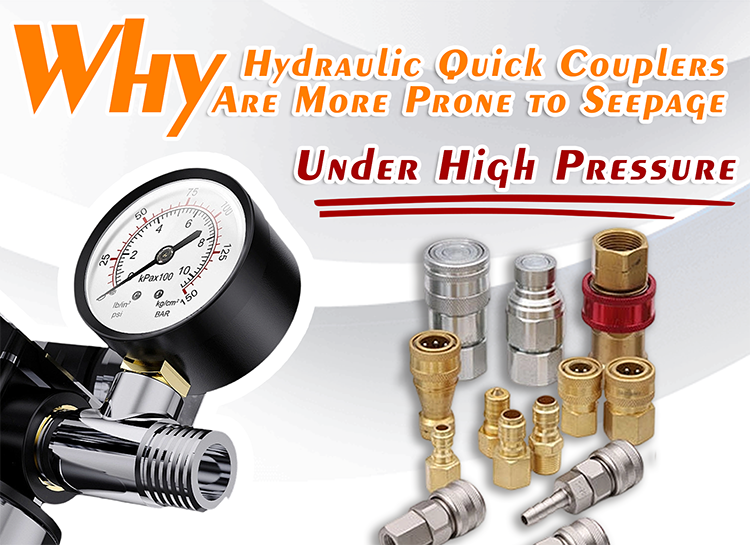
At low or medium pressure, the sealing elements inside a hydraulic quick coupling operate within a relatively forgiving range. As pressure rises, the forces acting on the seal increase exponentially. The internal fluid pressure attempts to push sealing materials out of their designed contact zone, while any microscopic gap becomes a potential leakage path.
In high-pressure systems, even a perfectly machined coupler can experience seepage if the sealing structure is not designed to adapt dynamically to pressure changes. This is why leakage under high pressure is more often a design limitation than a manufacturing defect.
Many standard hydraulic quick couplers rely on a single O-ring as the primary seal. Under high pressure, problems arise when the O-ring compression ratio is insufficient. If the O-ring is not compressed enough, it cannot maintain continuous surface contact once pressure fluctuates. If over-compressed, it may deform permanently, losing elasticity over time.
In repeated pressure cycles, especially in mobile hydraulics, the O-ring can momentarily relax or shift, allowing oil to migrate along the sealing surface. This results in slow seepage rather than catastrophic leakage, making the issue harder to detect early.
Seal material selection becomes critical as pressure increases. NBR, FKM, or polyurethane seals each behave differently under stress, temperature, and exposure to hydraulic oil additives. A material that performs well at standard pressure may harden, swell, or lose resilience in high-pressure environments.
When seal elasticity drops, the material can no longer compensate for micro-movements between mating parts. In hydraulic quick couplers, this loss of adaptive sealing ability is a common cause of persistent oil film formation around the connection area, even when the coupling appears fully locked.
High-pressure systems are often paired with frequent coupling cycles, such as in test rigs, hydraulic tools, or interchangeable attachments. Each connect–disconnect action introduces slight abrasion on sealing surfaces. Over time, these micro-wear patterns reduce surface smoothness and compromise sealing integrity.
Under low pressure, this wear may not be noticeable. Under high pressure, however, fluid exploits every imperfection. The result is seepage that appears only after extended use, leading users to mistakenly attribute it to aging rather than mechanical wear.
To address these challenges, high-pressure hydraulic quick couplers increasingly adopt enhanced sealing concepts rather than relying on a single elastomer element.
| Sealing Design | Leakage Control | Typical Application |
|---|---|---|
| Single O-ring seal | Limited at high pressure | Standard hydraulic circuits |
| Dual sealing structure | Improved pressure stability | High-pressure mobile hydraulics |
| Metal-to-metal primary seal | Excellent at extreme pressure | Heavy-duty industrial systems |
Dual sealing designs use a secondary seal to support the primary O-ring, maintaining sealing force even when pressure spikes occur. Metal-to-metal sealing, often combined with elastomer backup seals, limits elastic deformation and provides a stable sealing surface under extreme loads.
For engineers and procurement teams, selecting hydraulic quick couplers for high-pressure use means looking beyond nominal pressure ratings. Attention should be paid to seal structure, material compatibility, and connection cycle life. Couplers designed specifically for high pressure often feature reinforced housings, precision-machined sealing grooves, and pressure-responsive sealing geometries.
Standard couplers may technically withstand high pressure, but without optimized sealing, long-term leakage risk remains high. This distinction is particularly important in systems where cleanliness, safety, and pressure stability are critical.
High-pressure seepage in hydraulic quick couplers is rarely accidental. It is the predictable outcome of seal compression limits, material behavior, and mechanical wear under elevated stress. Once these factors are understood, leakage becomes a design problem that can be solved—not an unavoidable side effect.
For modern high-pressure hydraulic systems, choosing couplers with advanced sealing structures is no longer optional. It is a practical step toward cleaner operation, longer service life, and more stable system performance.
(FK9026)
You May Interest In

Dec 02, 2025 Blog
What are the parts of a pneumatic cylinder?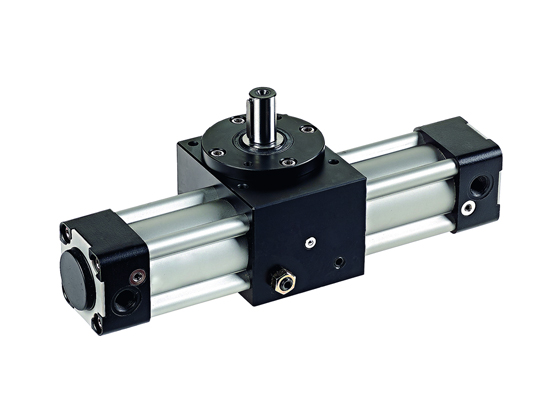
Apr 18, 2025 Blog
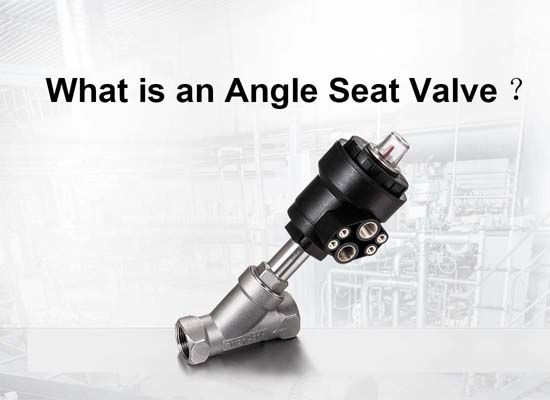
What is an Angle Seat Valve?
Get a free sample

Fokca is a brand of Ningbo Fokca Automation Co., Ltd.
Looking for custom pneumatic cylinder solutions? Visit our sister brand, Fescolo.→
© 2026 Ningbo Fokca Automation Co., Ltd. All rights reserved. Sitemap