Sep 27, 2025
In industrial automation, valves are not just flow control devices—they determine how efficiently compressed air or fluid energy is converted into mechanical motion. A poorly selected valve can slow down actuator response, increase energy consumption, or cause unstable system behavior. Understanding the application of different types of valves in industrial automation helps engineers balance response speed, pressure stability, and maintenance efficiency across production lines.
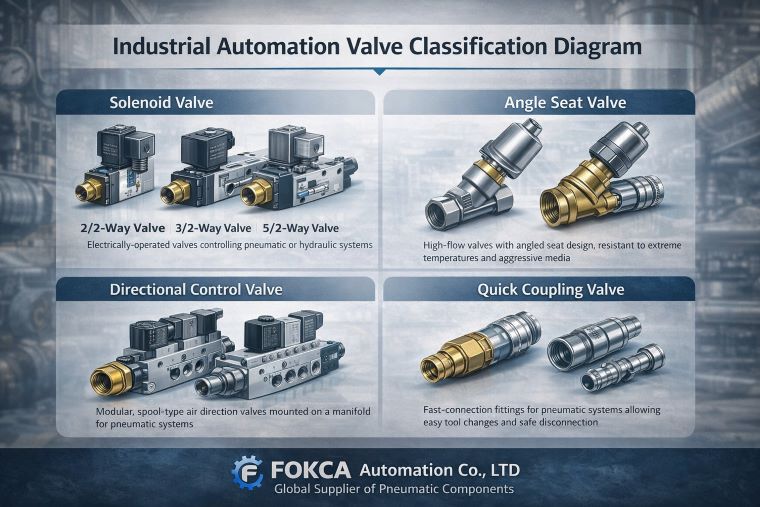
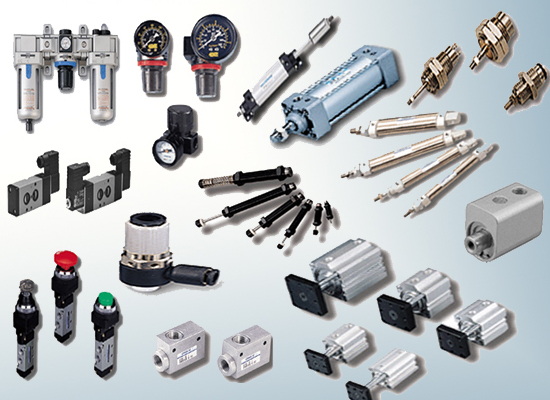
Modern automation systems integrate cylinders, actuators, filtration units, and control modules into compact assemblies. According to technical frameworks published by International Organization for Standardization, standardized interfaces and pressure classifications play a critical role in ensuring global compatibility and long-term reliability.
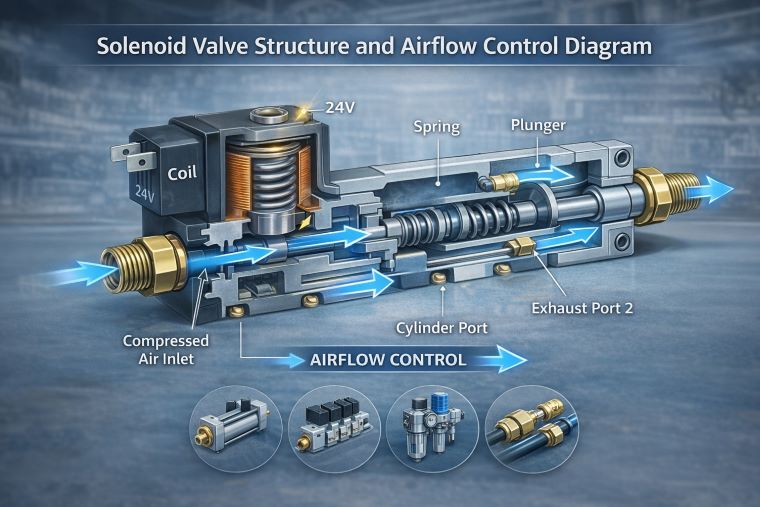
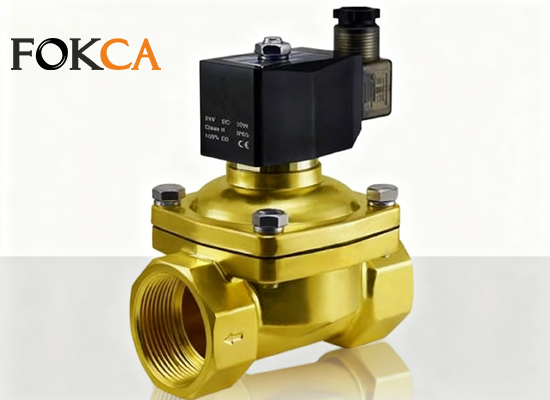
When precise electrical control is required, solenoid valves become the core switching component. In packaging lines, robotic cells, and conveyor systems, they convert electrical signals into pneumatic motion within milliseconds. The key advantage lies in fast response time (typically 10–30 ms) and compact installation.
In systems integrating cylinders and actuators, solenoid valves regulate airflow direction and timing. For example, in a carton sealing machine, a double-acting cylinder relies on a 5/2-way solenoid valve to extend and retract consistently. Improper valve sizing, however, can cause pressure drop and reduce actuator efficiency.
From an engineering perspective, selecting coil voltage, flow coefficient (Cv), and port size must match the system’s maximum flow demand. Oversized valves waste energy, while undersized ones restrict performance.
Automation rarely involves single movements. Production lines often require coordinated sequences—clamping, pressing, lifting, and releasing. Directional control valves manage these sequences by controlling airflow paths.
In modular automation platforms, directional valves are often mounted on valve manifolds to reduce piping complexity. This design lowers leakage points and improves maintenance access. In high-cycle systems operating over millions of cycles annually, reliability of spool design and sealing materials directly affects lifecycle cost.
Where vibration is moderate and installation is fixed, threaded valve connections provide structural stability. In contrast, compact modules may use push-in interfaces to simplify assembly.
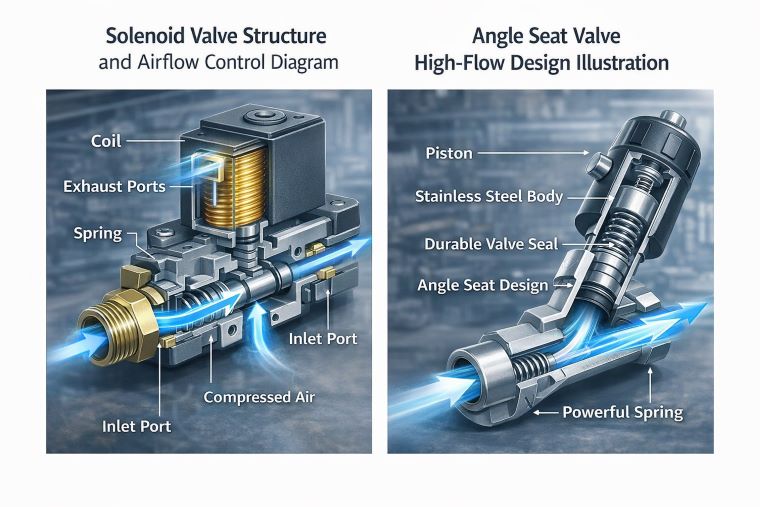
Certain industrial processes require rapid discharge or high flow capacity. Angle seat valves are widely used in steam systems, water treatment lines, and compressed air distribution. Their angled body design allows high flow rates with minimal pressure loss, making them suitable for demanding process environments.
In food processing or pharmaceutical automation, stainless steel angle seat valves provide corrosion resistance and hygienic performance. These valves often operate under fluctuating temperature conditions, requiring careful seal material selection to maintain durability.
Compact machinery—such as labeling machines or pick-and-place robots—demands space-saving components. Pneumatic control valves integrated with quick exhaust or speed control functions enhance efficiency in tight layouts.
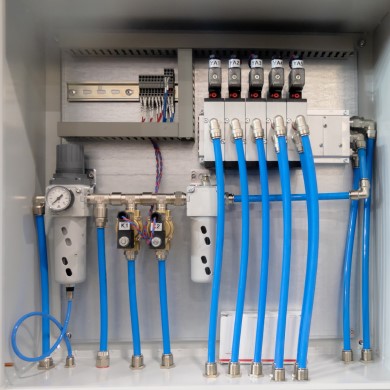
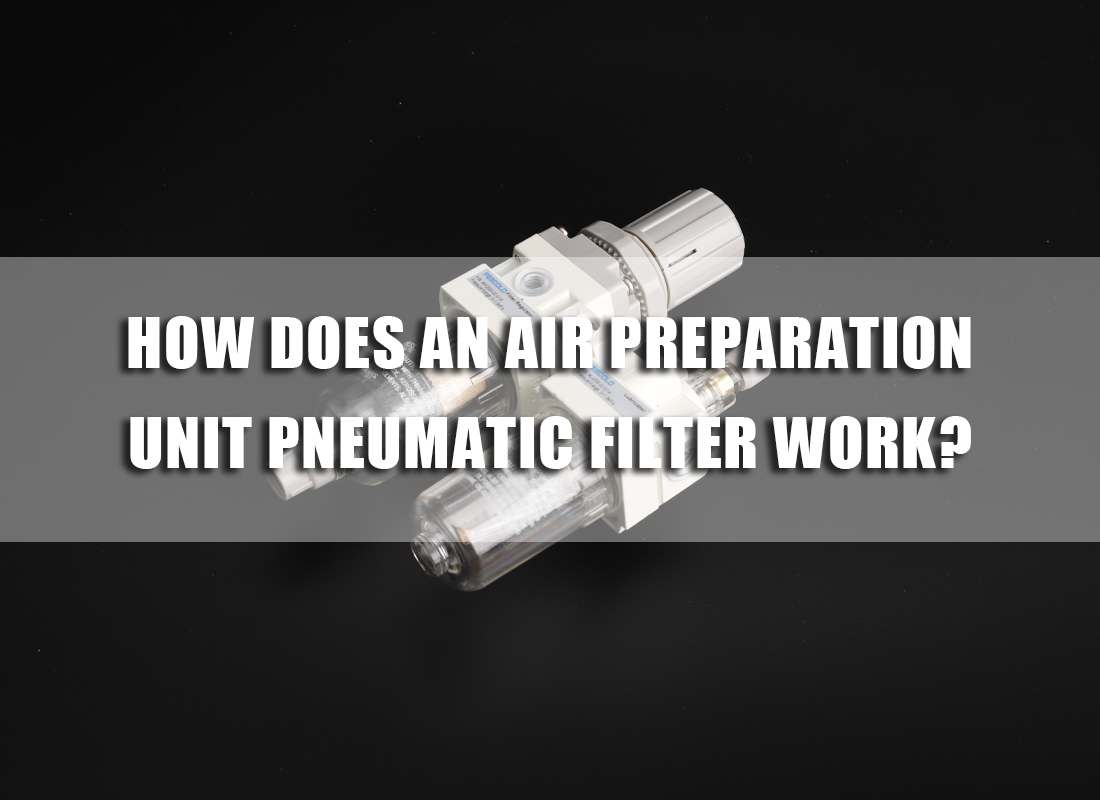
For instance, in a robotic gripping unit, rapid exhaust valves can shorten cylinder return time, improving cycle speed. When combined with air preparation systems, stable air quality ensures consistent valve response and reduces internal contamination.
Industry data from fluid power associations indicate that compressed air inefficiencies can account for up to 20–30% energy loss in poorly optimized systems. Proper valve configuration significantly reduces this waste.
Automation systems require more than directional switching. Check valves prevent backflow, protecting compressors and maintaining pressure balance. Flow control valves regulate actuator speed, ensuring smooth and synchronized motion.
In synchronized lifting systems, uneven airflow can cause mechanical misalignment. Installing precision flow control valves stabilizes movement and extends equipment lifespan. Though small in size, these valves play a decisive role in maintaining operational safety.
Industrial environments such as automotive workshops or mobile equipment demand rapid tool changes. Quick coupling valves enable safe connection and disconnection without depressurizing the entire system.
With built-in shut-off mechanisms, they reduce fluid loss and protect operators from accidental pressure release. In facilities where downtime costs can reach thousands of dollars per hour, minimizing maintenance time directly impacts profitability.
Choosing the appropriate valve involves evaluating multiple variables:
Parameter | Engineering Focus |
Working Pressure | Match valve rating to maximum system pressure |
Flow Rate | Ensure adequate Cv for actuator demand |
Temperature | Confirm seal compatibility |
Control Method | Electrical, pneumatic, or manual |
Maintenance Frequency | Consider modular or quick-connect design |
Early-stage mechanical design should define valve type and interface standard to avoid adapter stacking or pressure losses. For OEM/ODM manufacturers developing custom cylinders or specialized actuators, integration planning ensures structural rigidity and leak prevention.
The application of different types of valves in industrial automation extends beyond initial installation. Over years of operation, valves must withstand continuous cycling, pressure fluctuations, and environmental stress.
High-quality machining accuracy, corrosion-resistant materials, and standardized thread tolerances improve reliability. Distributors and equipment manufacturers who prioritize these factors benefit from reduced warranty claims and stronger brand credibility in global markets.
In modern automation systems, valves are not isolated components—they are control hubs that influence energy efficiency, motion precision, and operational stability. Selecting the correct type ensures scalable performance and sustainable industrial growth.
(FK9027)
 Pilot Pressure vs Working Pressure in Industrial Valves: Key Differences and Selection Guide
 Water Hammer Explained: Why Angle Seat Valves Are the Optimal Solution
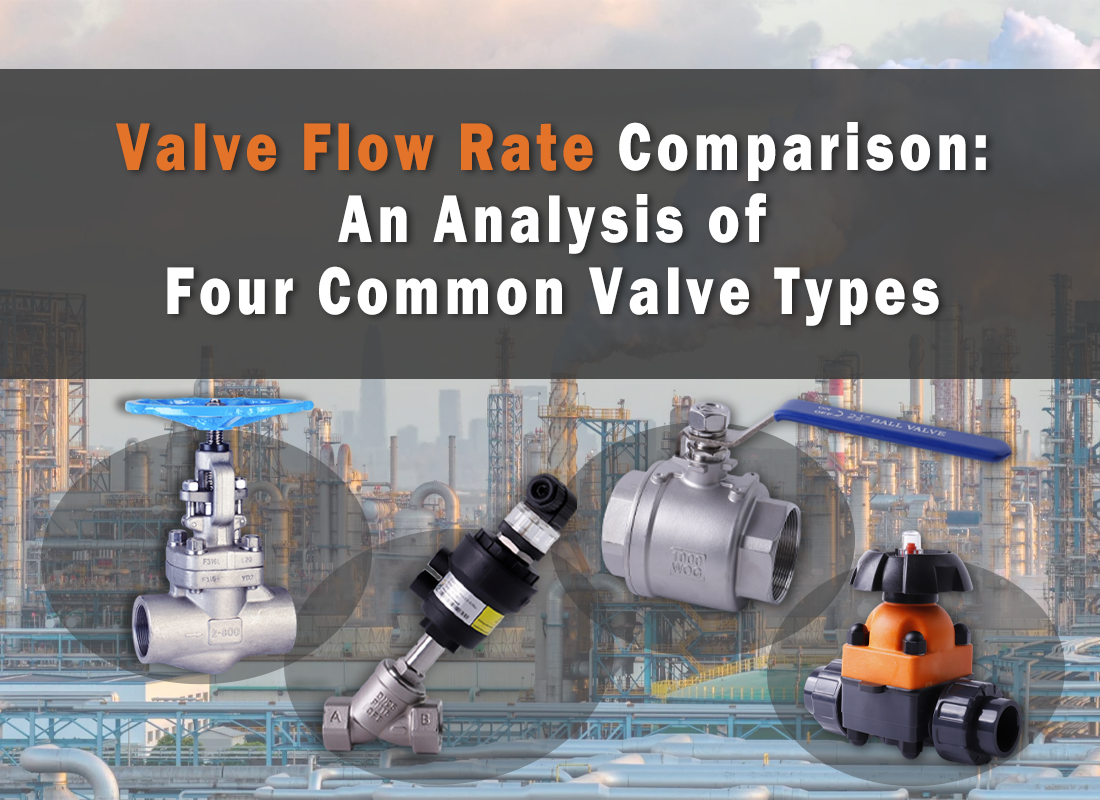 Valve Flow Rate Comparison: An Analysis of Four Common Valve Types
 The Temperature Limit of Valves: How Seal Material Affects Valve Body Performance
 Valve Flow Coefficients CV & KV: Differences Analysis and Selection Guide
You May Interest In

Dec 02, 2025 Blog
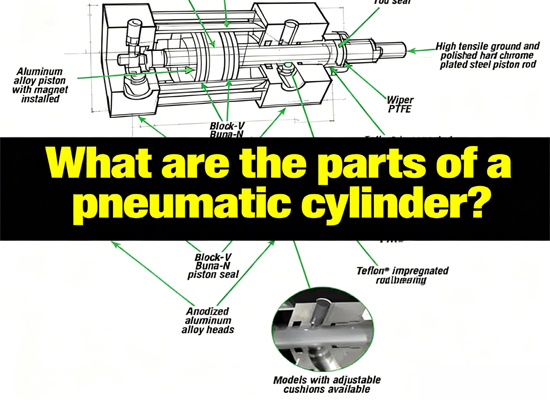
What are the parts of a pneumatic cylinder?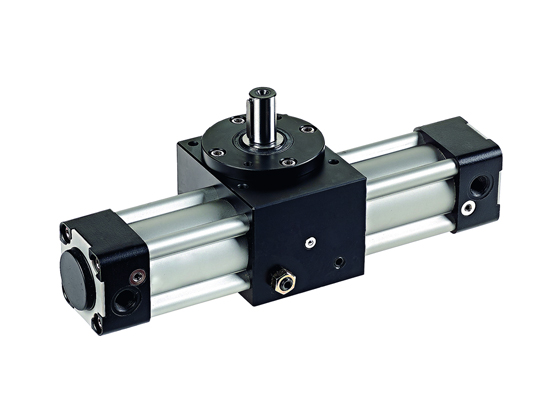

Apr 18, 2025 Blog
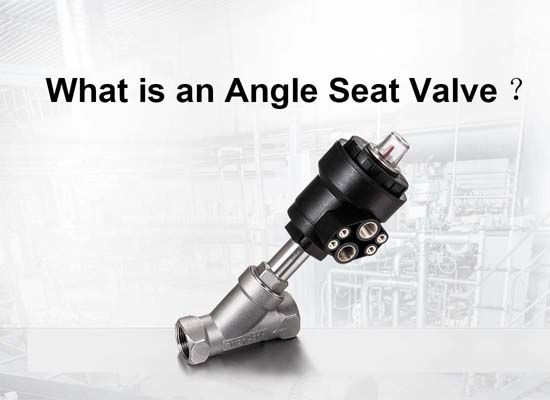
What is an Angle Seat Valve?
Get a free sample

Fokca is a brand of Ningbo Fokca Automation Co., Ltd.
Looking for custom pneumatic cylinder solutions? Visit our sister brand, Fescolo.→
© 2026 Ningbo Fokca Automation Co., Ltd. All rights reserved. Sitemap