Jan 13, 2026
Industrial robots place unique demands on pneumatic components. Unlike static equipment, robotic arms operate with high-frequency motion, continuous bending, and compact routing paths, all within limited space. In this environment, tubing failure rarely comes from extreme pressure alone—it is usually caused by fatigue, abrasion, or loss of dimensional stability over time. This is where Nylon Tubing demonstrates clear advantages in robotic pneumatic systems.
Compared with many traditional plastic hose solutions, nylon hose is designed to balance strength, flexibility, and long-term reliability, making it a preferred choice for modern automation.
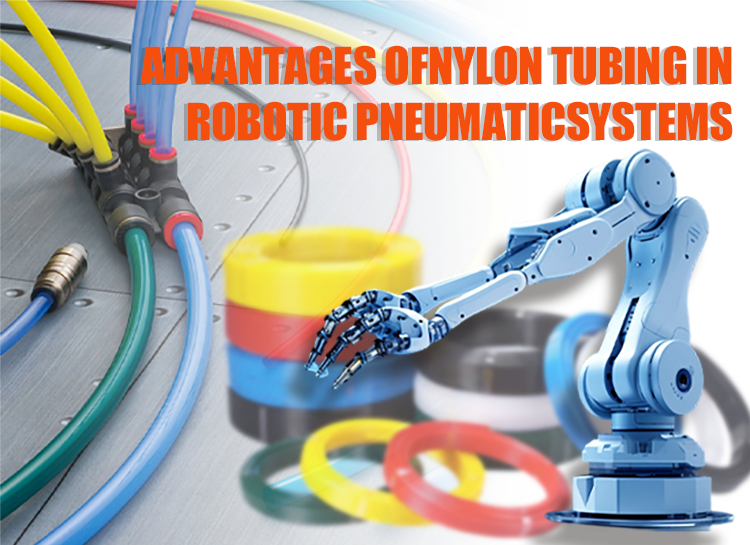
Robotic pneumatic systems operate under constant movement. Tubes are repeatedly bent, twisted, and guided through drag chains or articulated joints. In such conditions, ordinary pneumatic tubing may harden, deform, or develop micro-cracks after extended use.
Nylon Tubing offers strong fatigue resistance due to its molecular structure, which allows controlled elasticity without permanent deformation. During repetitive motion, the tube maintains its shape and internal diameter, ensuring stable airflow to actuators and valves. This consistency is critical for robotic positioning accuracy and cycle repeatability.
For equipment engineers, this means fewer unexpected stoppages caused by air tubing failure in dynamic zones.
Robotic cells are typically designed with tight layouts. Pneumatic lines must share space with electrical cables, sensors, and mechanical components. In these installations, tubing must tolerate small bending radii without collapsing or kinking.
Compared with softer plastic tubing, nylon hose maintains better structural stability under compression and bending. Even when routed through narrow channels or rotating joints, the tube resists flattening, which helps preserve airflow efficiency and response speed.
This structural rigidity also improves compatibility with hose pipe and connectors, reducing the risk of leakage caused by ovalization or dimensional drift over time.
In robotic systems, tubing often contacts metal brackets, guide rails, or cable carriers. Over thousands of cycles, surface wear becomes a major factor affecting service life.
Nylon Tubing provides excellent abrasion resistance compared to many common plastic hose materials. Its harder surface reduces material loss caused by friction, making it suitable for exposed routing or semi-protected installations.
For end users, this translates into longer replacement intervals and lower maintenance workload, particularly in multi-shift production environments.
Different materials are used for pneumatic tubing, but their performance in robotic systems varies significantly.
| Material | Fatigue Resistance | Abrasion Resistance | Dimensional Stability |
|---|---|---|---|
| Nylon Tubing | High | High | Excellent |
| PU Tubing | Medium–High | Medium | Good |
| PVC Tubing | Medium | Medium | Limited |
While PU tubing offers superior flexibility, it may deform more easily under constant motion. PVC tubing, though cost-effective, tends to harden and crack under repeated bending. Nylon Tubing strikes a balance, offering durability without excessive stiffness.
This balance is why nylon is often specified for robotic air tubing where reliability outweighs minimal initial cost differences.
In robotic pneumatic applications, airflow stability directly affects actuator response time. Changes in internal diameter due to tube expansion or deformation can introduce delays or inconsistencies in motion.
Because nylon hose maintains dimensional stability under pressure and movement, airflow remains predictable. This is especially important in systems requiring synchronized motion or precise timing between multiple pneumatic actuators.
For system integrators, this stability simplifies tuning and reduces the need for frequent recalibration.
As a global supplier of pneumatic components, FOKCA Automation approaches Nylon Tubing not as a standalone product, but as part of a complete pneumatic system. Our nylon air tubing is designed to match standard fittings, valves, and cylinders commonly used in robotic automation.
Through OEM and ODM services, FOKCA supports customized outer diameters, wall thicknesses, and material grades to suit specific robotic motion profiles. This ensures compatibility across plastic tubing, connectors, and pneumatic accessories, reducing integration risks for distributors and end users.
For procurement managers, sourcing tubing and connectors from a single system-focused supplier also simplifies quality control and supply chain management.
Robotic pneumatic systems demand more than basic pressure resistance. They require tubing that can withstand continuous motion, limited space, and mechanical interaction without compromising airflow or reliability.
The advantages of Nylon Tubing—including fatigue resistance, abrasion durability, and dimensional stability—make it well suited for these demanding applications. When properly selected and integrated, nylon hose contributes directly to system uptime, consistent performance, and reduced maintenance costs.
For distributors, engineers, and end users evaluating air tubing options, nylon tubing remains a practical and proven solution for modern robotic automation.
(FK9026)
You May Interest In

Dec 02, 2025 Blog
What are the parts of a pneumatic cylinder?

Apr 18, 2025 Blog
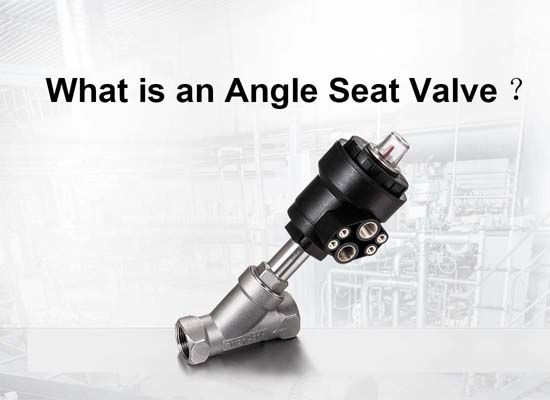
What is an Angle Seat Valve?
Get a free sample

Fokca is a brand of Ningbo Fokca Automation Co., Ltd.
Looking for custom pneumatic cylinder solutions? Visit our sister brand, Fescolo.→
© 2026 Ningbo Fokca Automation Co., Ltd. All rights reserved. Sitemap