Feb 12, 2026
In compact automation systems, airflow efficiency often depends on details that are easy to overlook. Mini Type Pneumatic Push In Fittings may look similar externally, but the internal passage design of a straight push fitting, mini elbow fitting, or T-type connector can significantly affect cylinder response time. For high-speed pick-and-place units or micro actuators, even a small pressure drop can reduce productivity. Understanding the flow difference helps engineers and distributors recommend the right pneumatic flow connector instead of choosing only by shape.
The primary difference lies in how air changes direction inside the body. A straight push fitting allows air to pass in a nearly linear path, minimizing turbulence and pressure loss. In contrast, a mini air elbow forces the airflow to turn 90 degrees within a compact cavity. This directional change creates additional resistance, especially in small bore sizes such as 4mm or 6mm.
T-type fittings introduce another factor: flow division. When air splits into two outlets, the effective flow per branch decreases unless supply pressure compensates. In micro automation, these structural differences directly influence cycle time and actuator stability.
Shorter and smoother flow paths always provide better dynamic response.
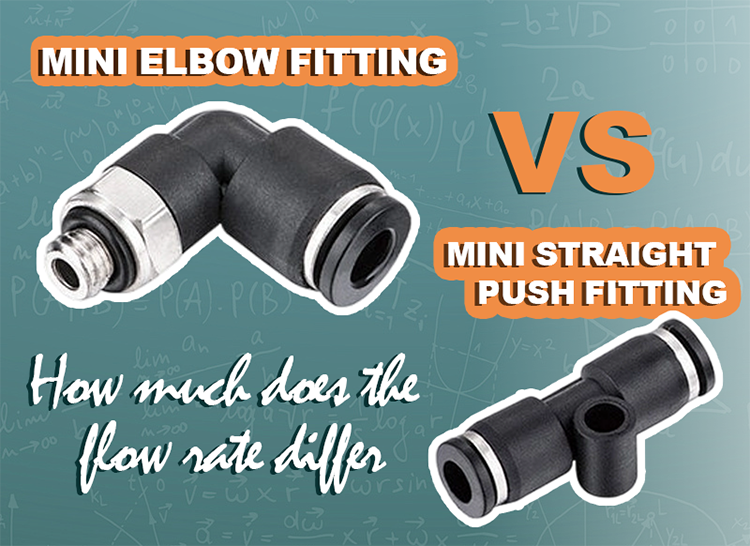
While exact values vary by manufacturer, internal testing across miniature connectors typically shows the following trend:
| Type | Internal Flow Path | Relative Flow Capacity | Typical Use |
|---|---|---|---|
| Straight push fitting | Linear | 100% (baseline) | High-speed cylinders |
| Mini elbow fitting | 90° turn | 80–90% | Space-limited routing |
| T-type connector | Split flow | 60–75% per branch | Dual-output systems |
The difference becomes noticeable when driving small cylinders at high frequency. A straight design maintains faster exhaust and refill rates, while a mini elbow fitting may slightly delay movement in rapid cycling applications.
High-speed micro cylinders rely on rapid air exchange. When a pneumatic flow connector restricts airflow, back pressure increases during exhaust, slowing piston return. In packaging lines or electronics assembly machines operating at hundreds of cycles per minute, this delay accumulates.
However, elbows are not inferior products. They solve routing challenges in confined cabinets where tubing cannot bend sharply without stress. In these cases, a mini air elbow prevents hose fatigue and actually improves long-term reliability despite the minor flow reduction.
The real boundary is application speed, not fitting quality.
Equipment designers often face a trade-off: compact layout or maximum airflow. Micro air fittings are widely used in medical analyzers, labeling machines, and desktop automation because space is extremely limited. Installing a straight connector may require additional tube bending radius, increasing overall footprint.
When cylinder bore is small (e.g., 8–12 mm) and stroke is short, the difference between straight and elbow versions is usually negligible. But in high-speed pick-and-place systems, engineers frequently choose straight fittings near the actuator and use elbows only at fixed manifold positions. This mixed strategy balances space efficiency with performance.
For equipment engineers, selection should begin with airflow demand:
1.Use straight push fitting for high-speed cylinders or vacuum generators.
2.Use mini elbow fitting when routing flexibility is critical.
3.Use T-type connectors only when dual output is structurally required.
For distributors and purchasing managers, stocking a complete range of Mini Type Pneumatic Push In Fittings allows flexible solutions without redesign.
When airflow stability and compact structure must coexist, choosing the right pneumatic flow connector becomes a system-level decision rather than a simple accessory purchase. Matching structure to application ensures reliable motion, consistent cycle time, and efficient space utilization in modern micro automation systems.
(FK9026)
 Pilot Pressure vs Working Pressure in Industrial Valves: Key Differences and Selection Guide
 Water Hammer Explained: Why Angle Seat Valves Are the Optimal Solution
 Valve Flow Rate Comparison: An Analysis of Four Common Valve Types
 The Temperature Limit of Valves: How Seal Material Affects Valve Body Performance
 Valve Flow Coefficients CV & KV: Differences Analysis and Selection Guide
You May Interest In


Dec 02, 2025 Blog
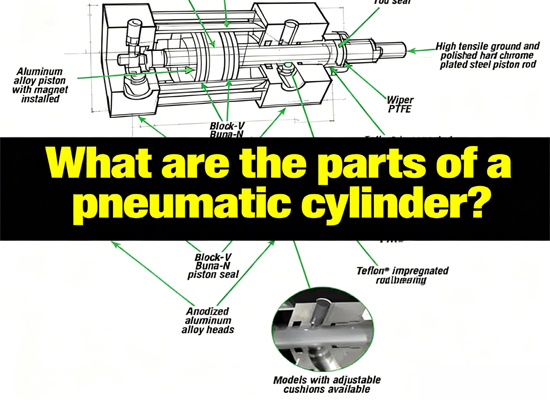
What are the parts of a pneumatic cylinder?





Apr 18, 2025 Blog
What is an Angle Seat Valve?
Get a free sample

Fokca is a brand of Ningbo Fokca Automation Co., Ltd.
Looking for custom pneumatic cylinder solutions? Visit our sister brand, Fescolo.→
© 2026 Ningbo Fokca Automation Co., Ltd. All rights reserved. Sitemap