Sep 30, 2025
In industrial automation, confusion between pneumatic components and automatic devices is extremely common, especially for engineers, purchasing managers, or system integrators who are new to factory automation. While both are essential to modern production systems, they operate at entirely different structural levels.
Understanding the real difference between pneumatic components and an automatic device helps avoid specification errors, unnecessary costs, and incorrect system design decisions.
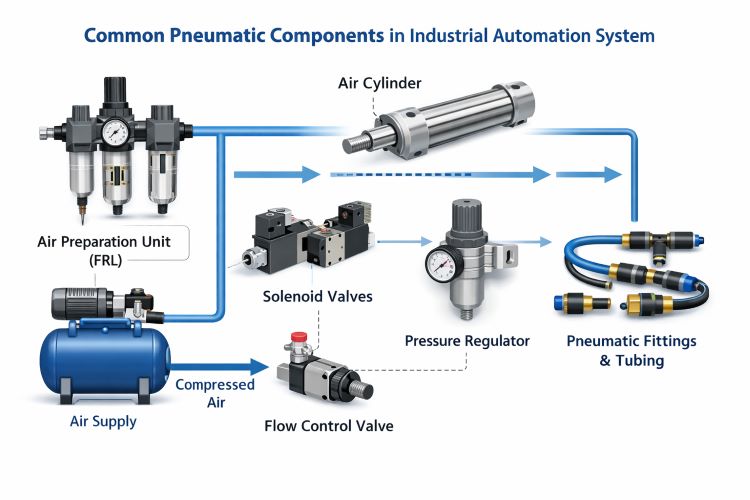
Pneumatic components are individual mechanical parts powered by compressed air. They are used to generate motion, control airflow, regulate pressure, and transmit force within industrial systems.
These components do not operate independently as complete systems. Instead, they perform defined functions within a larger framework.
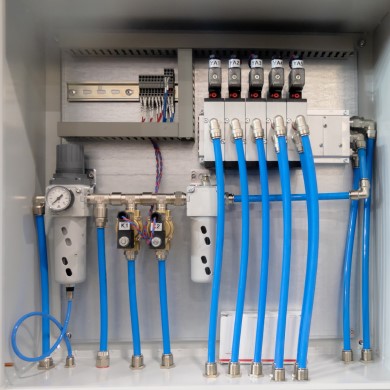
Common pneumatic components include:
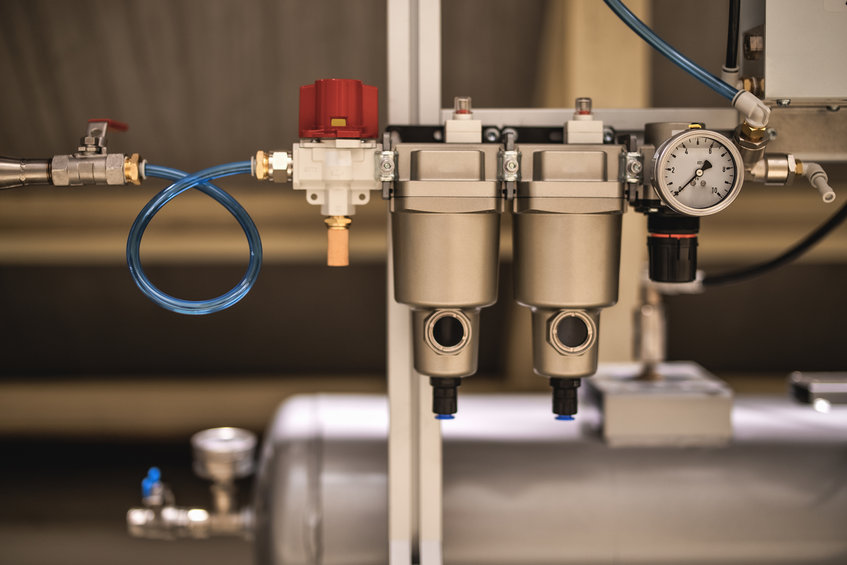
· Air preparation units (FRL units)
· Pressure regulators
· Flow control valves
· Pneumatic fittings and tubing
Each of these pneumatic components serves a specific purpose. For example, an air cylinder converts compressed air into linear motion. A solenoid valve controls the direction of airflow. A regulator stabilizes system pressure.
Individually, they cannot automate a production line. They require coordination.
From a structural standpoint, pneumatic components represent the actuation layer of an automation system. They provide the mechanical output, but they do not contain logic or decision-making capability.
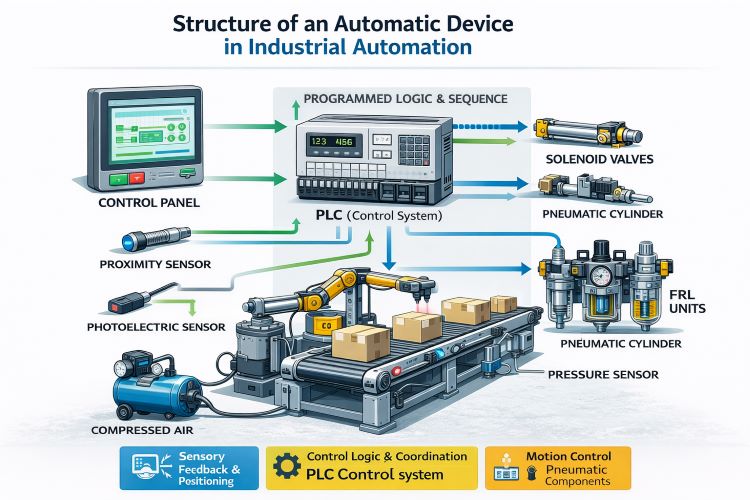
An automatic device refers to a complete machine or integrated system capable of performing tasks with minimal human intervention. Unlike standalone pneumatic components, an automatic device incorporates control logic, sensors, power systems, and mechanical structures into one unified solution.
A typical automatic device includes:
· A PLC or controller
· Sensors for feedback and positioning
· Actuators (which may include pneumatic components)
· Mechanical frames and transmission systems
· Safety modules
· Programmed operating sequences
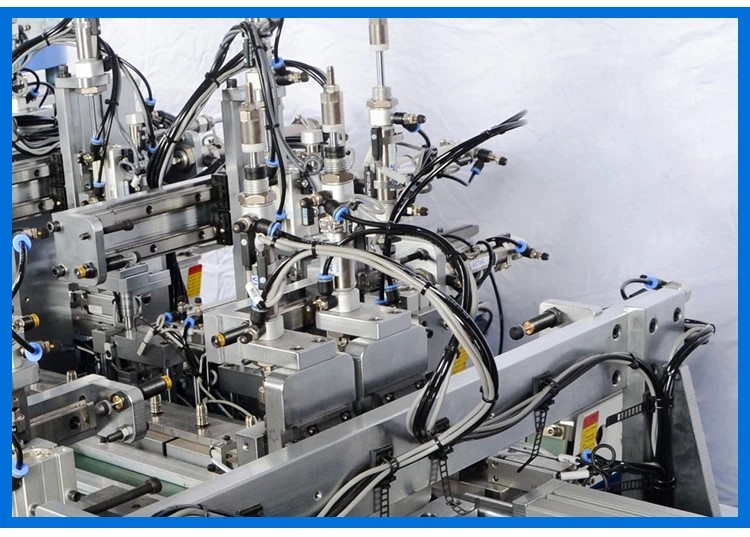
For example, an automatic packaging machine qualifies as an automatic device. Inside it, there may be dozens of pneumatic components, but the machine itself manages coordination, timing, and process logic.
This distinction is critical: pneumatic components execute motion; an automatic device manages the process.
The most effective way to understand the difference is through hierarchy.
Pneumatic components operate at the component level.
An automatic device operates at the system level.
One provides force and movement.
The other provides control and structured automation.
In simple terms:
· Pneumatic components are functional units.
· An automatic device is a complete operational solution.
Without pneumatic components, many automatic devices would lack efficient motion control. However, without integrated control architecture, pneumatic components alone cannot deliver automation.
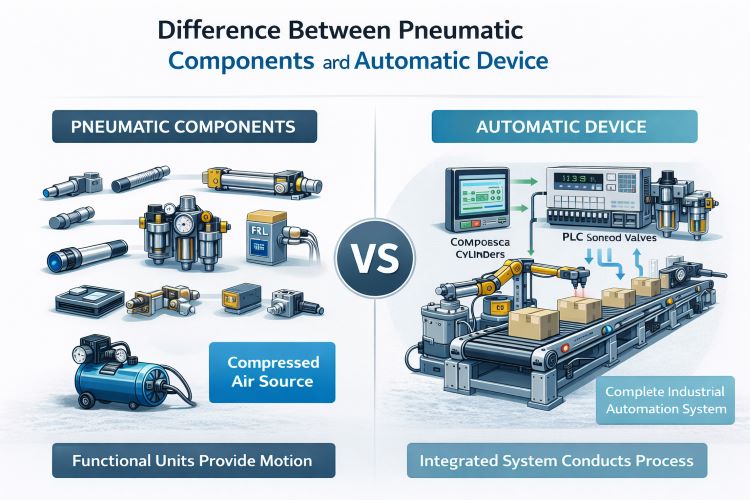
Consider an automated assembly workstation in a manufacturing plant.
Within the workstation:
· Pneumatic cylinders clamp and release parts.
· Solenoid valves control air direction.
· Pressure regulators stabilize compressed air supply.
These are all pneumatic components.
However, the workstation also includes:
· Position sensors detecting product alignment
· A PLC controlling the timing sequence
· A control panel for operator interaction
· Safety interlocks
Together, this entire structure forms the automatic device.
If you remove the control system, the pneumatic components cannot perform synchronized tasks. If you remove the pneumatic components, the automatic device loses its physical actuation capability.
They are interdependent but not identical.
There are several reasons why the difference between pneumatic components and automatic devices is often misunderstood:
1. Pneumatic components are physically installed inside automatic devices.
2. Suppliers sometimes market both categories under automation equipment.
3. Both are discussed within industrial automation contexts.
Because they appear together in applications, new engineers may assume they belong to the same classification.
However, classification in industrial engineering depends on system integration level, not physical proximity.
From a purchasing standpoint, understanding whether you need pneumatic components or a complete automatic device makes a significant financial difference.
If your production line already exists and you only need to replace a faulty cylinder, you purchase a pneumatic component.
If your company plans to automate a manual packaging process, you invest in an automatic device.
Confusing the two can lead to underestimating project budgets or overcomplicating simple maintenance tasks.
Industrial automation is built in layers:
1. Power source (compressed air or electrical supply)
2. Actuation layer (pneumatic components)
3. Control layer (PLC and sensors)
4. System layer (automatic device)
Pneumatic components sit primarily in the actuation layer.
An automatic device spans multiple layers, integrating them into one functioning system.
This layered model clarifies the structural difference clearly and professionally.
Modern automation systems increasingly integrate pneumatic, electric, and hybrid technologies. Even as electric actuators grow in popularity, pneumatic components remain widely used due to their simplicity, durability, and cost efficiency.
Similarly, automatic devices continue to evolve with smart sensors, IoT connectivity, and predictive maintenance capabilities.
Despite technological advancements, the structural difference remains consistent:
Components perform actions.
Devices manage systems.
For beginners entering industrial automation, distinguishing between pneumatic components and an automatic device is fundamental.
· Pneumatic components are individual air-powered parts responsible for mechanical output.
· An automatic device is a complete system integrating control logic, mechanical structure, and actuation technologies to perform automated tasks.
One is a building block.
The other is the finished structure.
Recognizing this difference improves communication between engineers, suppliers, and decision-makers, ultimately leading to more efficient automation solutions.
(FK9027)
 Pilot Pressure vs Working Pressure in Industrial Valves: Key Differences and Selection Guide
 Water Hammer Explained: Why Angle Seat Valves Are the Optimal Solution
 Valve Flow Rate Comparison: An Analysis of Four Common Valve Types
 The Temperature Limit of Valves: How Seal Material Affects Valve Body Performance
 Valve Flow Coefficients CV & KV: Differences Analysis and Selection Guide
You May Interest In
Nov 06, 2025 Blog
Why choose a single acting pneumatic cylinder?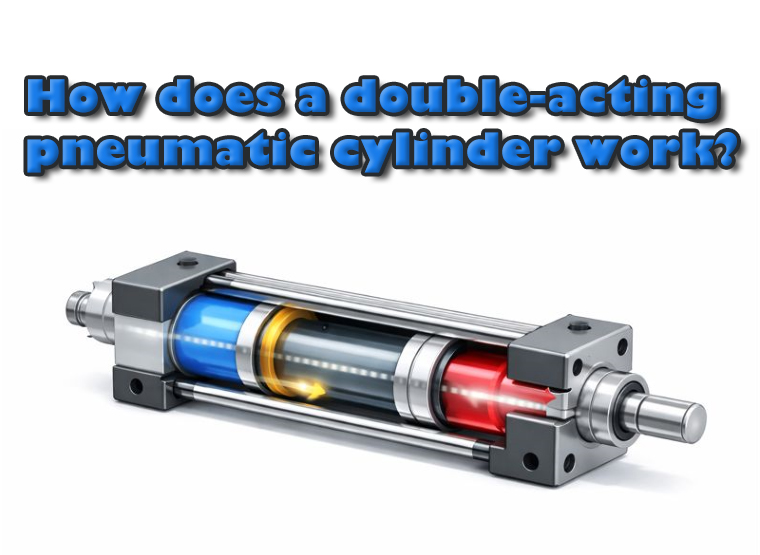
Nov 07, 2025 Blog
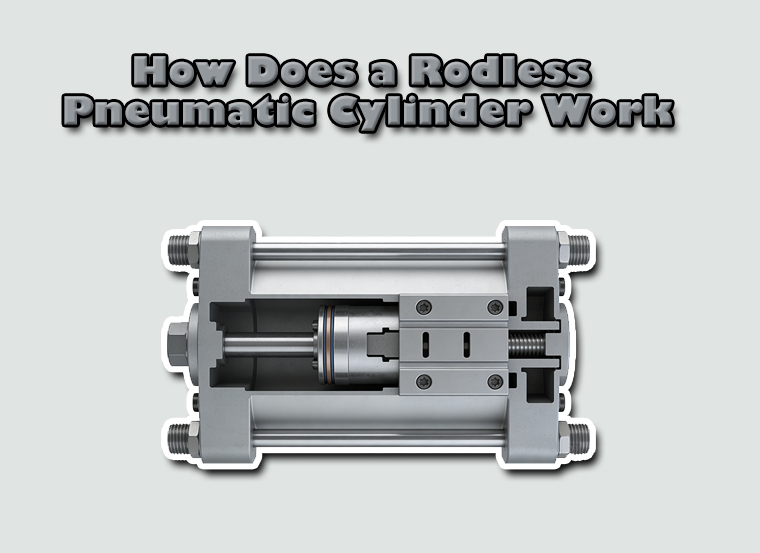
How does a rodless pneumatic cylinder work?
Nov 07, 2025 Blog
How much weight can a pneumatic cyinder lift?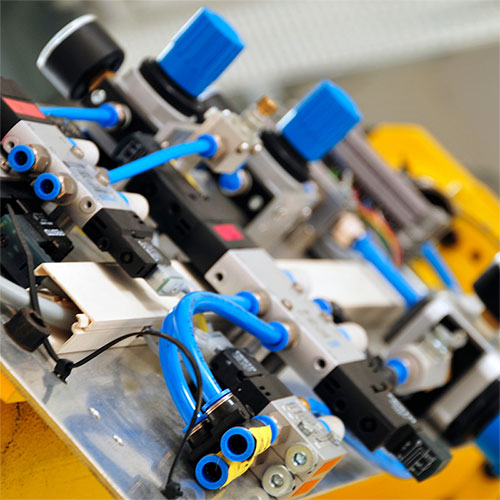
Get a free sample

Fokca is a brand of Ningbo Fokca Automation Co., Ltd.
Looking for custom pneumatic cylinder solutions? Visit our sister brand, Fescolo.→
© 2026 Ningbo Fokca Automation Co., Ltd. All rights reserved. Sitemap