Dec 09, 2025
In modern pneumatic systems, equipment reliability and operational lifespan are highly dependent on the quality of compressed air delivered to actuators and valves. Unfiltered or poorly regulated air can introduce moisture, particulates, and pressure spikes that damage sensitive components such as air cylinders and pneumatic solenoid valves. These failures not only increase maintenance costs but can also lead to unplanned downtime. Proper integration of FRL units—Filter, Regulator, and Lubricator assemblies—ensures stable operation, improved performance, and extended service life of pneumatic equipment.
An FRL unit combines three critical elements: a filter to remove contaminants, a regulator to maintain stable air pressure, and a lubricator to ensure adequate lubrication of moving components. Each element addresses specific failure modes in pneumatic systems. For example, contaminants in compressed air can cause piston sticking in air cylinders or valve spool wear in pneumatic solenoid valves. When positioned upstream of devices like Air Source Treatment Units or Pneumatic Hammers, FRL units provide clean, regulated, and lubricated air, improving reliability across the system.
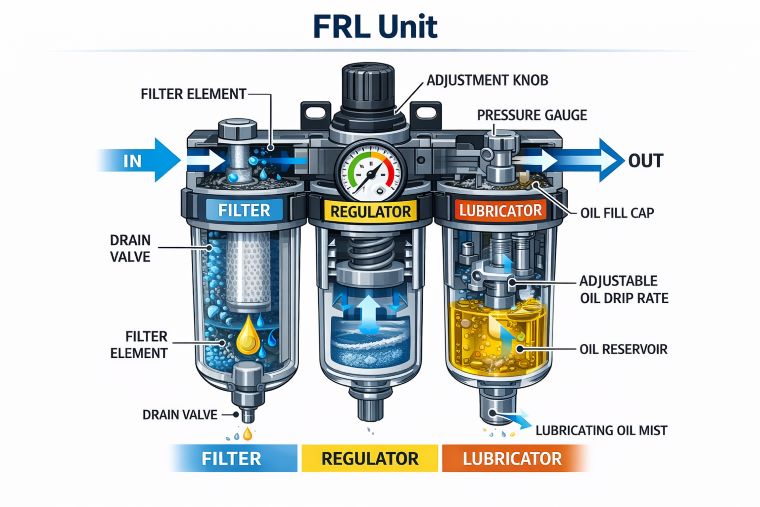
The filter component removes water, oil, and particulate matter from compressed air. Contaminants can erode seals in pneumatic cylinders, obstruct valve passages in pneumatic solenoid valves, and reduce actuator efficiency. High-cycle applications, such as robotic assembly lines or Can Crusher Machines, benefit from continuous filtration to prevent downtime. Engineers often integrate filters with Air Source Treatment Units to maximize particulate removal and ensure that air delivered to downstream components meets ISO cleanliness standards.
Inconsistent air pressure can cause erratic motion in actuators, impact cylinder stroke accuracy, and stress mechanical components. The regulator in an FRL unit stabilizes system pressure, ensuring consistent operation of air cylinders, pneumatic vibrators, and other automation devices. Maintaining proper pressure not only reduces fatigue on moving parts but also improves system efficiency and predictability. For OEM/ODM clients, such as those integrating Can Crusher Machines, regulators play a crucial role in maintaining actuator response time and repeatability.
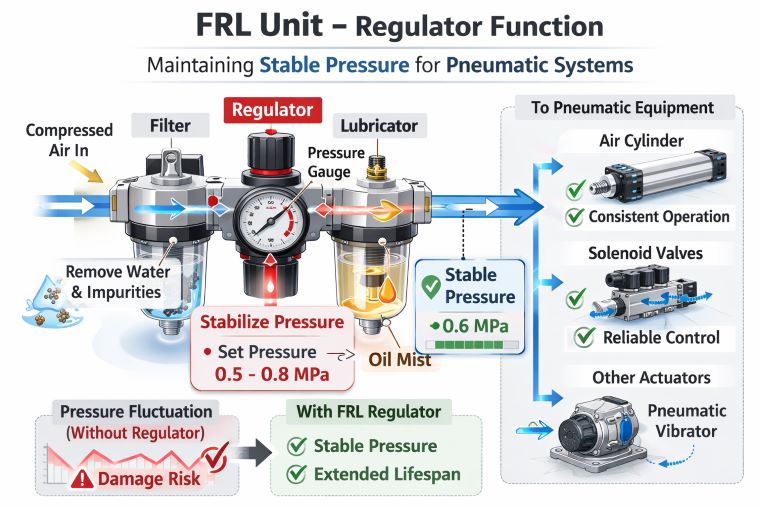
Lubrication is essential for moving parts in pneumatic systems. The lubricator in an FRL unit introduces a fine mist of oil into the airflow, reducing friction between metal components. This prevents premature wear in air cylinders and valve spools, prolonging the lifespan of pneumatic solenoid valves. For high-cycle and dusty environments, such as automated packaging or Pneumatic Hammer applications, proper lubrication reduces maintenance frequency and ensures reliable operation. Lubrication also prevents surface corrosion on internal components, which can compromise sealing and actuator efficiency.
Correct placement is critical. FRL units should be installed immediately upstream of the first active component, such as an Air Cylinder or Pneumatic Solenoid Valve, to ensure that filtered, regulated, and lubricated air reaches all downstream equipment. Routine maintenance—including draining the filter, checking regulator set points, and refilling the lubricator—prevents moisture accumulation, pressure spikes, and wear. Neglecting maintenance reduces the protective benefits of the FRL unit and can lead to early component failure.
By combining filtration, regulation, and lubrication, FRL units enhance the longevity and reliability of pneumatic systems across industrial applications. From robotic assembly to automated recycling lines using Can Crusher Machines, FRL units protect key components like Air Cylinders and Pneumatic Solenoid Valves, reducing downtime and repair costs. High-quality units with corrosion-resistant materials and accurate tolerances ensure system integrity across thousands of cycles. For distributors and OEMs, investing in precision FRL units is a cost-effective way to maintain equipment performance, reduce energy consumption, and build trust with end users.
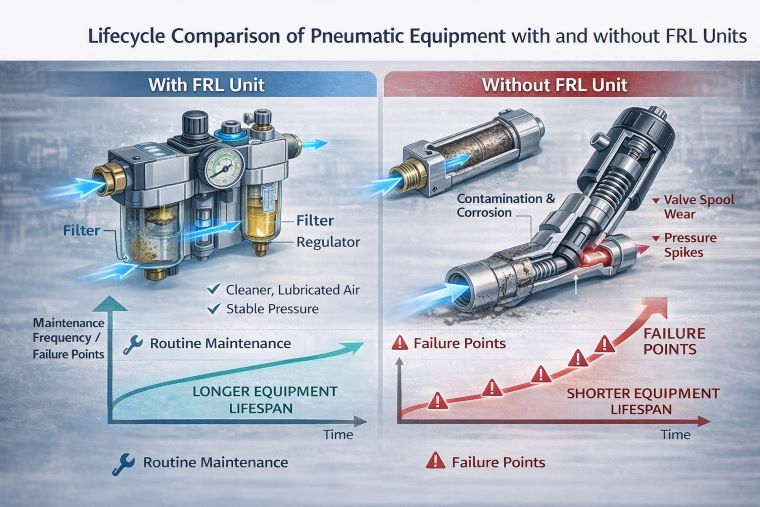
Selecting an appropriately sized FRL unit during the system design phase is critical. Engineers must consider flow rate, operating pressure, and lubricant type for each application. In modular automation setups where multiple Air Cylinders, Pneumatic Vibrators, and solenoid valves coexist, a central FRL station can serve several downstream components, simplifying maintenance and improving system reliability. By minimizing contaminant ingress, stabilizing pressure, and providing consistent lubrication, FRL units directly contribute to reduced maintenance intervals, lower lifecycle costs, and extended operational lifespan.
(FK9027)
 Pilot Pressure vs Working Pressure in Industrial Valves: Key Differences and Selection Guide
 Water Hammer Explained: Why Angle Seat Valves Are the Optimal Solution
 Valve Flow Rate Comparison: An Analysis of Four Common Valve Types
 The Temperature Limit of Valves: How Seal Material Affects Valve Body Performance
 Valve Flow Coefficients CV & KV: Differences Analysis and Selection Guide
You May Interest In
Get a free sample

Fokca is a brand of Ningbo Fokca Automation Co., Ltd.
Looking for custom pneumatic cylinder solutions? Visit our sister brand, Fescolo.→
© 2026 Ningbo Fokca Automation Co., Ltd. All rights reserved. Sitemap