Moving Things, Day After Day
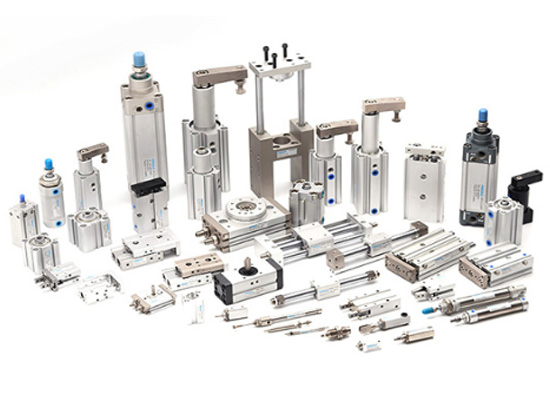
Motion control defines what a machine can do. Fokca actuators deliver that motion. ISO 15552 cylinders – 32 to 125mm bores, the workhorse of automation. ISO 6432 compact cylinders when space is tight. Guided cylinders when rotation isn't allowed. Rodless cylinders for long strokes. Stainless steel for washdown environments.
Mounting brackets – foot, flange, clevis. Rod end fittings, floating joints that forgive misalignment. Magnetic switches for position sensing. Seal kits for maintenance. Pneumatic grippers – parallel, angular, 3-point. Rotary actuators – rack and pinion for precision, vane type for tight spots. Hard chrome rods, adjustable cushions, magnetic piston options. Custom strokes and special materials when standard isn't enough.
Fokca Actuator Series
Pneumatic actuators convert compressed air energy into mechanical motion, forming the core of industrial automation systems. Fokca provides a complete range of high-performance pneumatic actuators for linear and rotary motion applications across all industries.
Pneumatic Cylinders (our specialty):
- ISO 15552 standard cylinders (formerly ISO 6431, VDMA 24562) for global interchangeability
- ISO 6432 compact cylinders for light-duty applications
- ISO 21287 compact cylinders for space-constrained installations
- Guided cylinders with integrated guide rods for non-rotational precision
- Double rod cylinders for balanced forces and guided applications
- Rodless cylinders (magnetic coupled and mechanical slotted) for long strokes
- Stainless steel cylinders for food processing, pharmaceutical, and corrosive environments
- Multi-position and tandem cylinders for special applications
Cylinder Accessories:
- Mounting brackets (foot mounts, flange mounts, clevis mounts, trunnion mounts)
- Rod end fittings (rod eye joints, spherical rod eyes, clevis joints)
- Floating joints for misalignment compensation
- Magnetic switches (reed and solid-state) for position sensing
- Seal kits and repair kits for maintenance
Pneumatic Grippers:
- Parallel grippers for precise part handling
- Angular grippers for space-saving installations
- 3-point grippers for centered gripping of round parts
Rotary Actuators:
- Rack and pinion rotary actuators for precise angular positioning
- Vane type rotary actuators for compact design
All Fokca actuators feature hard chrome plated piston rods, high-grade aluminum or stainless steel construction, adjustable cushions, and magnetic piston options. Custom stroke lengths, special materials, and modified designs available on request. Contact our technical team for application-specific solutions.
Pneumatic Actuators and Pneumatic Systems
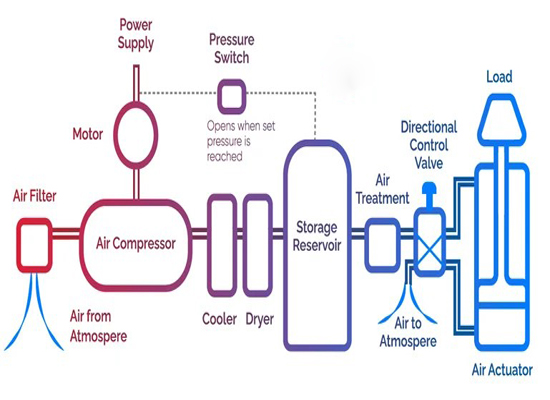
Pneumatic actuators are the core execution components in a pneumatic system, converting compressed air into mechanical motion. While each pneumatic component operates independently, they work together to form a complete and efficient system widely used in automation, packaging, material handling, assembly lines, and industrial machinery.
A modern pneumatic system typically includes air preparation units, air storage, air transmission, control valves, and pneumatic actuators. Thanks to their clean operation, high speed, safety, and cost efficiency, pneumatic actuator systems have become a preferred solution in industrial automation.
What Are Pneumatic Actuators?
Pneumatic actuators are devices that transform compressed air energy into linear or rotary motion, enabling functions such as pushing, pulling, lifting, clamping, or rotating.
They are known for:
• Simple and lightweight structure
• Fast response and high operating speed
• Easy installation and maintenance
• Cost-effective performance
These features make pneumatic actuators widely used in industrial equipment, automation systems, and electronics manufacturing.
Types of Pneumatic Actuators
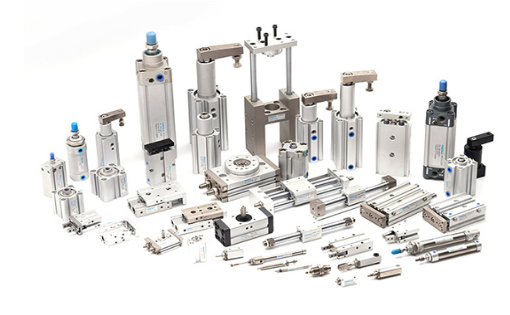
Pneumatic actuators are available in various designs to meet different application requirements:
◆ Linear Actuators (Cylinders)
The most common type, used to create straight-line motion.
Double-acting cylinders (air for both extend and retract)
Single-acting cylinders (spring return mechanism)
◆ Rotary Actuators
Designed to produce rotational motion for turning, indexing, or positioning tasks.
◆ Guided Cylinders
Provide higher precision and stability, ideal for applications requiring accurate movement and load guidance.
Role of Pneumatic Actuators in a System
Within a pneumatic system, actuators serve as the final motion output devices. They work in coordination with:
• Air preparation units (for clean and stable air supply)
• Control valves (to regulate direction, pressure, and flow)
• Tubing and fittings (to deliver compressed air efficiently)
This integration enables precise and synchronized mechanical operations across automated systems.
Advantages of Pneumatic Actuators in Industrial Automation
Pneumatic actuators are widely adopted across industries due to their key benefits:
◆ Energy Efficiency
Compressed air is readily available and can be efficiently utilized in many industrial environments.
◆ Clean and Safe Operation
Unlike hydraulic systems, pneumatic actuators do not use oil, eliminating the risk of leaks and ensuring environmentally friendly operation.
◆ Low Maintenance
With fewer moving parts and simple construction, pneumatic actuators require minimal maintenance and offer long service life.
◆ High Versatility
Suitable for a wide range of applications, from light-duty automation to high-speed repetitive operations.
◆ Modular Integration
Pneumatic actuators can be easily integrated with other components, enabling flexible and scalable system design.
Applications of Pneumatic Actuators
Pneumatic actuators are essential components in modern automated manufacturing systems, including:
• Automatic Assembly Lines – for positioning, pressing, and clamping
• Packaging Equipment – for sealing, sorting, and product handling
• Material Handling Systems – for lifting, pushing, and transferring items
• Machine Tool Fixtures – for clamping and positioning workpieces
• Welding and Spraying Equipment – for controlled and repeatable motion
• Testing and Inspection Equipment – for precise and consistent operation
Pneumatic actuators form the foundation of efficient, reliable, and scalable automation systems. Explore our range of high-performance pneumatic actuators to enhance your industrial productivity and system performance.
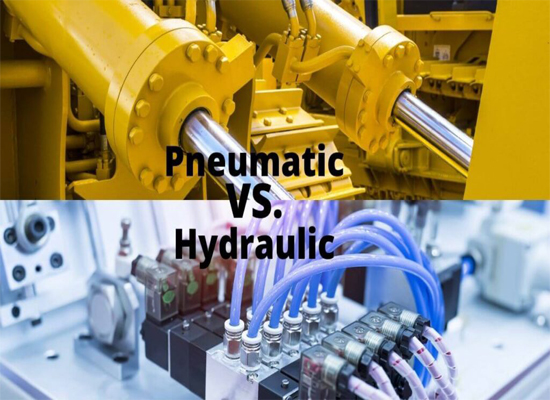
Pneumatic vs. Hydraulic Actuators
When selecting the right motion solution for your application, understanding the differences between pneumatic and hydraulic actuators is essential. Each technology offers unique advantages depending on performance requirements, working conditions, and cost considerations.
Hydraulic Actuators
Advantages
◆ High Force Output
Hydraulic actuators are capable of delivering extremely high torque and thrust, making them ideal for heavy-duty and high-load applications.
◆ Precise Control
With fast response and stable fluid characteristics, hydraulic systems enable accurate positioning and smooth motion control.
Disadvantages
◆ Leakage Risk
Hydraulic oil leaks can lead to environmental contamination and potential equipment damage.
◆ Complex Maintenance
Hydraulic systems involve more complex components, requiring higher maintenance effort and technical expertise.
◆ Higher Cost
Both initial setup and long-term maintenance costs are typically higher than pneumatic solutions.
◆ Temperature Sensitivity
Hydraulic fluid performance can vary significantly with temperature, limiting operational flexibility in extreme environments.
Pneumatic Actuators
Advantages
◆ Clean and Environmentally Friendly
Pneumatic actuators use compressed air or inert gases, ensuring a clean operation with no risk of fluid contamination.
◆ Fast Response and High Speed
Ideal for applications requiring rapid, repetitive motion such as automation, packaging, and assembly lines.
◆ Simple Structure & Easy Maintenance
With fewer components and straightforward design, pneumatic actuators are easy to install, maintain, and repair—resulting in lower operating costs.
Limitations
◆ Lower Force Output
Compared to hydraulic systems, pneumatic actuators generate less force and are not suitable for heavy-load applications.
◆ Higher Energy Consumption
Compressed air production can be energy-intensive, which may reduce overall system efficiency.
◆ Limited Precision
Due to the compressibility of air, achieving highly precise position control can be more challenging.
Why Choose Pneumatic Actuators?
Pneumatic actuators are an excellent choice for applications that prioritize speed, cleanliness, cost-effectiveness, and ease of maintenance. While they may not match the power of hydraulic systems, they excel in high-speed, repetitive operations where reliability and efficiency are key.
Explore our range of high-performance pneumatic actuators to find the ideal solution for your automation needs.
Pneumatic Actuator Maintenance Guide
Pneumatic actuators are known for their simple structure, reliable performance, and ease of maintenance. To ensure long service life and optimal efficiency, follow these essential maintenance practices:
◆ Actuator (Cylinder) Maintenance
Regularly inspect the actuator’s lubrication condition and sealing components. Replace worn seals promptly to prevent air leakage. Keep the actuator surface clean and verify that all mounting points and connections are secure. During operation, ensure smooth movement without abnormal noise, vibration, or sticking.
◆ Valve Maintenance
Control valves play a critical role in pneumatic actuator performance. Clean filters and valve cores periodically to remove dust and contaminants. Check solenoid coils for signs of overheating or wiring damage. Ensure proper sealing of the valve body to avoid air leakage, and test valve responsiveness to confirm smooth opening and closing. Keep external surfaces clean to prevent debris from entering the system.
◆ Tubing Maintenance
Inspect pneumatic tubing regularly to ensure all connections are tight and leak-free. Look for signs of wear, aging, cracks, or deformation, and replace damaged tubing immediately. Avoid excessive bending or crushing of tubes to maintain proper airflow. Clean tubing systems periodically to prevent internal blockages.
◆ Fittings Maintenance
Ensure all fittings are securely tightened and free from air leaks. Regularly check sealing elements such as O-rings and gaskets, replacing any that show signs of wear or aging. Avoid over-tightening, which can damage threads or fittings. Maintain cleanliness around connection points to prevent contamination.
◆ General Maintenance Best Practices
In addition to component-specific care, it is important to:
• Monitor system pressure and airflow to ensure stable operation
• Regularly check sealing integrity across the system
• Perform functional testing to verify actuator performance
• Maintain maintenance records for troubleshooting and lifecycle management
Choosing the Right Pneumatic Actuator Supplier
Selecting a reliable supplier is essential to ensure the performance, safety, energy efficiency, and long-term stability of your pneumatic actuators and systems. Consider the following factors before making a decision:
• Product Range & Expertise: Evaluate whether the supplier offers a comprehensive range of pneumatic actuators and has a professional technical team capable of providing customized solutions.
• Certifications: Check if the supplier complies with international standards and certifications such as ISO, CE, and RoHS to ensure product quality and reliability.
• After-Sales Support: A dependable supplier should provide strong pre-sales consultation and responsive after-sales service, including technical support and troubleshooting.
• Delivery & Lead Times: Ensure the supplier can meet your production schedule with reliable delivery timelines and efficient logistics.
• Customer Feedback: Review customer testimonials, case studies, and industry reputation to better understand real-world performance and service quality.
FAQ: Pneumatic Actuators
Q1: What are pneumatic actuators?
Pneumatic actuators are devices that convert compressed air into mechanical motion. They are commonly used to produce linear or rotary movement and are widely applied in automation systems, packaging, manufacturing, and material handling.
Q2: What are the main components of a pneumatic actuator system?
A typical pneumatic actuator system includes an air compressor, air treatment units (such as filters and regulators), control components like valves, the actuator itself (cylinders or rotary actuators), and connecting tubes and fittings.
Q3: Can pneumatic actuators and their components be replaced?
Yes, most pneumatic actuators and related components are designed to be replaceable. However, proper selection is essential—factors such as pressure ratings, size, mounting style, compatibility with existing fittings, and functional requirements must be carefully considered to ensure safe and efficient operation.
Q4: Are pneumatic actuators suitable for heavy-duty applications?
Pneumatic actuators are well-suited for applications requiring fast and repetitive motion. However, for heavy-duty tasks that demand extremely high force or precise control, hydraulic systems may be a better choice.

Get a free sample

Links: www.fescolo.com(Pneumatic)
FOKCA ©1998-2025 All Rights Reserved Sitemap