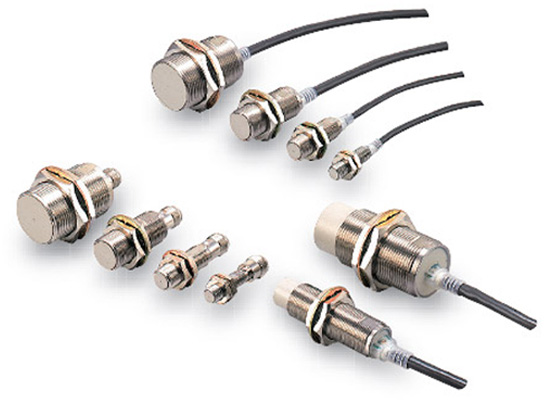
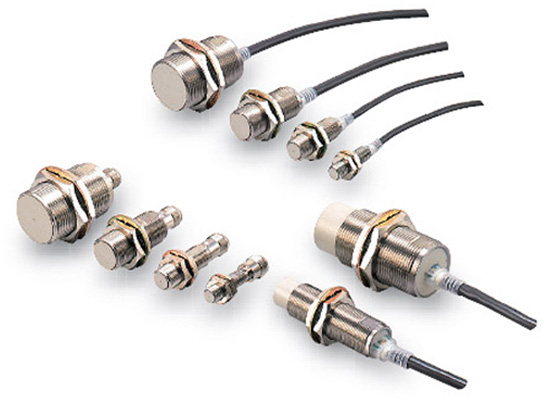
A proximity sensor detects object presence or position without contact, widely used in parts counting, positioning, speed monitoring, and liquid level control. Compared to mechanical limit switches, it offers no moving contacts, fast response, long life, and minimal impact from object material.
Fokca provides inductive and capacitive types, with NPN/PNP, 2-wire/3-wire, and NO/NC options, compatible with various PLC systems. Rigorously tested for stable and reliable performance, it is an ideal choice for non-contact detection in industrial automatio
A proximity sensor is a device that detects the presence or position change of an object without direct contact. It operates on principles such as electromagnetic fields, electrostatic fields, or capacitance, outputting an electrical signal when an object approaches, providing the control system with information on position, presence, or passage status.
Compared to mechanical limit switches, proximity sensors offer advantages such as no moving contacts, fast response, long service life, and immunity to object material (capacitive type) or specialized metal detection (inductive type). They are widely used in automated production lines for parts counting, positioning, speed monitoring, liquid level control, and similar applications.
| Aspect | Inductive Proximity Sensor | Capacitive Proximity Sensor |
|---|---|---|
| Working Principle | High-frequency oscillating electromagnetic field; generates eddy currents when metal approaches, triggering signal | Electrostatic field change; any approaching object changes dielectric constant, triggering signal |
| Detectable Objects | Metal only (highest sensitivity to iron/steel, lower to aluminum/copper) | Metal and non-metal (plastic, glass, wood, liquid, powder, etc.) |
| Sensing Distance | Typically 1–15 mm (affected by metal type) | Typically 1–20 mm (sensitivity adjustable) |
| Anti-Interference | Strong (less affected by dust, oil) | Weak (more affected by humidity, contaminants) |
| Response Speed | Fast (kHz range) | Moderate (hundreds of Hz range) |
| Applications | Metal part positioning, gear speed monitoring, assembly lines | Liquid level control, material level detection, non-metal object presence |
Selection Guide:
Need metal detection only, harsh environment, high-speed response → Choose Inductive
Need non-metal detection, liquid, powder, or multi-material sensing →Choose Capacitive
Two Types for Different Needs – Inductive type specializes in metal detection with strong anti-interference and fast response, ideal for machining, automotive manufacturing, and other metal-intensive applications. Capacitive type detects both metal and non-metal with adjustable sensitivity, ideal for liquid level control, material level detection, and sensing plastic/wood/glass non-metal objects.
Wide Control System Compatibility – Available in NPN and PNP output, 2-wire and 3-wire configurations, with flexible NO/NC switch logic. Operating voltage DC 10-30V (standard), with some models supporting AC 90-250V, compatible with various PLC input modules.
Rich Mounting Options – Cylindrical types (M8/M12/M18/M30) for standard threaded installation; rectangular types for surface mounting. Shielded (flush) types can be mounted flush with metal brackets; unshielded (non-flush) types offer longer sensing distances. Multiple options meet different installation space and sensing distance requirements.
Stable and Reliable– IP67 protection rating, dustproof and waterproof, suitable for damp, dusty industrial environments. LED indicator for easy on-site adjustment, operating temperature -25~70℃, stable sensing distance, high repeat accuracy.
Quality Assurance – Each batch undergoes rigorous testing to ensure stable and reliable sensing distance, switching frequency, repeat accuracy, and other performance parameters.
Verify sensing distance before installation, leaving margin to prevent drift due to temperature changes or voltage fluctuations. Shielded switches can be flush-mounted in metal brackets; unshielded switches require sufficient space around them (typically 2-3 times the switch diameter) to avoid magnetic field interference from metal brackets.
Ensure the sensing face is directly facing the target object,kept vertical or at the specified angle. For capacitive switches, avoid mounting on metal brackets; use non-metal spacers if necessary.
Confirm voltage compatibility between power supply and switch rating. For DC types, observe polarity (brown/positive, blue/negative); reverse polarity may damage internal circuits. Never short-circuit the output terminal directly to power supply positive or negative.
Inductive types may require additional shielding when exposed to strong magnetic fields (e.g., welders, motors). Capacitive types are more affected by humidity and contaminants; keep the sensing face clean and consider coated/protected models for harsh conditions.
Regularly inspect the sensing face for metal chips or oil buildup; clean with a soft cloth to avoid scratching. Check LED indicator status and ensure mounting screws are tight.
Q1: What is the difference between inductive and capacitive proximity sensors?
A1: Inductive sensors detect only metal objects, offering fast response and strong anti-interference. Capacitive sensors detect metal, non-metal, liquid, powder, and more, but are more affected by humidity. Choose based on your target object.
Q2: What is the difference between NPN and PNP output?
A2: NPN outputs low level (0V), suitable for Japanese and most domestic PLCs. PNP outputs high level (24V+), suitable for European and American PLCs. Verify your PLC input module type before selection.
Q3: What is the difference between shielded and unshielded types?
A3: Shielded (flush) switches can be mounted flush with metal brackets but have shorter sensing distances. Unshielded (non-flush) switches require surrounding clearance but offer longer sensing distances. Choose shielded for space-constrained installations, unshielded when longer sensing distance is needed.
Q4: What factors affect the sensing distance of a proximity sensor?
A4: Factors include target object material, ambient temperature, supply voltage, and mounting method. It is recommended to leave a 20% margin during selection.

Get a free sample

Links: www.fescolo.com(Pneumatic)
FOKCA ©1998-2025 All Rights Reserved Sitemap