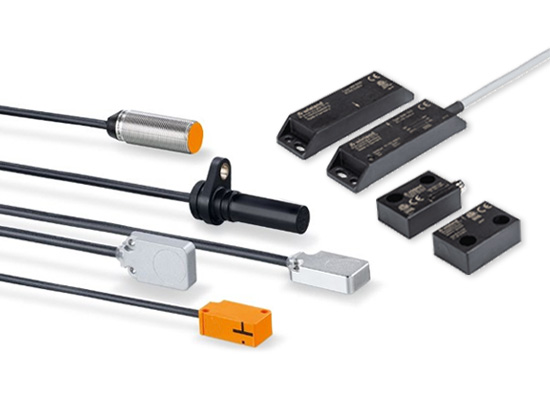
Non-contact detection, fast response, easy installation – Magnetic switches are core components for cylinder position feedback in pneumatic systems. They sense the built-in magnetic ring inside the cylinder and transmit real-time piston position signals to the control system, letting automation equipment “know” whether the cylinder is fully extended, fully retracted, or somewhere in between, thereby enabling precise positioning and speed monitoring.
Fokca CS1 series magnetic switches feature high sensitivity, fast switching frequency, and long service life. With a wide operating voltage of AC/DC 5–240V, they are compatible with various PLC control systems. Three output types are available – 2-wire, 3-wire NPN, and 3-wire PNP – with flexible NO/NC switch logic configuration.
A magnetic switch is a key sensing component in pneumatic systems used to detect the position of a cylinder piston. It is widely applied across various industrial automation scenarios. It uses a non-contact method to detect the built-in magnetic ring inside the cylinder. When the piston moves into the switch‘s sensing range, the switch changes state, providing accurate position signals to a PLC or control system.
The core function of a magnetic switch is to let the control system “know” the piston‘s position – whether it is fully extended, fully retracted, or somewhere in between. With real-time feedback from magnetic switches, automation equipment can achieve precise positioning, speed monitoring, and safety protection.
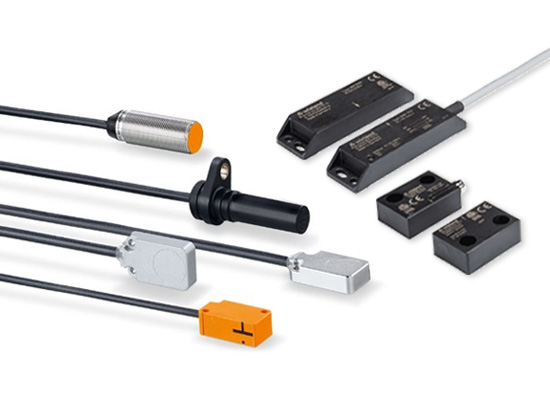
Fokca offers four series of magnetic switches – CS1-M, CS1-U, CS1-J, and CS1-S – each specifically designed for different cylinder types. Each comes with a matching mounting bracket for quick and easy installation.
◆ CS1-M Series – Designed for DNC standard cylinders. Suitable for general-purpose cylinders conforming to ISO 15552 standards, including Festo DNC and compatible alternatives. Includes matching mounting bracket for secure installation.
◆ CS1-U Series – Designed for SC, SU, and SI standard cylinders. Suitable for tie-rod round cylinders and standard industrial cylinders, including AirTac SC, SU, SI, and similar series. Flexible mounting with strong compatibility.
◆ CS1-J Series – Designed for SDA compact cylinders. Specially engineered for compact cylinders, featuring a small size that saves installation space. Suitable for SDA series and compatible thin cylinders – ideal for compact equipment layouts.
◆ CS1-S Series – Designed for MA, MAL, and DSN mini cylinders. Engineered for mini and micro cylinders, suitable for MA, MAL, DSN, and other small cylinder series – meeting the detection needs of precision electronics and small automation equipment.
| Parameter | CS1-M | CS1-U | CS1-J | CS1-S |
|---|---|---|---|---|
| Applicable Cylinder | DNC standard cylinder (ISO 15552) | SC / SU / SI tie-rod or profile cylinder | SDA and compatible compact cylinder | MA / MAL / DSN mini cylinder |
| Operating Voltage | AC/DC 5 ~ 240V | |||
| Output | 2-wire / 3-wire NPN / 3-wire PNP | |||
| Switch Logic | Normally Open (NO) / Normally Closed (NC) | |||
| Sensitivity | 40 Gauss | 60 Gauss | 40 Gauss | 60 Gauss |
| Switching Frequency | 200 Hz (2-wire) / 1000 Hz (3-wire) | |||
| Operating Temperature | -10 ~ 70℃ | |||
| Protection Rating | IP67 | |||
| Shock Resistance | 30G (2-wire) / 50G (3-wire) | |||
| Cable Specification | φ3.2 mm, oil-resistant PVC | |||
| Bracket Requirement | None | Yes | None | Yes |
Improper installation of magnetic switches can lead to unstable signals, false triggering, or even damage. Please pay attention to the following during installation:
⒈Install the switch at the midpoint of the piston‘s travel range, not at the switching boundary. Boundary installation may cause the switch to toggle repeatedly due to cylinder vibration, leading to signal instability. After installation, perform an actual air test to confirm that the switch indicator lights up when the piston reaches the target position.
⒉Apply fastening torque within the specified range. Excessive torque can damage the switch housing, while insufficient torque may allow the switch position to shift over time.
⒊The switch cable should not move with the cylinder, as repeated bending may cause wire breakage or internal component damage. Secure the cable using cable trays, zip ties, or cable carriers.
⒋Avoid dropping or impacting the switch during installation and storage. Even if the housing appears undamaged, internal reed or electronic components may be compromised, leading to permanently open/closed states or intermittent false triggering that is difficult to diagnose.
⒌Magnetic switches have an IP67 protection rating, but avoid long-term immersion of cable joints in oil-water mixtures. In high-oil-mist environments, regularly clean the switch surface to prevent oil accumulation that could affect heat dissipation and LED indicator visibility.
◆ 2-Wire Type – Pay attention to load matching when connecting in series. Voltage drops accumulate when multiple switches are wired in series, which may prevent downstream devices from recognizing signals.
◆ 3-Wire NPN – The output terminal typically connects to the PLC input‘s negative side (0V). Confirm that the PLC input module supports NPN signals.
◆ 3-Wire PNP – The output terminal connects to the PLC input‘s positive side (24V+). Suitable for current-sourcing PLC input modules.
◆ General Notes – Always confirm power supply polarity before wiring; reverse polarity may burn out internal switch components. The output terminal must never be short-circuited directly to the power supply positive or negative terminals.

Get a free sample

Links: www.fescolo.com(Pneumatic)
FOKCA ©1998-2025 All Rights Reserved Sitemap