Directing Air, Simply and Reliably
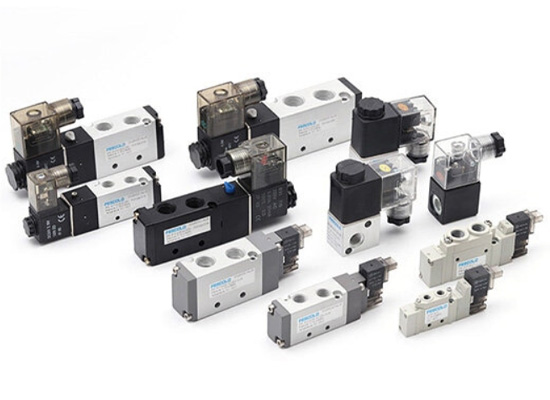
Every pneumatic system needs switches. Valves that tell air where to go. Fokca offers solenoid valves – single and double coil, 24V DC to 220V AC. 3/2 way for single-acting cylinders. 5/2 way for double-acting. 5/3 way when you need mid-position stop. Manual valves when an operator needs control. Mechanical valves when cams do the triggering.
Valve terminals pack multiple valves into one assembly – 4 to 16 stations, less plumbing, cleaner machines. Check valves, flow controls, quick exhausts for specific jobs. Ports from M5 to G1/2. Pressure to 10 bar. IP65 rated. Machined spools, durable seals, fast response. For new builds or replacements – same quality.
Fokca Valve Series
Pneumatic control valves direct and regulate compressed air flow to actuators, cylinders, and other pneumatic devices. Fokca offers a comprehensive selection of high-quality control valves for diverse industrial automation applications, from simple on/off control to complex sequencing.
Our control valve portfolio includes:
- Solenoid valves (single and double coil) for electrical-pneumatic control
- Valve terminals (valve islands) for compact multi-valve installations
- Manual valves (hand lever, push-button, selector) for operator control
- Mechanically operated valves (roller lever, one-way trip) for cam or flag actuation
- Pneumatically piloted valves for remote air signal control
- Check valves and flow control valves for directional and speed control
Technical specifications:
- Port sizes from M5 to G1/2 (1/8" to 1/2" NPT available)
- 3/2, 5/2, and 5/3 way valve configurations
- 24V DC, 110V AC, and 220V AC solenoid voltages
- IP65 rated enclosures for harsh environments
- Manual override as standard on all solenoid valves
- Explosion-proof options for hazardous locations
Fokca control valves feature precision-machined spools, durable seals, and fast response times. Whether you're designing a new machine or replacing worn valves, our extensive inventory ensures quick delivery. Contact us for valve sizing and selection assistance.
Pneumatic Control Valves Overview
Pneumatic control valves are essential components in pneumatic systems, responsible for regulating the direction, pressure, and flow rate of compressed air. By controlling airflow, they enable the start, stop, speed, and directional movement of pneumatic actuators such as cylinders and rotary actuators.
As core control elements, pneumatic valves work in coordination with air supply units and actuators to ensure efficient, stable, and automated system operation.
What Are Pneumatic Solenoid Valves?
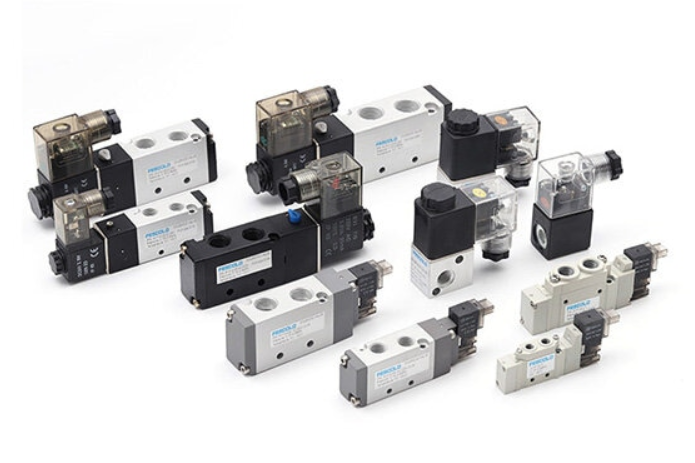
Pneumatic solenoid valves are electrically controlled valves that use electromagnetic force to switch airflow on or off. They are the most widely used type of pneumatic control valve in modern automation systems.
By converting electrical signals into mechanical action, solenoid valves enable fast, precise, and remote control of pneumatic actuators, making them ideal for automated production lines and intelligent equipment.
Key Functions of Pneumatic Control Valves
Pneumatic control valves play a critical role in fluid and air management across industrial systems:
◆ Flow Regulation
Control valves can precisely adjust airflow and pressure to meet specific process requirements. This is especially important in industries such as food & beverage, chemical processing, and pharmaceuticals, where stable and accurate flow control is essential.
◆ On/Off Control
Valves provide reliable opening and closing of airflow, enabling accurate control of gases and liquids in applications like filling systems, water treatment, and dosing processes.
◆ Automation Control
Pneumatic solenoid valves allow automated operation through electrical signals, enabling remote control, high-speed switching, and integration into PLC-controlled systems.
◆ Safety Protection
Certain valve types, such as safety and relief valves, help protect systems from overpressure and operational risks.
Advantages of Pneumatic Solenoid Valves
Pneumatic solenoid valves offer several key benefits for industrial automation:
• Fast Response Time – Ideal for high-speed, repetitive operations
• Low Power Consumption – Efficient electromagnetic control mechanism
• Compact Design – Easy to install in space-limited systems
• High Reliability – Long service life with stable performance
• Safe Operation – No electrical sparks at the point of airflow control, suitable for hazardous environments
Common Types of Pneumatic Control Valves
We offer a wide range of pneumatic control valves to meet diverse application needs:
◆ Pneumatic Solenoid Valves (Recommended)
The most popular choice for automation systems, providing fast and precise electrical control of airflow.
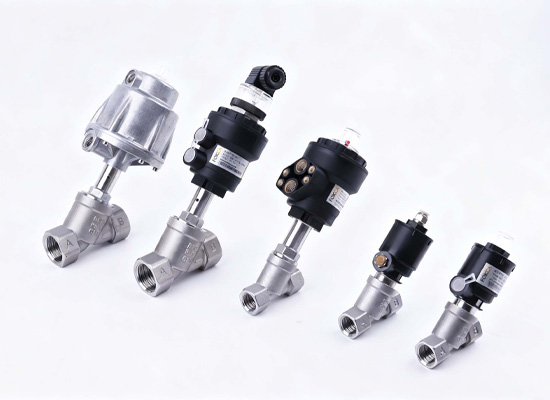
◆ Angle Seat Valves
Designed for high flow rates and demanding environments, suitable for steam, liquids, and gases.
◆ Globe Control Valves
Provide accurate flow regulation and reliable shut-off in high-pressure and high-temperature conditions.
◆ Check Valves
Prevent backflow and ensure one-way fluid movement.
◆ Ball Valves
Offer simple and reliable on/off control for various fluid systems.
Applications of Pneumatic Control Valves
Pneumatic control valves are widely used across multiple industries:
• Industrial Automation – Control of cylinders and automated machinery
• Food & Beverage – Filling, dosing, and hygienic fluid control
• Pharmaceutical Industry – Precise and clean process control
• Chemical Processing – Handling corrosive and sensitive media
• Electronics & Semiconductor – High-precision air control
• Automotive Manufacturing – Assembly lines and robotic systems
• Water Treatment – Flow regulation and system control
Advantages Over Manual and Electric Valves
Compared to manual and electric valves, pneumatic control valves offer:
• Higher Safety – Operate using compressed air, avoiding electrical sparks in hazardous environments
• Faster Operation – Rapid switching for high-efficiency automation
Better Suitability for Harsh Conditions – Perform reliably in high-temperature, high-pressure, or explosive environments
How to Choose the Right Pneumatic Control Valve
Selecting the right valve is crucial for system performance and longevity. Consider the following factors:
• Working Pressure and Flow Requirements
• Type of Medium (air, gas, liquid, corrosive substances)
• Control Method (manual, pneumatic, or solenoid/electric control)
• Connection Size and Installation Requirements
• Environmental Conditions (temperature, humidity, hazardous areas)
For automated systems, pneumatic solenoid valves are typically the best choice due to their precision, speed, and ease of integration.
FAQ
Q1: What is a pneumatic control valve?
A pneumatic control valve is a device used to regulate compressed air flow in a system. It controls the direction, pressure, and flow rate of air to operate pneumatic actuators and other components.
Q2: Why choose pneumatic solenoid valves for automation?
Pneumatic solenoid valves provide fast, accurate, and remote control through electrical signals, making them ideal for automated systems and PLC-controlled environments.
Q3: Which valves are suitable for corrosive environments?
For corrosive applications, it is recommended to use valves made of stainless steel, engineering plastics, or diaphragm-type designs to ensure durability and chemical resistance.
Explore our full range of pneumatic control valves, especially our high-performance pneumatic solenoid valves, designed to deliver precision, reliability, and efficiency in modern industrial automation systems.

Get a free sample

Links: www.fescolo.com(Pneumatic)
FOKCA ©1998-2025 All Rights Reserved Sitemap