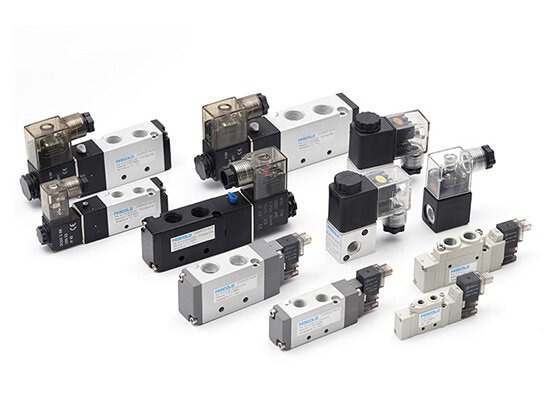
A pneumatic solenoid valve, as its name suggests, operates through the action of electricity and is used to control the flow of fluids (liquids or gases) in a system.
A pneumatic solenoid valve is an electrically controlled valve designed to regulate the switching,flow,and direction of compressed air in a pneumatic system,it is also called electromagnetic valve.When energized, the coil generates a magnetic field that drives a plunger to open or close the valve's air passages.
What does solenoid valve do?Similar to commonly available water solenoid valves that specifically control the flow of water, or carbon canister solenoid valves that regulate the flow of evaporative gases within a carbon canister, pneumatic solenoid valve is widely used in applications like automation, HVAC systems, and industrial processes to control the flow of water, air, or fuel.
Single solenoid control:
Uses one solenoid + spring return. When energized, the spool shifts; when de-energized, the spring resets it.
Double solenoid control:
Two solenoids control both switching positions without relying on springs.
◆ Precise Flow Control: The most significant feature of the solenoid valve is that it enables accurate manipulation of compressed air.
◆ Fast Response: One of its most notable features is its ability to open and close rapidly for efficient system operation.
◆ Durable Construction:These pneumatic solenoid valves are made of brass, stainless steel, or aluminum and have a long service life.
◆ Energy Efficient:Another characteristic of solenoid valves is that they require minimal power to operate.
◆ Wide Application Range: Different models of solenoid valves are suitable for controlling air, water, gas, steam, and oil.
Air Flow Control
One of its functions is to open or close the supply of compressed air to pneumatic cylinders and actuators.
Switching Function(On/Off Control)
Another function of it is that it can act as an electrically driven switch that engages or stops airflow in the system.
Controlling Direction: Some pneumatic solenoid valves are directional valves, which means they control not only the flow but also the direction of the air directing it to different parts of the system to cause movement in different directions.
Pressure Regulation: Some can help regulate the pressure by opening and closing at specific intervals, helping maintain a stable system pressure.
Automation and Remote Control: Since they are electrically controlled, these valves can be automated and remotely controlled,which allowing precise control over pneumatic systems, which is useful in manufacturing or automated machinery.
A solenoid valve is an electromechanical device composed of a solenoid coil, plunger, spring, valve body, and flow ports.
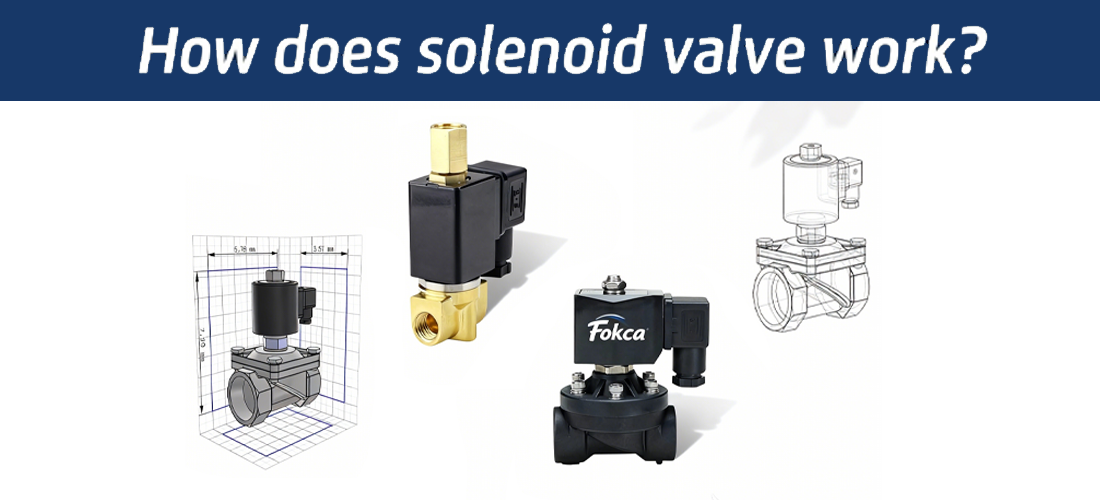
Solenoid Coil (Electromagnet):
This is the heart of the solenoid valve, consisting of a coil of wire that generates a magnetic field when an electric current is passed through it.When the coil is energized, it creates a magnetic field that pulls or pushes a metal plunger or armature, activating the valve.
Plunger (Armature):
The plunger is a movable metal component inside the valve that responds to the magnetic field created by the solenoid coil.When the solenoid coil is energized, the plunger moves, either opening or closing the valve's flow passage.
It typically moves vertically within a guide tube or cylinder.
Spring:
The spring is used to return the plunger to its original position when the solenoid coil is de-energized.The spring ensures that the valve closes when no electrical signal is applied, keeping the fluid flow controlled.
Valve Body:
The valve body houses all the internal components (solenoid coil, plunger, spring, etc.).It has one or more fluid ports, which connect to the piping of the system.Inside the body, there is a flow path or seat that the plunger either opens or closes, controlling the flow of the fluid.
Flow Paths/Ports:
These are the openings on the valve body through which the fluid flows. The dimensions of these openings adhere to international standards, facilitating their connection to a Manifold Block for integrated and centralized management.
When the spool (stud) is actuated by the solenoid, it obstructs or opens these flow ports, thereby controlling the fluid flow. In an integrated valve island configuration, this action essentially connects the solenoid valve to the common air supply.
226a1413p004 solenoid valve replacement:
The type,A GE solenoid valve which offers a ¾-inch pipe connection with a ¼-inch orifice,is a durable component designed for precise control of fluid flow in industrial applications.
solenoid valve type s4a:
reliable and efficient valve designed for controlling the flow of fluids in various industrial systems
1 1/2 inch solenoid valve:
The 1 1/2 inch solenoid valve is a durable and efficient valve designed to control the flow of liquids or gases in medium to large-scale industrial systems
In a pneumatic system, a solenoid valve may be used to control the flow of compressed air to a cylinder.
◆ Fast Response Time: Solenoid valves open and close rapidly, allowing precise control over fluid flow.
◆ Automation Friendly: They can be controlled remotely by electrical signals, enabling automation in industrial systems.
VVT solenoid valve is used to regulate the valve timing of the engine. It changes the opening and closing time of the valves by controlling the oil flow
thereby optimizing the performance of the engine.
It plays an important role in improving fuel efficiency, reducing emissions, enhancing power and acceleration response.
Perhaps you can follow the following simple steps to check.
◆ Visual Inspection: Check for damage or leaks.
◆ Electrical Test: Measure resistance and voltage using a multimeter or scanner.
◆ Listen for Operation: Check for clicking sounds when the engine is running.
◆ Test with Scan Tool: Check live data to see if the VVT system is responding.
◆ Mechanical Check: Ensure there are no blockages or oil flow issues.
◆ Replace if Necessary: If the solenoid is faulty, replace it.
These points will help you systematically explain how to test VVT solenoid valves and why regular inspection and maintenance of this component is crucial for the performance of the car.
If you would like to learn more about our Pneumatic Solenoid Valves, you can visit our subwebsite at www.fokcavalve.com. As a professional valve manufacturer,We offer more comprehensive and customized solutions for Pneumatic Solenoid Valves.
Get a free sample

Fokca is a brand of Ningbo Fokca Automation Co., Ltd.
Looking for custom pneumatic cylinder solutions? Visit our sister brand, Fescolo.→
© 2026 Ningbo Fokca Automation Co., Ltd. All rights reserved. Sitemap